Saitta Cesare, De Simone Ilaria, Fasulo Vittorio, Corbetta Marinella, Duga Stefano, Chiereghin Chiara, Colombo Federico Simone, Benetti Alessio, Contieri Roberto, Avolio Pier Paolo, Uleri Alessandro, Saita Alberto, Guazzoni Giorgio Ferruccio, Hurle Rodolfo, Colombo Piergiuseppe, Buffi Nicolò Maria, Casale Paolo, Lughezzani Giovanni, Asselta Rosanna, Soldà Giulia, Lazzeri Massimo
Department of Urology, IRCCS Humanitas Research Hospital, 20089 Rozzano, Italy.
Department of Biomedical Sciences, Humanitas University, 20072 Pieve Emanuele, Italy.
Cancers (Basel). 2023 May 9;15(10):2666. doi: 10.3390/cancers15102666.
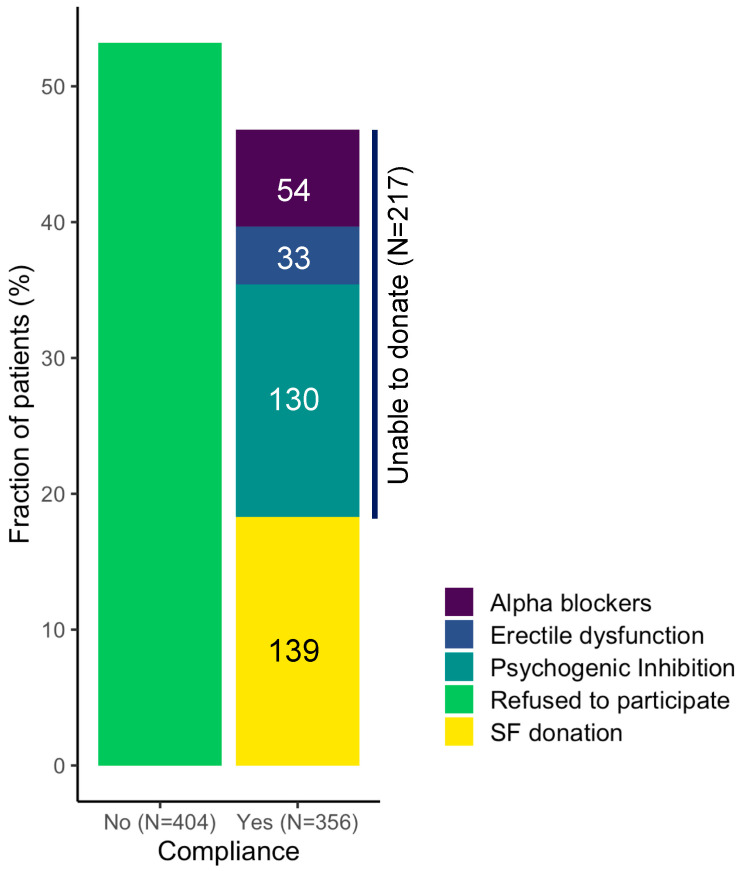
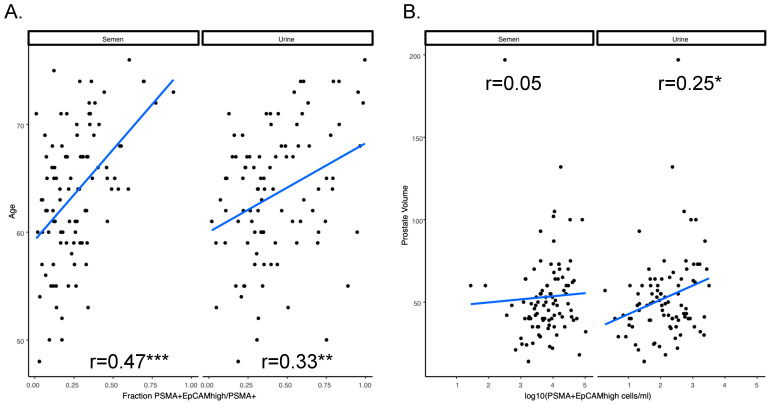
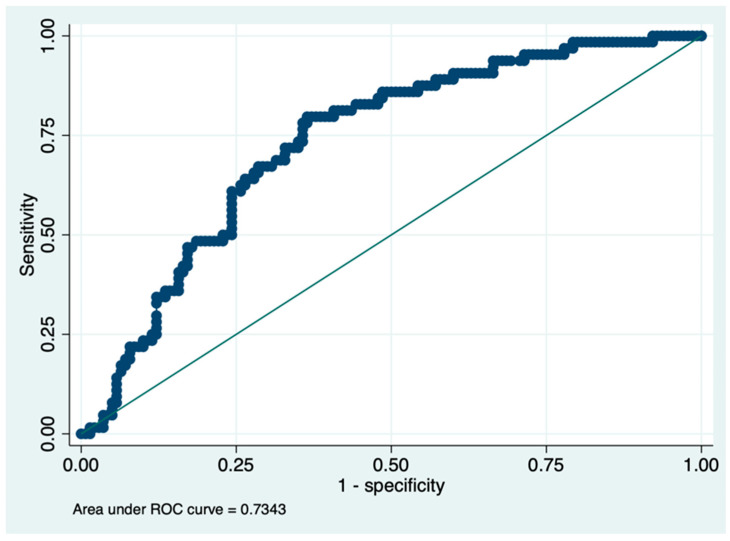
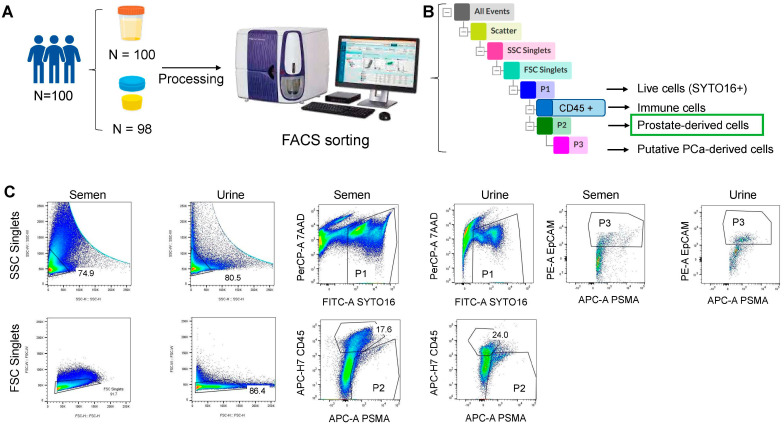
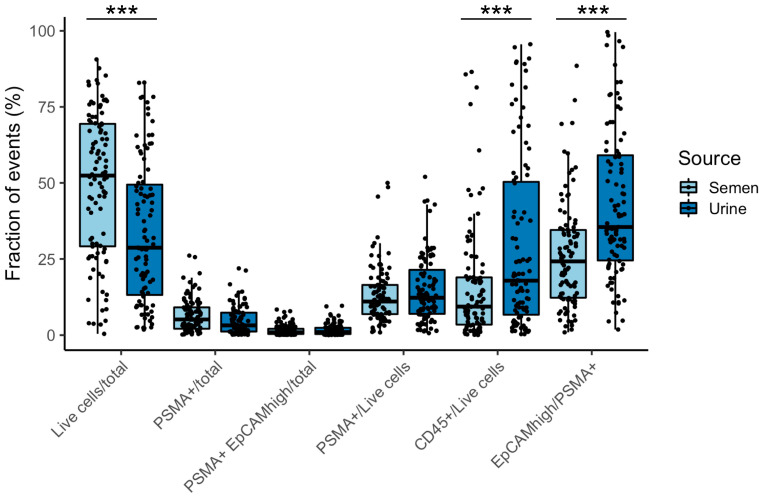
Liquid biopsy (LB) for prostate cancer (PCa) detection could represent an alternative to biopsy. Seminal fluid (SF) is a source of PCa-specific biomarkers, as 40% of ejaculate derives from the prostate. We tested the feasibility of an SF-based LB by evaluating the yield of semen self-sampling in a cohort of >750 patients with clinically localized PCa. The overall SF collection yield was 18.2% (39% when considering only compliant patients), with about a half of the patients (53.15%) not consenting to SF donation. Independent favorable predictors for SF collection were younger age and lower prostate volume. We implemented a protocol to enrich prostate-derived cells by multi-color flow cytometry and applied it on SF and urine samples from 100 patients. The number of prostate-enriched cells (SYTO-16+ PSMA+ CD45-) was variable, with higher numbers of cells isolated from SF than urine ( value < 0.001). Putative cancer cells (EpCAM) were 2% of isolated cells in both specimens. The fraction of EpCAM cells over prostate-enriched cells (PSMA+) significantly correlated with patient age in both semen and urine, but not with other clinical parameters, such as Gleason Score, ISUP, or TNM stage. Hence, enumeration of prostate-derived cells is not sufficient to guide PCa diagnosis; additional molecular analyses to detect patient-specific cancer lesions will be needed.
用于前列腺癌(PCa)检测的液体活检(LB)可能是活检的一种替代方法。精液(SF)是PCa特异性生物标志物的一个来源,因为40%的射精液来自前列腺。我们通过评估超过750例临床局限性PCa患者的精液自我采样成功率,测试了基于SF的LB的可行性。总体SF采集成功率为18.2%(仅考虑依从性患者时为39%),约一半的患者(53.15%)不同意捐献SF。SF采集的独立有利预测因素是年龄较小和前列腺体积较小。我们实施了一项通过多色流式细胞术富集前列腺来源细胞的方案,并将其应用于100例患者的SF和尿液样本。前列腺富集细胞(SYTO-16+PSMA+CD45-)的数量各不相同,从SF中分离出的细胞数量高于尿液(值<0.001)。两个样本中假定的癌细胞(EpCAM)占分离细胞的2%。精液和尿液中EpCAM细胞在前列腺富集细胞(PSMA+)中的比例均与患者年龄显著相关,但与其他临床参数(如Gleason评分、ISUP或TNM分期)无关。因此,对前列腺来源细胞进行计数不足以指导PCa诊断;还需要进行额外的分子分析以检测患者特异性的癌症病变。