Zheng Hui, Zhang Mengyu, Gao Dingwei, Zhang Xiaoying, Cai Haidong, Cui Zhijun, Gao Yang, Lv Zhongwei
Department of Nuclear Medicine, Shanghai Tenth People's Hospital, Tongji University School of Medicine, Shanghai 200092, China.
Department of Medicine Imaging, the Chongming Branch of Shanghai Tenth People's Hospital, Tongji University, Shanghai 200092, China.
Cancers (Basel). 2023 May 11;15(10):2720. doi: 10.3390/cancers15102720.
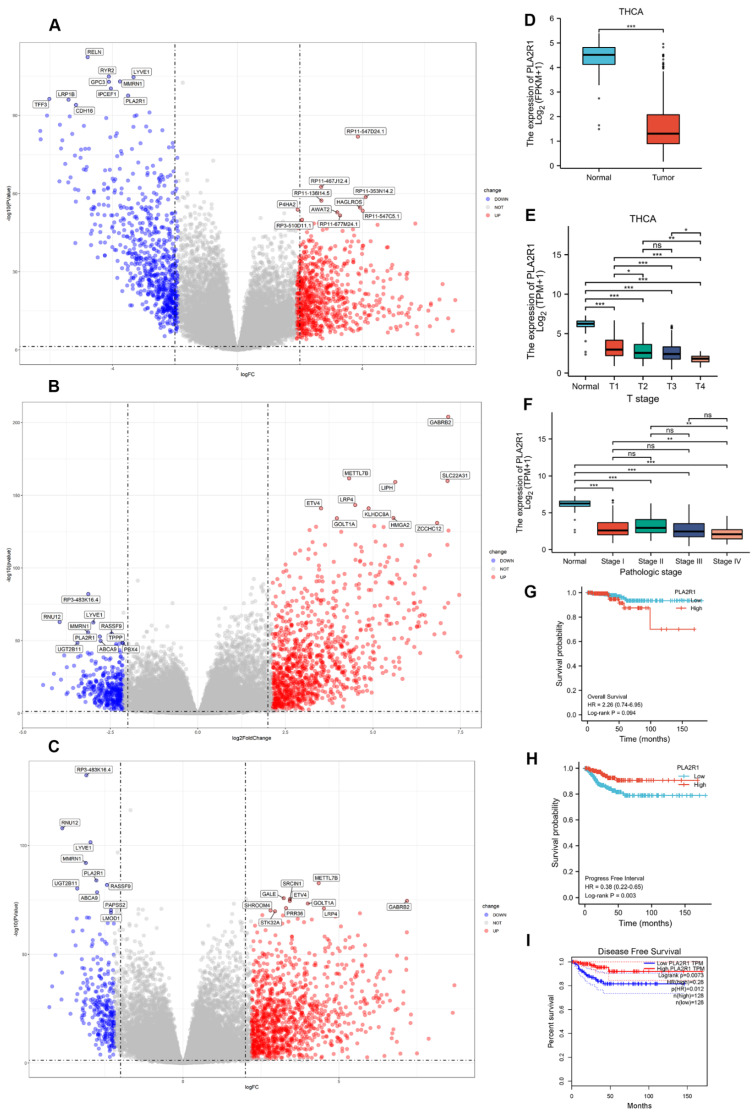
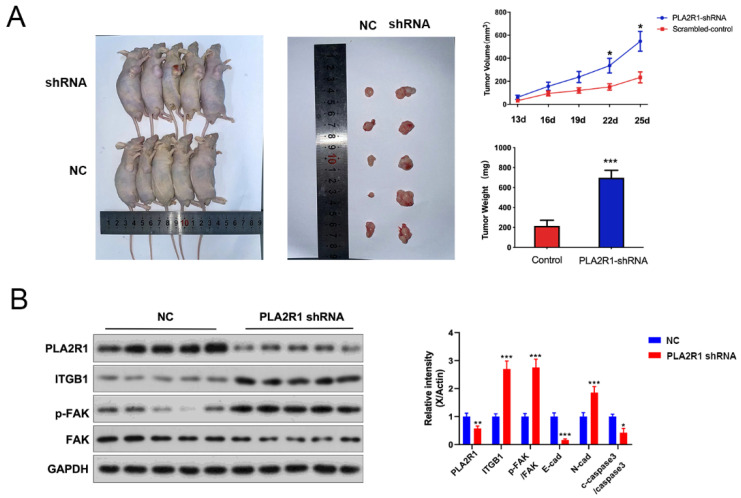
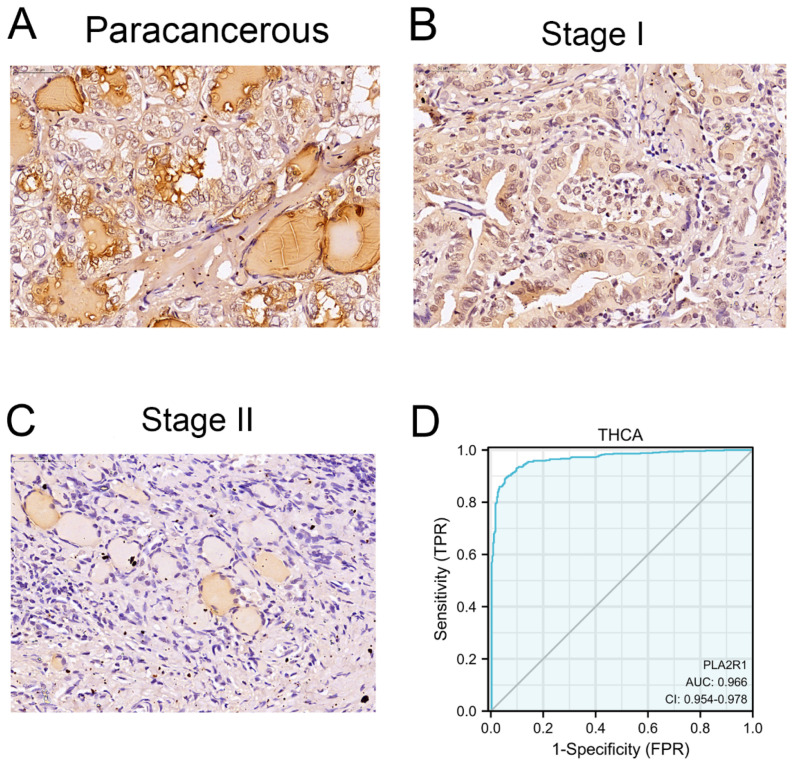
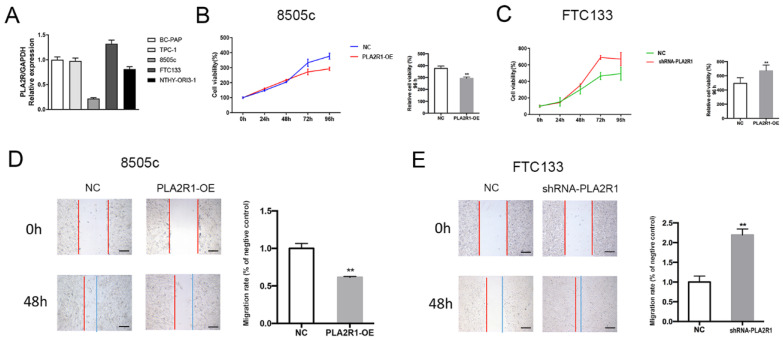
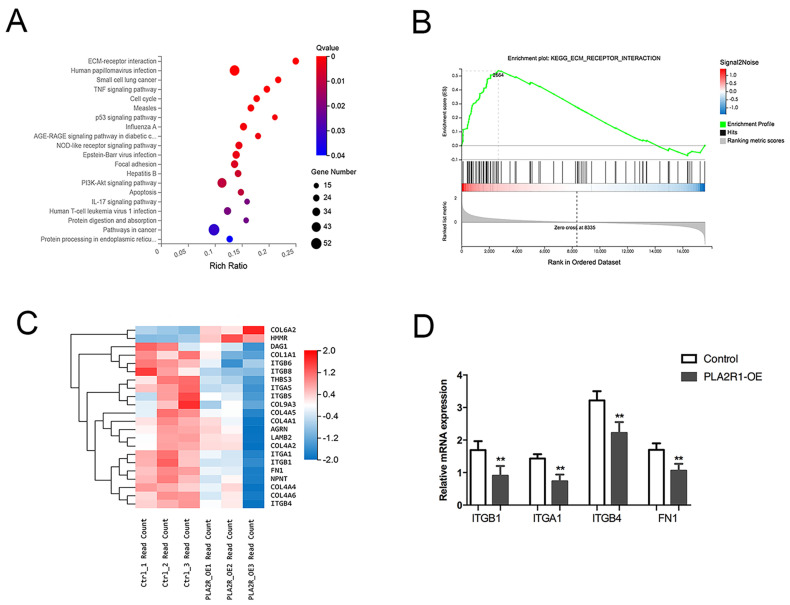
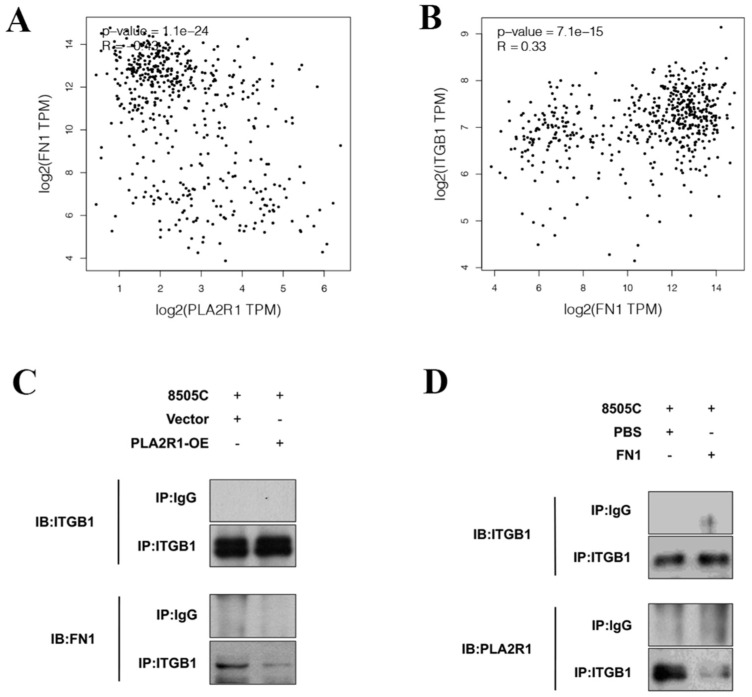
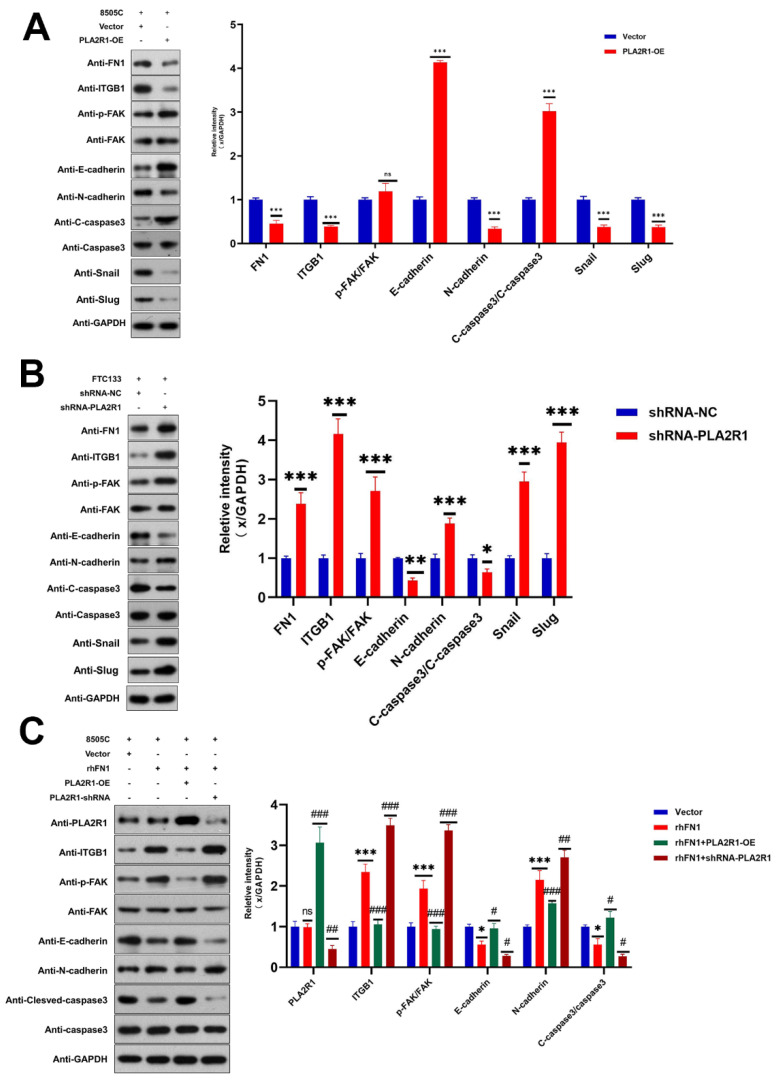
PLA2R1 is a novel gene that is aberrantly expressed in a variety of malignancies. However, the role and mechanism of PLA2R1 in thyroid cancer has not been elucidated. We aimed to uncover the underlying mechanism of PLA2R1 in thyroid cancer. We collected 115 clinical specimens, including 54 tumor tissues and 61 para-cancerous tissues, who underwent surgical treatment at Shanghai Tenth Hospital. Immunohistochemical staining was used to evaluate PLA2R1 expression in differentiated thyroid cancer (DTC) tissues. The thyroid cancer cell lines 8505c and FTC133 transfected with PLA2R1 overexpression or knockdown plasmids were used for CCK8 assays and a wound healing assay. Next, we conducted coimmunoprecipitation (Co-IP) experiments and western blotting to explore the underlying mechanism of PLA2R1 in regulating the growth of thyroid cancer. We discovered that the expression of PLA2R1 was lower in the tumor tissues than in para-cancerous tissues (χ = 37.0, < 0.01). The overexpression of PLA2R1 significantly suppressed thyroid cancer cell proliferation and migration, and both of these effects were partially attenuated by the knockdown of PLA2R1. Furthermore, the in vivo growth of DTC could be alleviated by the knockdown of PLA2R1. The mechanistic study revealed that PLA2R1 competed with FN1 for binding to ITGB1, inhibiting the FAK axis and epithelial-mesenchymal transition (EMT). We speculate that PLA2R1 might be a promising marker and a novel therapeutic target for thyroid cancer.
PLA2R1是一种在多种恶性肿瘤中异常表达的新基因。然而,PLA2R1在甲状腺癌中的作用和机制尚未阐明。我们旨在揭示PLA2R1在甲状腺癌中的潜在机制。我们收集了115份临床标本,包括54份肿瘤组织和61份癌旁组织,这些标本均来自于在上海第十人民医院接受手术治疗的患者。采用免疫组织化学染色法评估PLA2R1在分化型甲状腺癌(DTC)组织中的表达。将转染了PLA2R1过表达或敲低质粒的甲状腺癌细胞系8505c和FTC133用于CCK8检测和伤口愈合检测。接下来,我们进行了免疫共沉淀(Co-IP)实验和蛋白质印迹分析,以探究PLA2R1调控甲状腺癌生长的潜在机制。我们发现,PLA2R1在肿瘤组织中的表达低于癌旁组织(χ = 37.0,< 0.01)。PLA2R1的过表达显著抑制了甲状腺癌细胞的增殖和迁移,而PLA2R1的敲低则部分减弱了这两种作用。此外,PLA2R1的敲低可减轻DTC在体内的生长。机制研究表明,PLA2R1与FN1竞争结合ITGB1,抑制FAK轴和上皮-间质转化(EMT)。我们推测,PLA2R1可能是一种有前景的甲状腺癌标志物和新型治疗靶点。