Dan L Duncan Comprehensive Cancer Center, Baylor College of Medicine, Houston, TX, USA; Dept. of Molecular and Cellular Biology, Baylor College of Medicine, Houston, TX, USA; Center for Precision Environmental Health, Baylor College of Medicine, Houston, TX, USA.
Division of Neonatology, Department of Pediatrics, Baylor College of Medicine and Texas Children's Hospital, Houston, TX, USA.
Redox Biol. 2023 Aug;64:102790. doi: 10.1016/j.redox.2023.102790. Epub 2023 Jun 16.
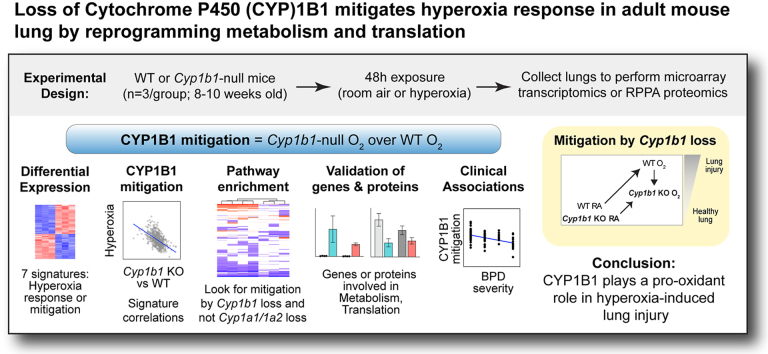
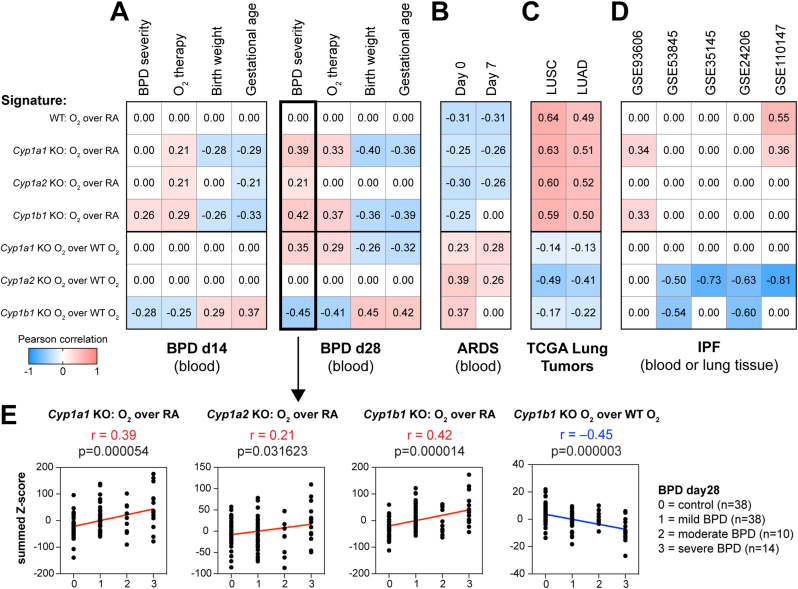
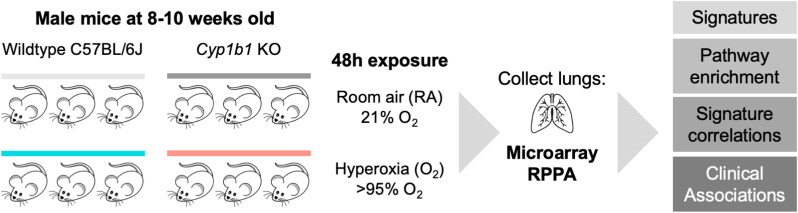
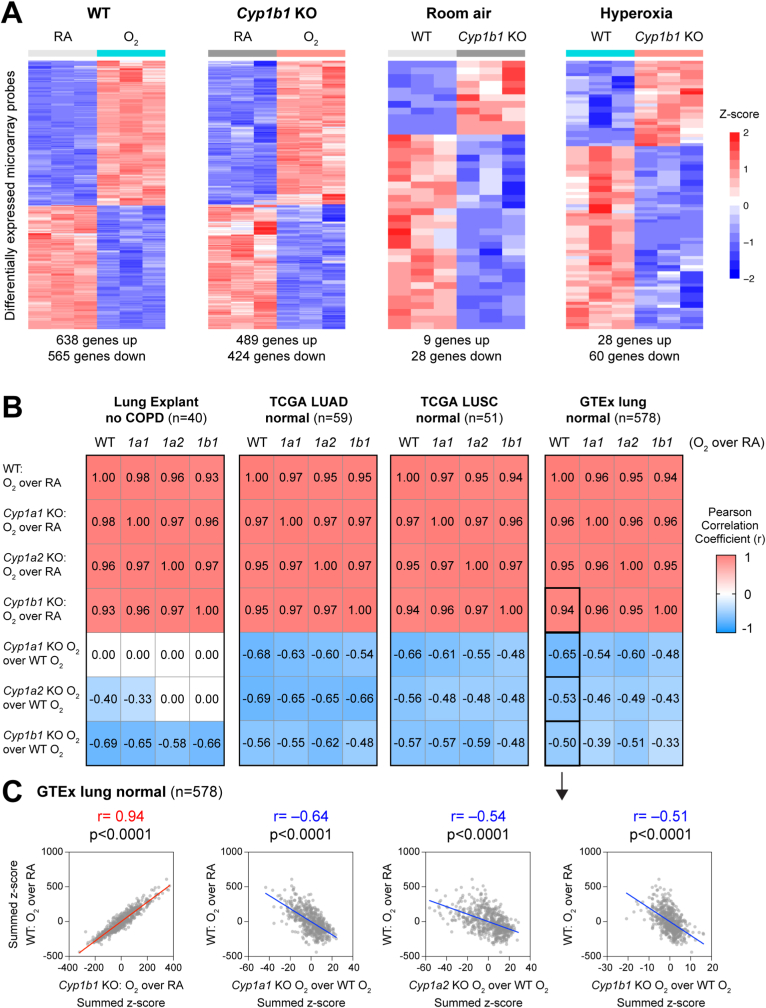
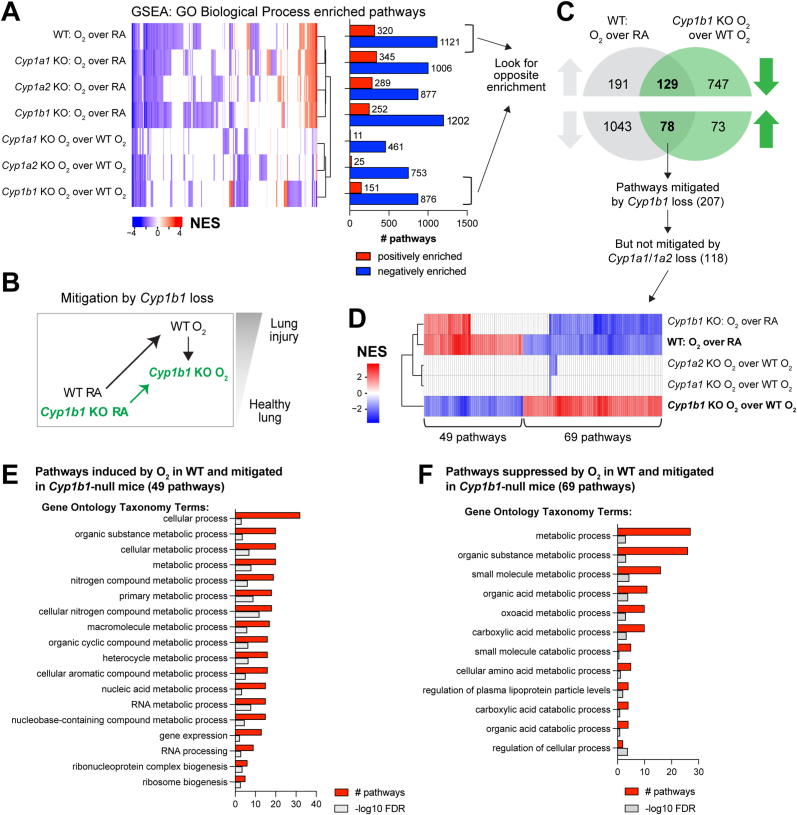
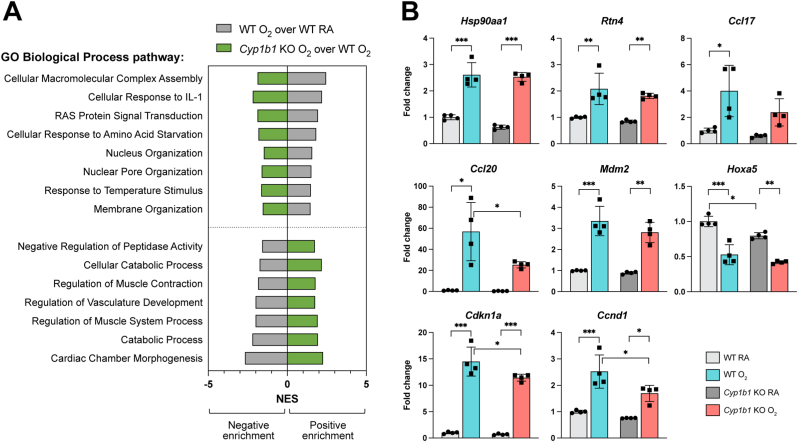
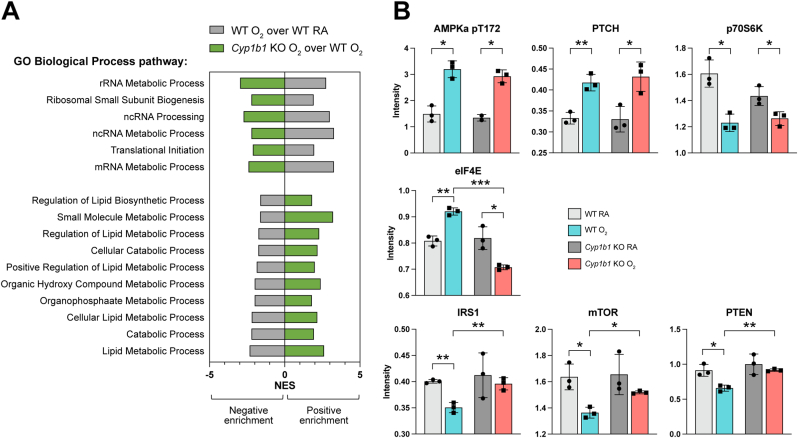
Oxygen supplementation is life saving for premature infants and for COVID-19 patients but can induce long-term pulmonary injury by triggering inflammation, with xenobiotic-metabolizing CYP enzymes playing a critical role. Murine studies showed that CYP1B1 enhances, while CYP1A1 and CYP1A2 protect from, hyperoxic lung injury. In this study we tested the hypothesis that Cyp1b1-null mice would revert hyperoxia-induced transcriptomic changes observed in WT mice at the transcript and pathway level. Wild type (WT) C57BL/6J and Cyp1b1-null mice aged 8-10 weeks were maintained in room air (21% O) or exposed to hyperoxia (>95% O) for 48h. Transcriptomic profiling was conducted using the Illumina microarray platform. Hyperoxia exposure led to robust changes in gene expression and in the same direction in WT, Cyp1a1-, Cyp1a2-, and Cyp1b1-null mice, but to different extents for each mouse genotype. At the transcriptome level, all Cyp1-null murine models reversed hyperoxia effects. Gene Set Enrichment Analysis identified 118 hyperoxia-affected pathways mitigated only in Cyp1b1-null mice, including lipid, glutamate, and amino acid metabolism. Cell cycle genes Cdkn1a and Ccnd1 were induced by hyperoxia in both WT and Cyp1b1-null mice but mitigated in Cyp1b1-null O compared to WT O mice. Hyperoxia gene signatures associated positively with bronchopulmonary dysplasia (BPD), which occurs in premature infants (with supplemental oxygen being one of the risk factors), but only in the Cyp1b1-null mice did the gene profile after hyperoxia exposure show a partial rescue of BPD-associated transcriptome. Our study suggests that CYP1B1 plays a pro-oxidant role in hyperoxia-induced lung injury.
氧疗对早产儿和 COVID-19 患者是救命的,但通过引发炎症,可导致长期的肺损伤,而异生素代谢 CYP 酶在此过程中起着关键作用。鼠类研究表明 CYP1B1 增强、而 CYP1A1 和 CYP1A2 则保护机体免受高氧性肺损伤。在这项研究中,我们检验了以下假设,即 Cyp1b1 敲除小鼠会逆转 WT 小鼠在转录和通路水平上观察到的高氧诱导的转录组变化。8-10 周龄的野生型(WT)C57BL/6J 和 Cyp1b1 敲除小鼠在常氧(21%O)或高氧(>95%O)下维持 48 小时。使用 Illumina 微阵列平台进行转录组谱分析。高氧暴露导致 WT、Cyp1a1-、Cyp1a2-和 Cyp1b1 敲除小鼠的基因表达发生强烈变化,且方向相同,但每种小鼠基因型的程度不同。在转录组水平上,所有 Cyp1 敲除鼠模型均逆转了高氧的影响。基因集富集分析确定了 118 个受高氧影响的通路,这些通路仅在 Cyp1b1 敲除小鼠中得到缓解,包括脂质、谷氨酸和氨基酸代谢。细胞周期基因 Cdkn1a 和 Ccnd1 在 WT 和 Cyp1b1 敲除小鼠中均被高氧诱导,但在 Cyp1b1 敲除 O 小鼠中与 WT O 小鼠相比则得到缓解。高氧基因特征与支气管肺发育不良(BPD)呈正相关,BPD 发生在早产儿中(氧疗是其中一个危险因素),但只有 Cyp1b1 敲除小鼠在高氧暴露后的基因谱显示出与 BPD 相关的转录组部分恢复。我们的研究表明 CYP1B1 在高氧诱导的肺损伤中发挥促氧化剂作用。