Division of Cell-Free Life Science, Proteo-Science Center, Ehime University, 3 Bunkyo-Cho, Matsuyama, Ehime, 790-8577, Japan.
Division of Malaria Research, Proteo-Science Center, 3 Bunkyo-Cho, Matsuyama, Ehime, 790-8577, Japan.
Sci Rep. 2023 Jun 23;13(1):10243. doi: 10.1038/s41598-023-36858-y.
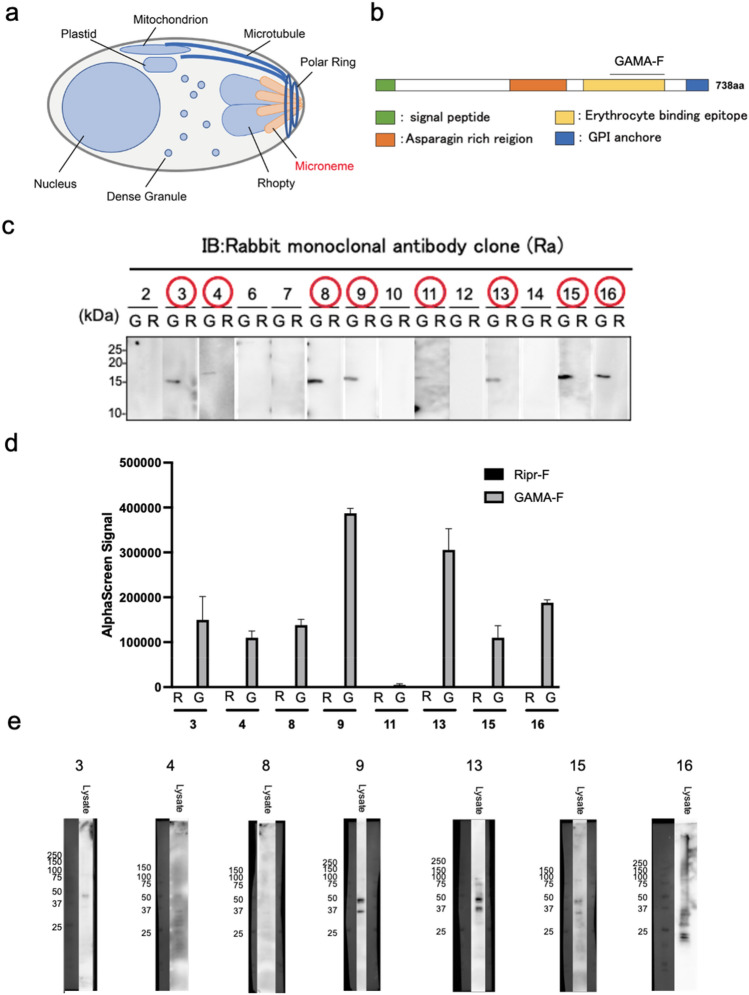
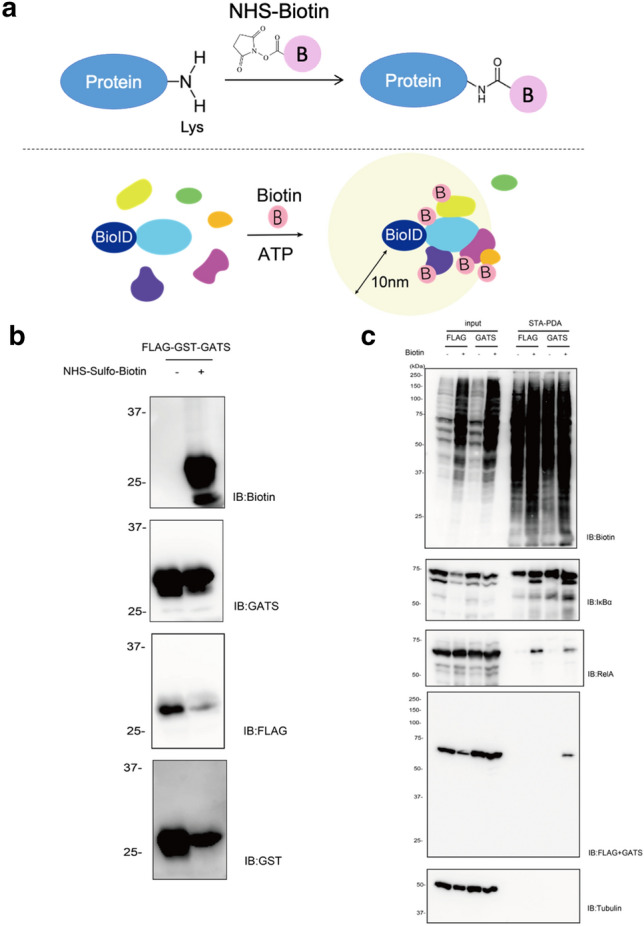
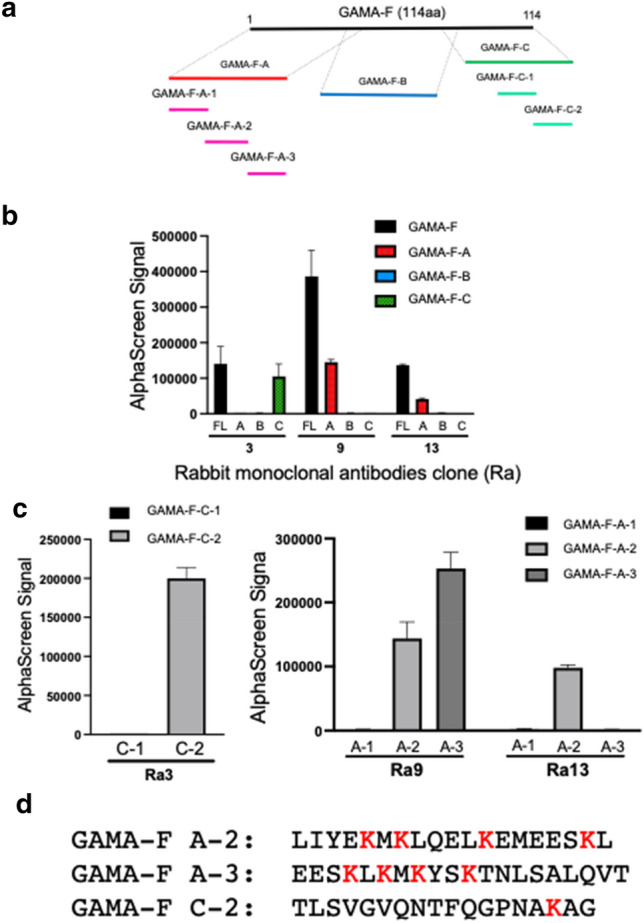
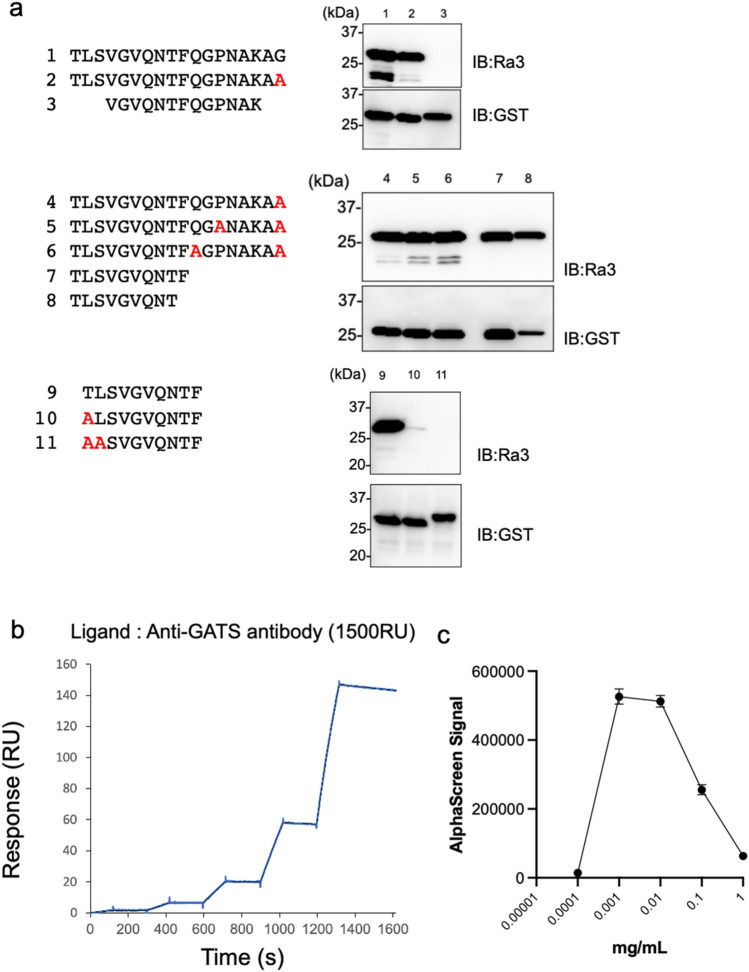
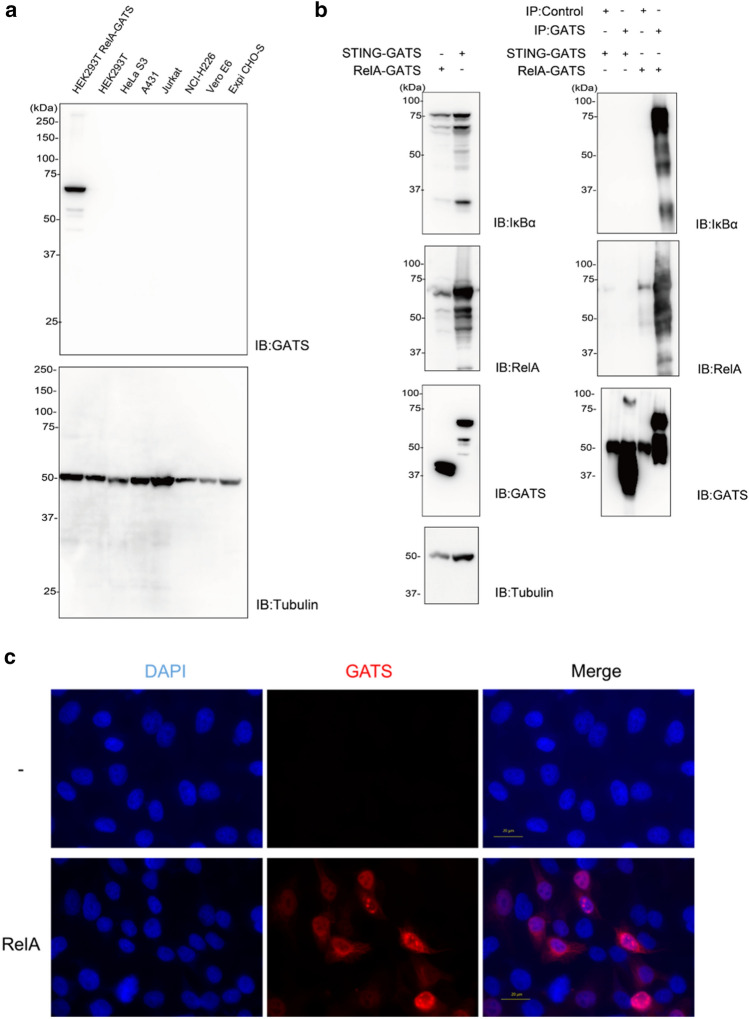
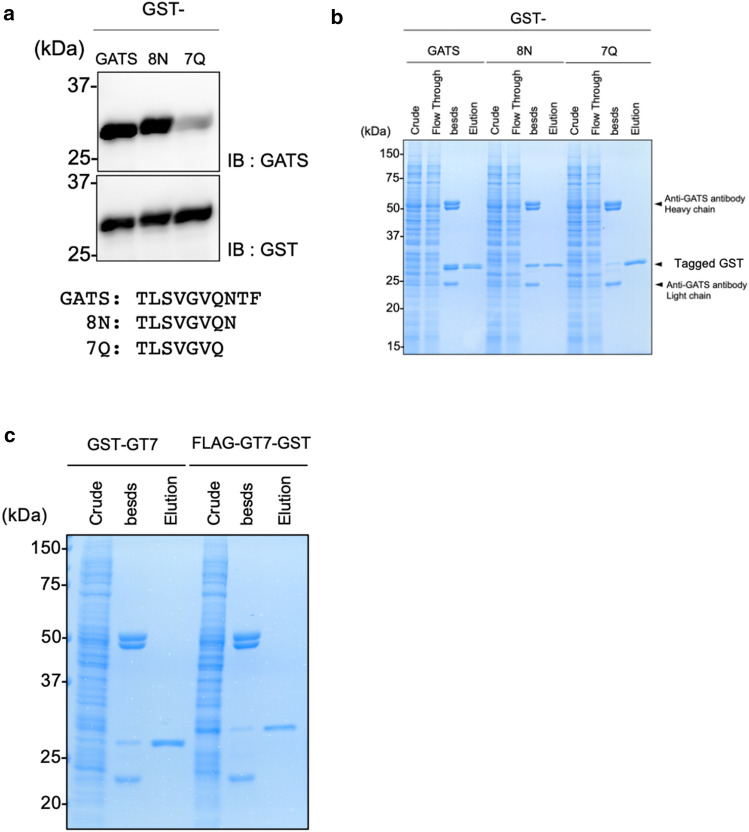
Polypeptide tags and biotin labelling technologies are widely used for protein analyses in biochemistry and cell biology. However, many peptide tag epitopes contain lysine residues (or amino acids) that are masked after biotinylation. Here, we propose the GATS tag system without a lysine residue and with high sensitivity and low non-specific binding using a rabbit monoclonal antibody against Plasmodium falciparum glycosylphosphatidylinositol (GPI)-anchored micronemal antigen (PfGAMA). From 14 monoclonal clones, an Ra3 clone was selected as it recognized an epitope-TLSVGVQNTF-without a lysine residue; this antibody and epitope tag set was called the GATS tag system. Surface plasmon resonance analysis showed that the tag system had a high affinity of 8.71 × 10 M. GATS tag indicated a very low background with remarkably high sensitivity and specificity in immunoblotting using the lysates of mammalian cells. It also showed a high sensitivity for immunoprecipitation and immunostaining of cultured human cells. The tag system was highly sensitive in both biotin labelling methods for proteins using NHS-Sulfo-biotin and BioID (proximity-dependent biotin identification) in the human cells, as opposed to a commercially available tag system having lysine residues, which showed reduced sensitivity. These results showed that the GATS tag system is suitable for methods such as BioID involving labelling lysine residues.
多肽标签和生物素标记技术广泛应用于生物化学和细胞生物学中的蛋白质分析。然而,许多肽标签表位含有赖氨酸残基(或氨基酸),在生物素化后会被掩盖。在这里,我们提出了一种不含赖氨酸残基的 GATS 标签系统,该系统使用针对疟原虫糖基磷脂酰肌醇(GPI)锚定微线抗原(PfGAMA)的兔单克隆抗体具有高灵敏度和低非特异性结合。从 14 个单克隆克隆中,选择了 Ra3 克隆,因为它识别不含赖氨酸残基的表位-TLSVGVQNTF-;该抗体和表位标签集称为 GATS 标签系统。表面等离子体共振分析表明,该标签系统具有 8.71×10 M 的高亲和力。GATS 标签在使用哺乳动物细胞裂解物进行免疫印迹时具有非常低的背景、极高的灵敏度和特异性。它在培养的人类细胞的免疫沉淀和免疫染色中也显示出很高的灵敏度。与含有赖氨酸残基的商业标签系统相比,该标签系统在 NHS-Sulfo-biotin 和 BioID(邻近依赖性生物素鉴定)等用于蛋白质的生物素标记方法中具有很高的灵敏度。这些结果表明,GATS 标签系统适用于涉及标记赖氨酸残基的方法,如 BioID。