Division of Diabetes, Endocrinology and Metabolism, Department of Medicine, Vanderbilt University Medical Center, Nashville, TN, USA.
Division of Diabetes, Endocrinology and Metabolism, Department of Medicine, Vanderbilt University Medical Center, Nashville, TN, USA; Vanderbilt University Center for Structural Biology, Nashville, TN, USA; Program in Precision Medicine, Vanderbilt University School of Medicine, Nashville, TN, USA.
J Lipid Res. 2023 Aug;64(8):100406. doi: 10.1016/j.jlr.2023.100406. Epub 2023 Jun 24.
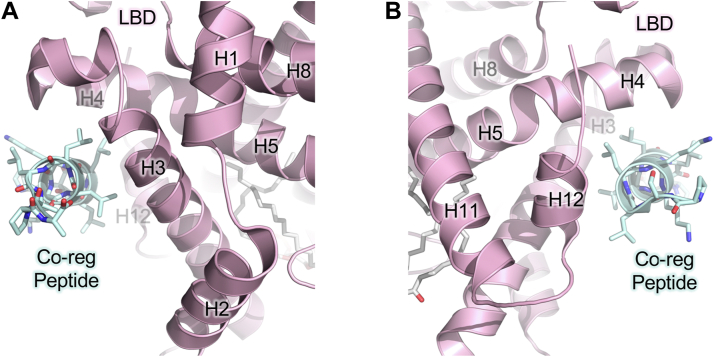
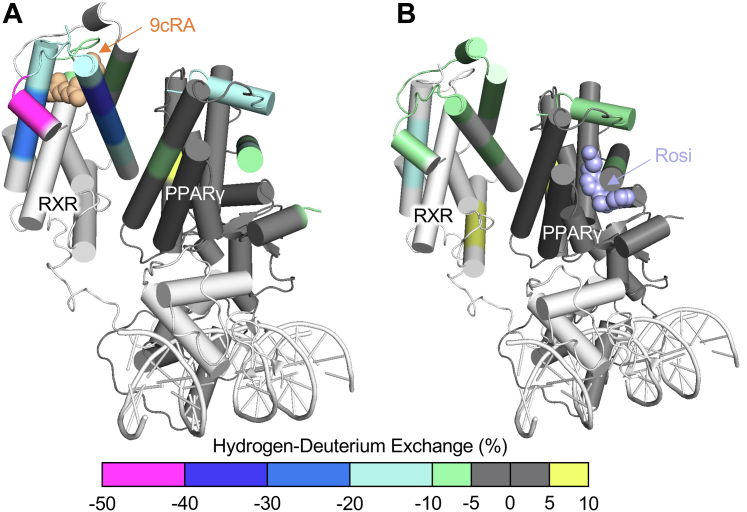
Nuclear receptors are a superfamily of transcription factors regulated by a wide range of lipids that include phospholipids, fatty acids, heme-based metabolites, and cholesterol-based steroids. Encoded as classic two-domain modular transcription factors, nuclear receptors possess a DNA-binding domain (DBD) and a lipid ligand-binding domain (LBD) containing a transcriptional activation function. Decades of structural studies on the isolated LBDs of nuclear receptors established that lipid-ligand binding allosterically regulates the conformation of the LBD, regulating transcriptional coregulator recruitment and thus nuclear receptor function. These structural studies have aided the development of several FDA-approved drugs, highlighting the importance of understanding the structure-function relationships between lipids and nuclear receptors. However, there are few published descriptions of full-length nuclear receptor structure and even fewer descriptions of how lipids might allosterically regulate full-length structure. Here, we examine multidomain interactions based on the published full-length nuclear receptor structures, evaluating the potential of interdomain interfaces within these nuclear receptors to act as inducible sites of allosteric regulation by lipids.
核受体是一类受多种脂质调控的转录因子超家族,这些脂质包括磷脂、脂肪酸、血红素代谢物和胆固醇类甾体。核受体作为经典的双域模块化转录因子,具有 DNA 结合域(DBD)和包含转录激活功能的脂质配体结合域(LBD)。数十年来,对核受体分离的 LBD 的结构研究确立了脂质配体结合通过变构调节 LBD 的构象,调节转录共激活因子的募集,从而调节核受体功能。这些结构研究有助于开发几种获得 FDA 批准的药物,突出了理解脂质与核受体之间的结构-功能关系的重要性。然而,关于全长核受体结构的描述很少,关于脂质如何变构调节全长结构的描述就更少了。在这里,我们根据已发表的全长核受体结构检查多域相互作用,评估这些核受体中域间界面作为脂质变构调节的诱导性位点的潜力。