Ghafurian Moojan, Ellard Colin, Dautenhahn Kerstin
Department of Electrical and Computer Engineering, University of Waterloo, Waterloo, ON, Canada.
Department of Psychology, University of Waterloo, Waterloo, ON, Canada.
Comput Hum Behav Rep. 2023 Jun 6:100300. doi: 10.1016/j.chbr.2023.100300.
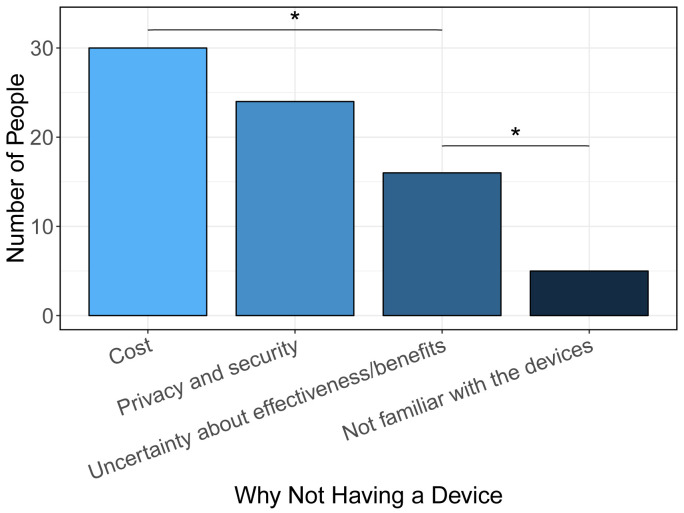
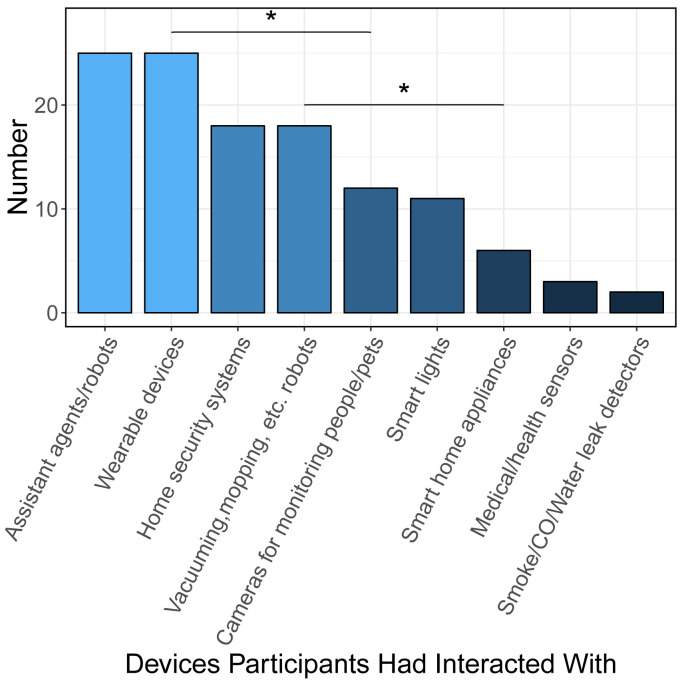
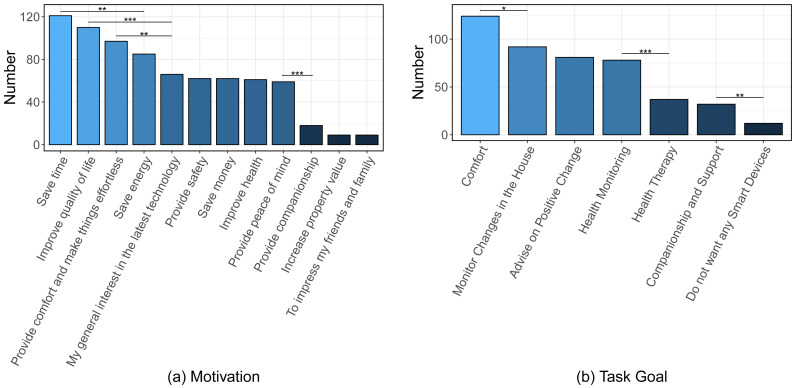
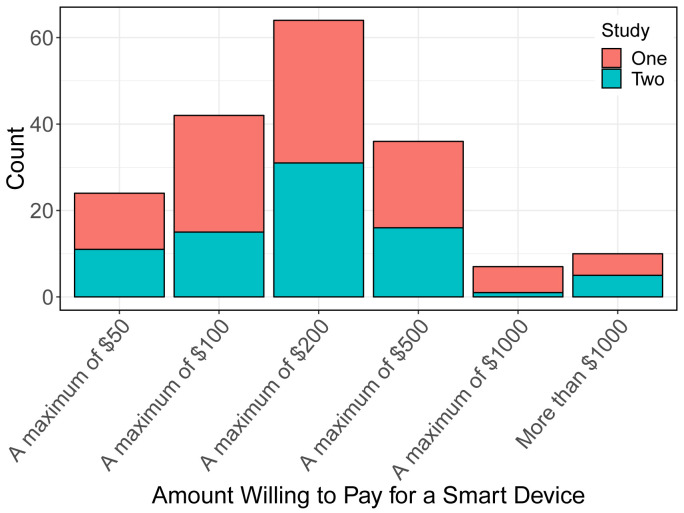
With the goal of designing smart environments that can support users' physical/mental well-being, we studied users' experiences and different factors that can influence success of smart home devices through an online study conducted during and after the COVID-19 restrictions in June 2021 (109 participants) and March 2022 (81 participants). We investigated what motivates users to buy smart home devices, and if smart home devices may have the potential to improve different aspects of users' well-being. As COVID-19 emphasized a situation where people spent a significant amount of time at home in Canada, we also asked if/how COVID-19 motivated purchase of smart-home devices and how these devices affected participants during the pandemic. Our results provide insights into different aspects that may motivate the purchase of smart home devices and users' concerns. The results also suggest that there may be correlations between the use of specific types of devices and psychological well-being.
为了设计能够支持用户身心健康的智能环境,我们通过在2021年6月(109名参与者)和2022年3月(81名参与者)新冠疫情限制期间及之后进行的一项在线研究,研究了用户的体验以及可能影响智能家居设备成功使用的不同因素。我们调查了促使用户购买智能家居设备的动机,以及智能家居设备是否有可能改善用户生活的不同方面。由于新冠疫情凸显了加拿大人在家中度过大量时间的情况,我们还询问了新冠疫情是否/如何促使人们购买智能家居设备,以及这些设备在疫情期间对参与者产生了怎样的影响。我们的研究结果为可能促使人们购买智能家居设备的不同方面以及用户的担忧提供了见解。结果还表明,特定类型设备的使用与心理健康之间可能存在关联。