Jiménez-Arias David, Morales-Sierra Sarai, Suárez Emma, Lozano-Juste Jorge, Coego Alberto, Estevez Juan C, Borges Andrés A, Rodriguez Pedro L
ISOPlexis, Center for Sustainable Agriculture and Food Technology, Madeira University, Madeira, Portugal.
Chemical Plant Defence Activators Group, Department of Life Science & Earth, Instituto de Productos Naturales y Agrobiología-CSIC, Avda Astrofísico Francisco Sánchez 3, Canary Islands, Spain.
Front Plant Sci. 2023 Jun 8;14:1191967. doi: 10.3389/fpls.2023.1191967. eCollection 2023.
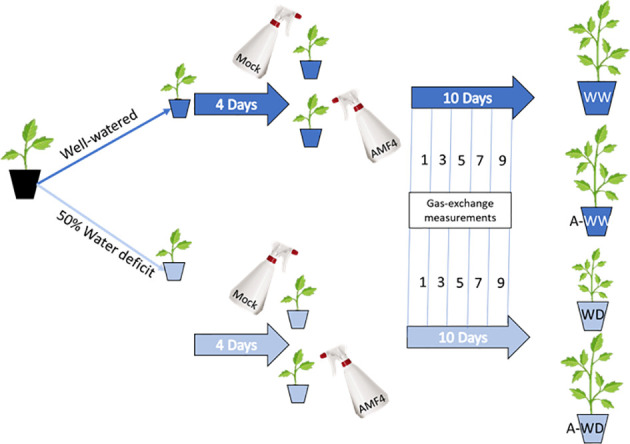
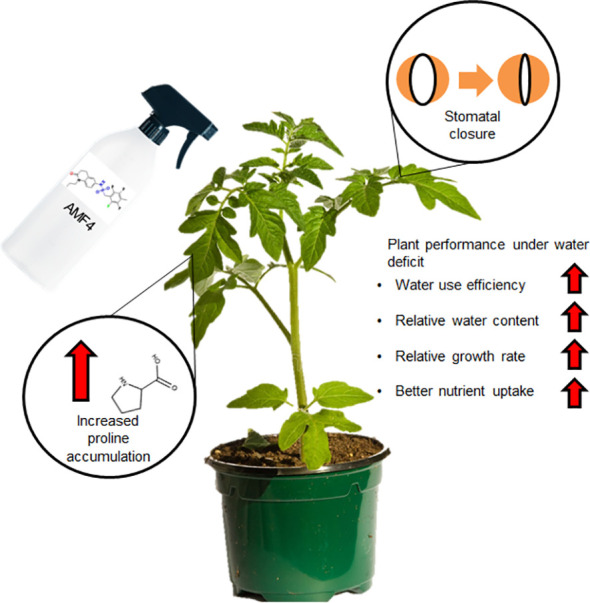
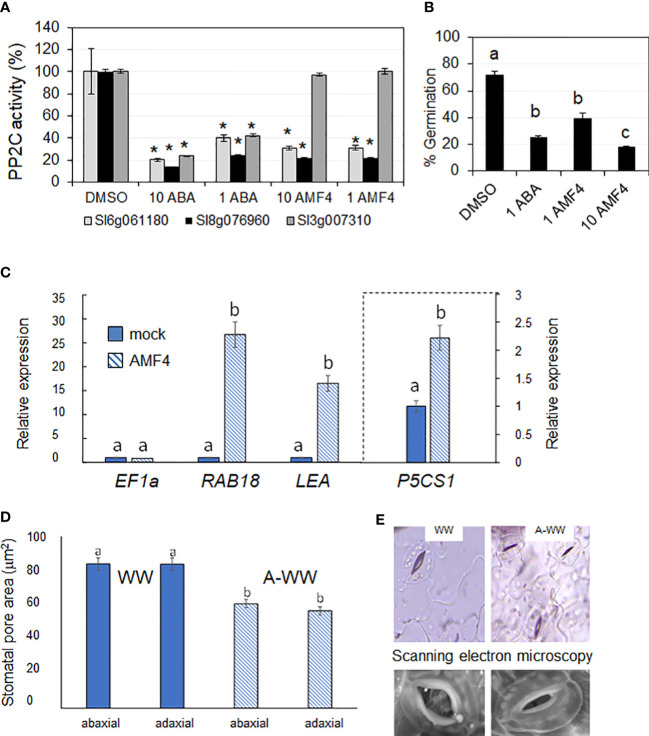
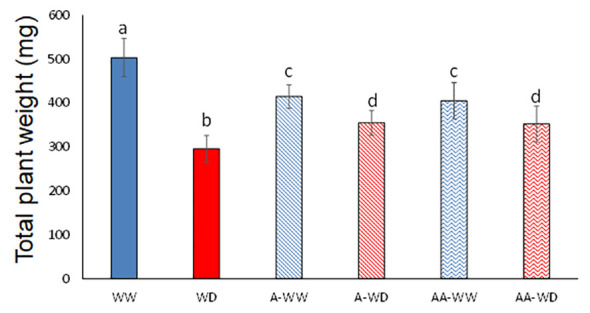
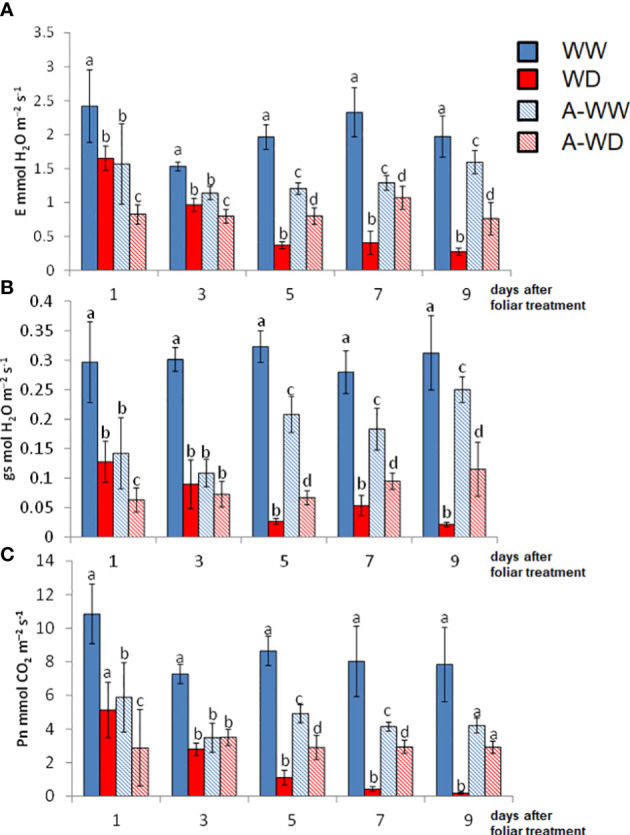
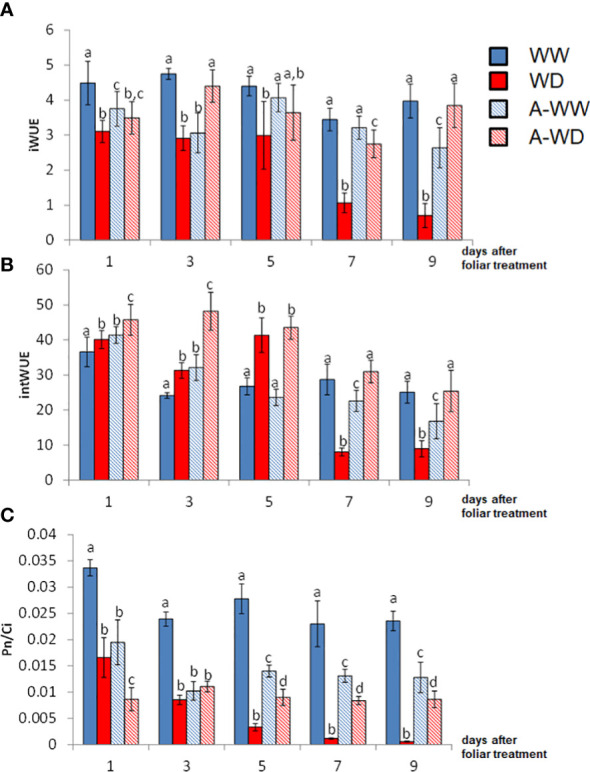
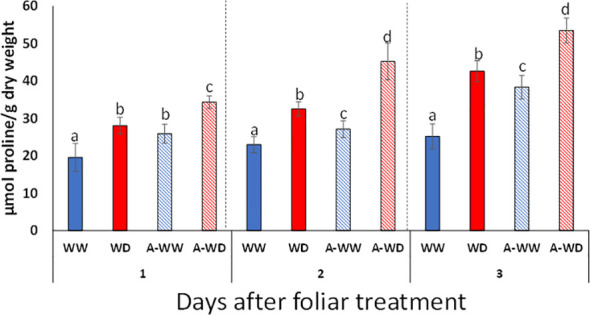
Water deficit represents a serious limitation for agriculture and both genetic and chemical approaches are being used to cope with this stress and maintain plant yield. Next-generation agrochemicals that control stomatal aperture are promising for controlling water use efficiency. For example, chemical control of abscisic acid (ABA) signaling through ABA-receptor agonists is a powerful method to activate plant adaptation to water deficit. Such agonists are molecules able to bind and activate ABA receptors and, although their development has experienced significant advances in the last decade, few translational studies have been performed in crops. Here, we describe protection by the ABA mimic-fluorine derivative 4 (AMF4) agonist of the vegetative growth in tomato plants subjected to water restriction. Photosynthesis in mock-treated plants is markedly impaired under water deficit conditions, whereas AMF4 treatment notably improves CO assimilation, the relative plant water content and growth. As expected for an antitranspirant molecule, AMF4 treatment diminishes stomatal conductance and transpiration in the first phase of the experiment; however, when photosynthesis declines in mock-treated plants as stress persists, higher photosynthetic and transpiration parameters are recorded in agonist-treated plants. Additionally, AMF4 increases proline levels over those achieved in mock-treated plants in response to water deficit. Thus water deficit and AMF4 cooperate to upregulate through both ABA-independent and ABA-dependent pathways, and therefore, higher proline levels are produced Finally, analysis of macronutrients reveals higher levels of Ca, K and Mg in AMF4- compared to mock-treated plants subjected to water deficit. Overall, these physiological analyses reveal a protective effect of AMF4 over photosynthesis under water deficit and enhanced water use efficiency after agonist treatment. In summary, AMF4 treatment is a promising approach for farmers to protect the vegetative growth of tomatoes under water deficit stress.
水分亏缺是农业生产的严重限制因素,目前人们正通过遗传和化学方法来应对这种胁迫并维持作物产量。能够控制气孔开度的新一代农用化学品有望提高水分利用效率。例如,通过脱落酸(ABA)受体激动剂对ABA信号进行化学调控是激活植物适应水分亏缺的有效方法。这类激动剂是能够结合并激活ABA受体的分子,尽管在过去十年中其研发取得了显著进展,但在作物上进行的转化研究却很少。在此,我们描述了ABA模拟物——氟衍生物4(AMF4)激动剂对水分受限的番茄植株营养生长的保护作用。在水分亏缺条件下, mock处理植株的光合作用明显受损,而AMF4处理显著提高了CO同化、相对植株含水量和生长量。正如抗蒸腾分子所预期的那样,在实验的第一阶段,AMF4处理降低了气孔导度和蒸腾作用;然而,随着胁迫持续,mock处理植株的光合作用下降,而激动剂处理植株的光合和蒸腾参数更高。此外,AMF4使脯氨酸水平高于mock处理植株在水分亏缺时的水平。因此,水分亏缺和AMF4通过ABA非依赖和ABA依赖途径协同上调,从而产生更高水平的脯氨酸。最后,大量营养素分析表明,与水分亏缺的mock处理植株相比,AMF4处理植株中的Ca、K和Mg含量更高。总体而言,这些生理分析揭示了AMF4在水分亏缺条件下对光合作用的保护作用以及激动剂处理后水分利用效率的提高。总之,AMF4处理是农民在水分亏缺胁迫下保护番茄营养生长的一种有前景的方法。