Instituto de Biología Molecular y Celular de Plantas, Consejo Superior de Investigaciones Cientificas-Universidad Politecnica de Valencia, ES-46022 Valencia, Spain.
Departamento de Cristalografía y Biología Estructural, Instituto de Química Física 'Rocasolano', CSIC, Serrano 119, E-28006 Madrid, Spain.
J Exp Bot. 2014 Aug;65(15):4451-64. doi: 10.1093/jxb/eru219. Epub 2014 May 26.
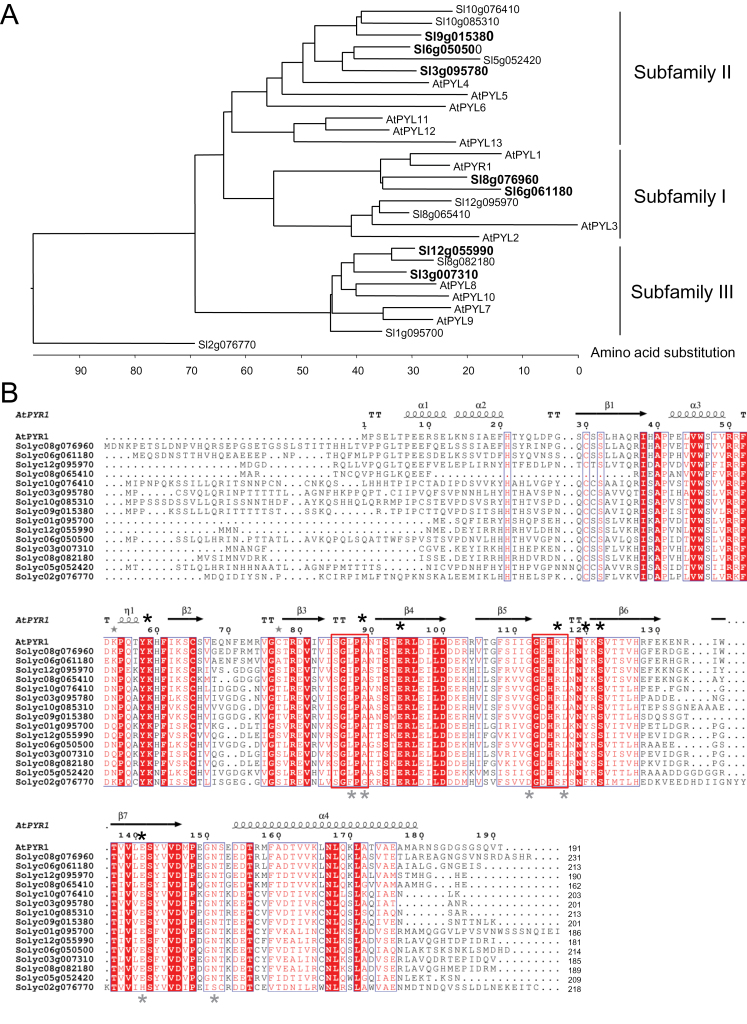
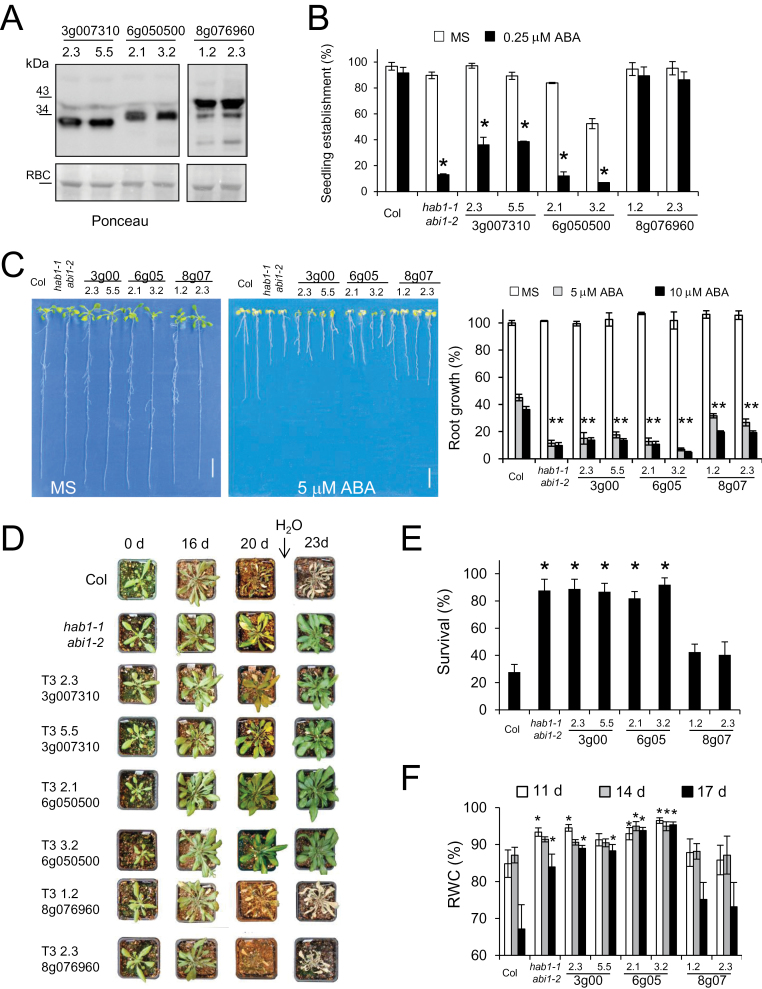
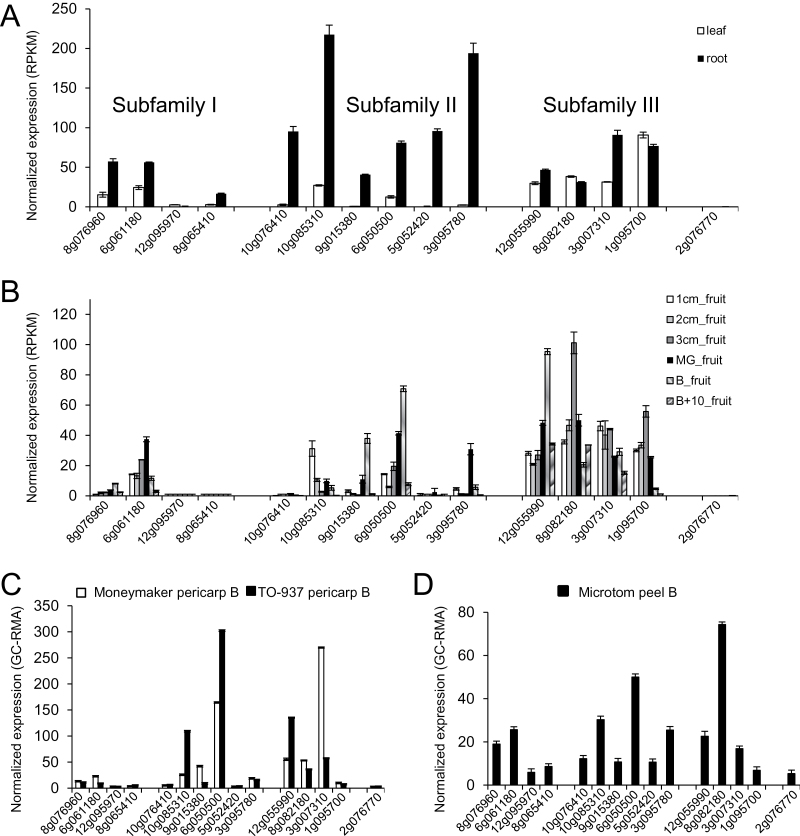
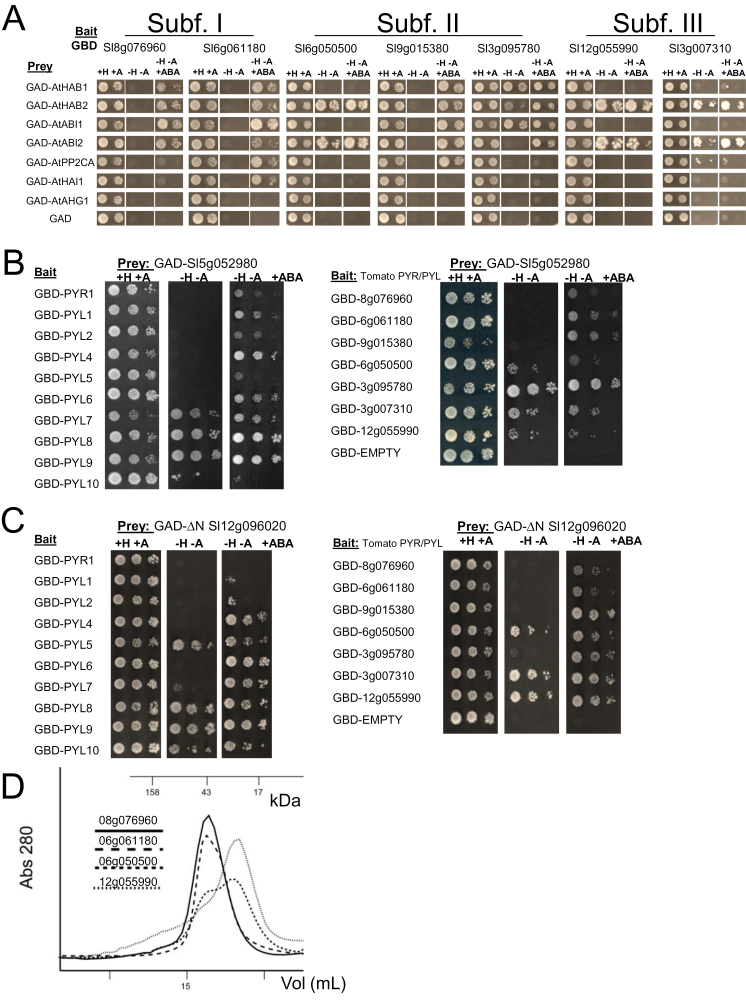
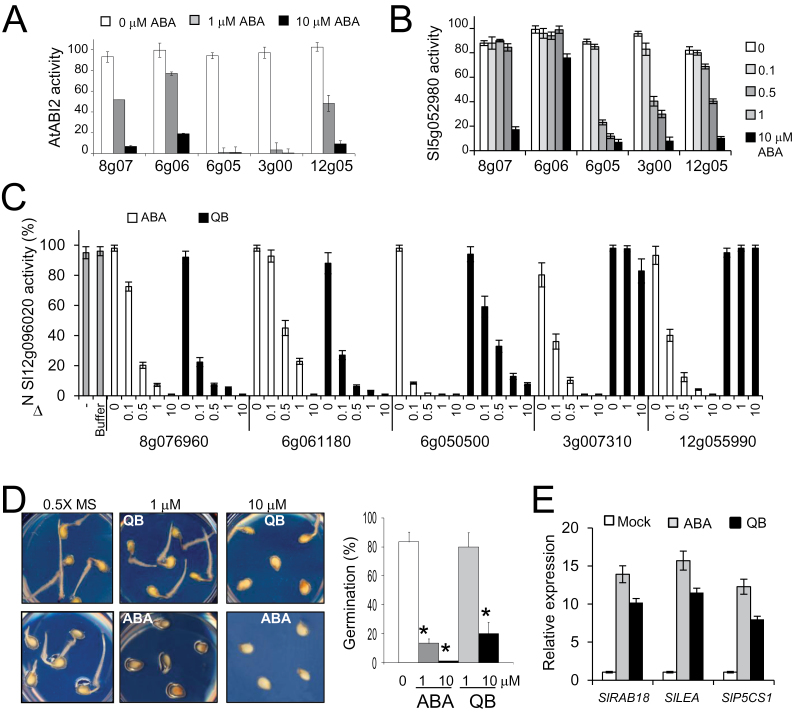
Abscisic acid (ABA) plays a crucial role in the plant's response to both biotic and abiotic stress. Sustainable production of food faces several key challenges, particularly the generation of new varieties with improved water use efficiency and drought tolerance. Different studies have shown the potential applications of Arabidopsis PYR/PYL/RCAR ABA receptors to enhance plant drought resistance. Consequently the functional characterization of orthologous genes in crops holds promise for agriculture. The full set of tomato (Solanum lycopersicum) PYR/PYL/RCAR ABA receptors have been identified here. From the 15 putative tomato ABA receptors, 14 of them could be grouped in three subfamilies that correlated well with corresponding Arabidopsis subfamilies. High levels of expression of PYR/PYL/RCAR genes was found in tomato root, and some genes showed predominant expression in leaf and fruit tissues. Functional characterization of tomato receptors was performed through interaction assays with Arabidopsis and tomato clade A protein phosphatase type 2Cs (PP2Cs) as well as phosphatase inhibition studies. Tomato receptors were able to inhibit the activity of clade A PP2Cs differentially in an ABA-dependent manner, and at least three receptors were sensitive to the ABA agonist quinabactin, which inhibited tomato seed germination. Indeed, the chemical activation of ABA signalling induced by quinabactin was able to activate stress-responsive genes. Both dimeric and monomeric tomato receptors were functional in Arabidopsis plant cells, but only overexpression of monomeric-type receptors conferred enhanced drought resistance. In summary, gene expression analyses, and chemical and transgenic approaches revealed distinct properties of tomato PYR/PYL/RCAR ABA receptors that might have biotechnological implications.
脱落酸(ABA)在植物对生物和非生物胁迫的反应中起着至关重要的作用。粮食的可持续生产面临着几个关键挑战,特别是需要培育具有提高水分利用效率和耐旱性的新品种。不同的研究表明,拟南芥 PYR/PYL/RCAR ABA 受体在提高植物抗旱性方面具有潜在的应用。因此,对作物同源基因的功能表征有望为农业带来益处。本文鉴定了番茄(Solanum lycopersicum)的全套 PYR/PYL/RCAR ABA 受体。在 15 个推定的番茄 ABA 受体中,其中 14 个可以分为三个亚家族,与相应的拟南芥亚家族很好地相关。PYR/PYL/RCAR 基因在番茄根中表达水平较高,一些基因在叶和果实组织中表现出优势表达。通过与拟南芥和番茄 clade A 蛋白磷酸酶 2C(PP2C)的相互作用分析以及磷酸酶抑制研究对番茄受体进行了功能表征。番茄受体能够以 ABA 依赖的方式差异地抑制 clade A PP2C 的活性,至少有 3 个受体对 ABA 激动剂喹那巴嗪敏感,喹那巴嗪抑制番茄种子萌发。事实上,喹那巴嗪诱导的 ABA 信号的化学激活能够激活应激响应基因。二聚体和单体番茄受体在拟南芥植物细胞中均具有功能,但只有单体型受体的过表达赋予了增强的耐旱性。总之,基因表达分析、化学和转基因方法揭示了番茄 PYR/PYL/RCAR ABA 受体的独特特性,这可能具有生物技术意义。