White Makita, Canning Elizabeth A
Department of Psychology, Washington State University, Pullman, WA USA.
Soc Psychol Educ. 2023 May 26:1-22. doi: 10.1007/s11218-023-09794-y.
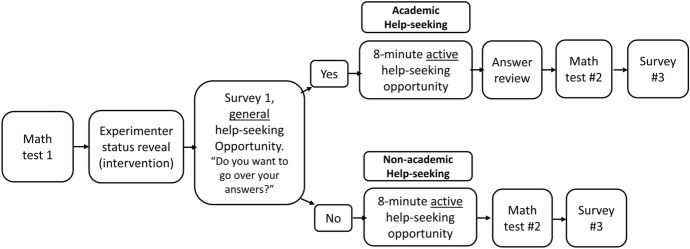
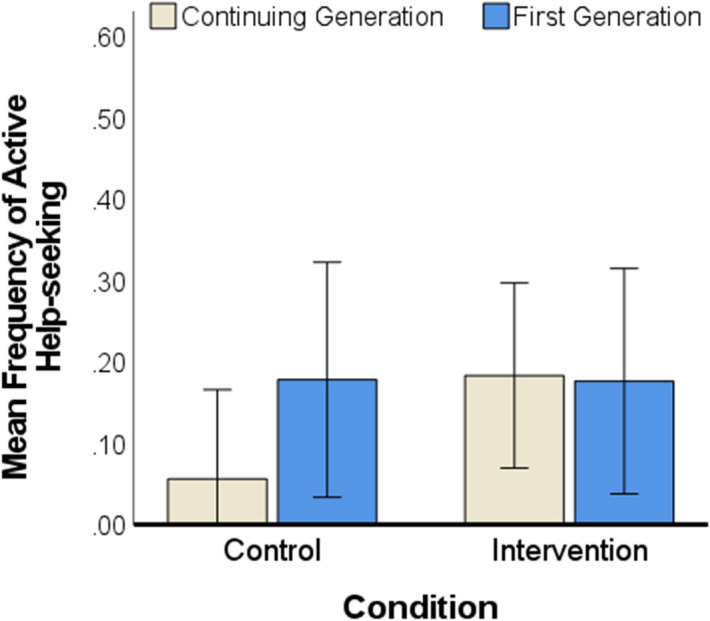
First-generation (FG) college students (students for whom neither parent earned a bachelor's degree) are typically less likely to interact with their instructors and communicate with them by email or in person, compared to continuing-generation (CG) students. Qualitative research suggests FG students are less likely to seek help when they need it, and when they do seek help they are more likely to engage in passive help-seeking (e.g., waiting quietly for assistance) as opposed to active help-seeking (e.g., promptly requesting assistance through multiple methods), compared to CG students. The current laboratory study provided students with an opportunity to seek academic and non-academic help and measured whether students engaged in active help-seeking behavior. We also tested whether having a shared identity with a help-provider could increase active help-seeking behavior among FG students. Results showed that FG students were less likely to seek academic help. Among FG and CG students who sought academic help, the intervention had no significant impact on active help-seeking. However, among students seeking non-academic help, active help-seeking behaviors were significantly higher for FG college students assigned a help-provider who signaled a FG identity. In other words, having a shared identity with a help-provider led to more active help-seeking among FG college students seeking non-academic assistance. FG faculty, staff, and student workers who provide non-academic assistance may want to consider self-identifying as FG to increase help-seeking behaviors among FG students struggling to navigate the college environment.
The online version contains supplementary material available at 10.1007/s11218-023-09794-y.
与连续代际(CG)学生相比,第一代(FG)大学生(父母双方均未获得学士学位的学生)通常不太可能与他们的教师互动,也不太可能通过电子邮件或亲自与教师交流。定性研究表明,与CG学生相比,FG学生在需要帮助时不太可能寻求帮助,而且当他们确实寻求帮助时,他们更有可能采取被动寻求帮助的方式(例如,安静地等待帮助),而不是主动寻求帮助的方式(例如,通过多种方式迅速请求帮助)。当前的实验室研究为学生提供了寻求学术和非学术帮助的机会,并测量了学生是否采取主动寻求帮助的行为。我们还测试了与帮助提供者有共同身份是否会增加FG学生的主动寻求帮助行为。结果表明,FG学生寻求学术帮助的可能性较小。在寻求学术帮助的FG和CG学生中,干预措施对主动寻求帮助没有显著影响。然而,在寻求非学术帮助的学生中,被分配了具有FG身份信号的帮助提供者的FG大学生的主动寻求帮助行为明显更高。换句话说,与帮助提供者有共同身份会导致寻求非学术帮助的FG大学生更积极地寻求帮助。提供非学术帮助的FG教师、工作人员和学生工作人员可能希望考虑自我认同为FG,以增加在努力适应大学环境的FG学生中的寻求帮助行为。
在线版本包含可在10.1007/s11218-023-09794-y获取的补充材料。