Department of Biology, School of Science, Indiana University - Purdue University Indianapolis, IN, United States.
Biochem Pharmacol. 2023 Aug;214:115668. doi: 10.1016/j.bcp.2023.115668. Epub 2023 Jun 25.
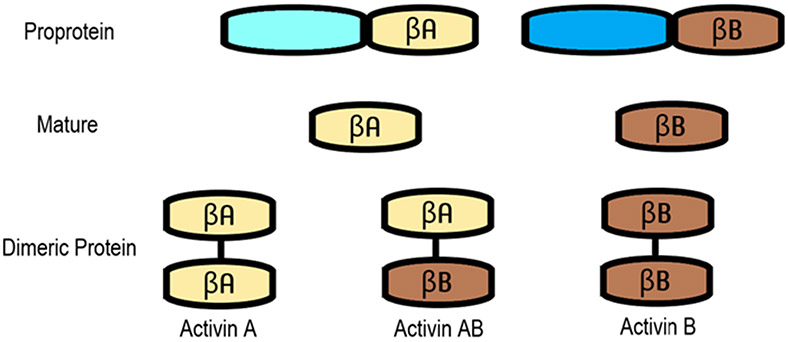
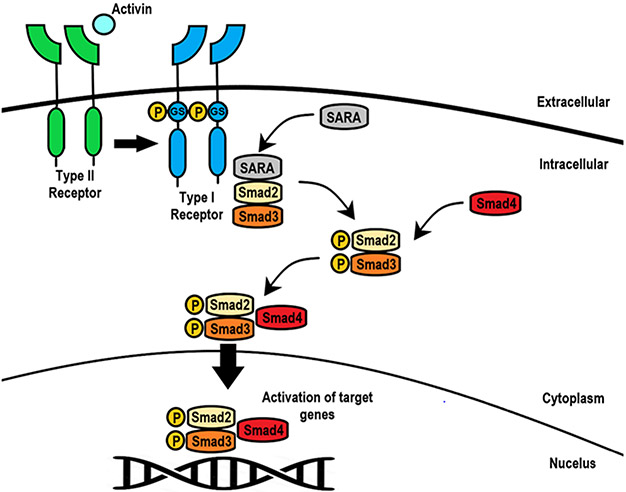
Activins are a subgroup of the TGFβ superfamily of growth and differentiation factors, dimeric in nature and consisting of two inhibin beta subunits linked via a disulfide bridge. Canonical activin signaling occurs through Smad2/3, with negative feedback initiated by Smad6/7 following signal transduction, which binds activin type I receptor preventing phosphorylation of Smad2/3 and activation of downstream signaling. In addition to Smad6/7, other inhibitors of activin signaling have been identified as well, including inhibins (dimers of an inhibin alpha and beta subunit), BAMBI, Cripto, follistatin, and follistatin-like 3 (fstl3). To date, activins A, B, AB, C, and E have been identified and isolated in mammals, with activin A and B having the most characterization of biological activity. Activin A has been implicated as a regulator of several important functions of liver biology, including hepatocyte proliferation and apoptosis, ECM production, and liver regeneration; the role of other subunits of activin in liver physiology are less understood. There is mounting data to suggest a link between dysregulation of activins contributing to various hepatic diseases such as inflammation, fibrosis, and hepatocellular carcinoma, and emerging studies demonstrating the protective and regenerative effects of inhibiting activins in mouse models of liver disease. Due to their importance in liver biology, activins demonstrate utility as a therapeutic target for the treatment of hepatic diseases such as cirrhosis, NASH, NAFLD, and HCC; further research regarding activins may provide diagnostic or therapeutic opportunity for those suffering from various liver diseases.
激活素是转化生长因子β(TGFβ)超家族生长和分化因子的亚群,二聚体,由两个通过二硫键连接的抑制素β亚基组成。经典的激活素信号通过 Smad2/3 发生,信号转导后通过 Smad6/7 启动负反馈,Smad6/7 结合激活素 I 型受体,阻止 Smad2/3 的磷酸化和下游信号的激活。除了 Smad6/7 之外,还鉴定出其他激活素信号抑制剂,包括抑制素(抑制素α和β亚基的二聚体)、BAMBI、Cripto、卵泡抑素和卵泡抑素样 3(fstl3)。迄今为止,已在哺乳动物中鉴定和分离出激活素 A、B、AB、C 和 E,其中激活素 A 和 B 具有最特征的生物学活性。激活素 A 被认为是肝脏生物学的几个重要功能的调节剂,包括肝细胞增殖和凋亡、细胞外基质(ECM)的产生和肝脏再生;激活素其他亚基在肝脏生理学中的作用知之甚少。越来越多的证据表明,激活素的失调与各种肝脏疾病(如炎症、纤维化和肝细胞癌)有关,而新兴的研究表明抑制激活素在肝脏疾病的小鼠模型中具有保护和再生作用。由于其在肝脏生物学中的重要性,激活素作为治疗肝脏疾病(如肝硬化、NASH、NAFLD 和 HCC)的治疗靶点具有一定的应用价值;对激活素的进一步研究可能为患有各种肝脏疾病的患者提供诊断或治疗机会。