Tiller Jane, Nowak Kristen, Boughtwood Tiffany, Otlowski Margaret
Australian Genomics, Parkville, VIC 3052, Australia.
Murdoch Children's Research Institute, Parkville, VIC 3052, Australia.
BioTech (Basel). 2023 Jun 2;12(2):45. doi: 10.3390/biotech12020045.
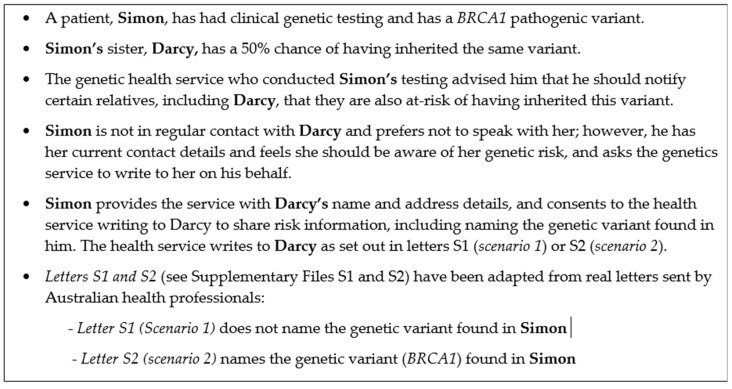
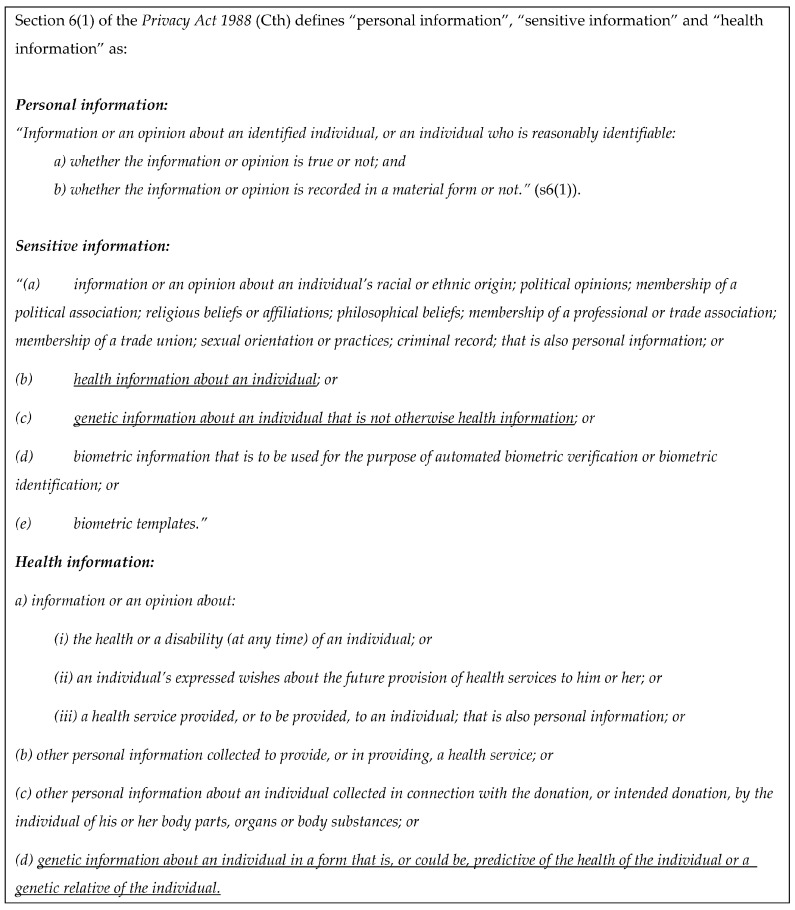
Genetic risk information has relevance for patients' blood relatives. However, cascade testing uptake in at-risk families is <50%. International research supports direct notification of at-risk relatives by health professionals (HPs), with patient consent. However, HPs express concerns about the privacy implications of this practice. Our privacy analysis, grounded in a clinically relevant hypothetical scenario, considers the types of personal information involved in direct notification of at-risk relatives and the application of Australian privacy regulations. It finds that collecting relatives' contact details, and using those details (with patient consent) to notify relatives of possible genetic risk, does not breach Australian privacy law, providing that HPs adhere to regulatory requirements. It finds the purported "right to know" does not prevent disclosure of genetic information to at-risk relatives. Finally, the analysis confirms that the discretion available to HPs does not equate to a positive duty to warn at-risk relatives. Thus, direct notification of a patient's at-risk relatives regarding medically actionable genetic information, with patient consent, is not a breach of Australian privacy regulations, providing it is conducted in accordance with the applicable principles set out. Clinical services should consider offering this service to patients where appropriate. National guidelines would assist with the clarification of the discretion for HPs.
基因风险信息与患者的血亲相关。然而,高危家庭中进行级联检测的比例不到50%。国际研究支持在患者同意的情况下,由医疗专业人员(HPs)直接通知高危亲属。然而,医疗专业人员对这种做法的隐私影响表示担忧。我们基于一个具有临床相关性的假设情景进行的隐私分析,考虑了直接通知高危亲属所涉及的个人信息类型以及澳大利亚隐私法规的适用情况。研究发现,收集亲属的联系方式,并在患者同意的情况下使用这些信息通知亲属可能存在的基因风险,并不违反澳大利亚隐私法,前提是医疗专业人员遵守监管要求。研究发现,所谓的“知情权”并不妨碍向高危亲属披露基因信息。最后,分析证实,医疗专业人员的自由裁量权并不等同于有积极义务警告高危亲属。因此,在患者同意的情况下,直接通知患者的高危亲属有关具有医学可操作性的基因信息,只要按照规定的适用原则进行,就不违反澳大利亚隐私法规。临床服务机构应考虑在适当情况下为患者提供这项服务。国家指南将有助于明确医疗专业人员的自由裁量权范围。