
一种由肌电信号驱动并由在线神经网络控制的3D打印仿生手。
A 3D Printed, Bionic Hand Powered by EMG Signals and Controlled by an Online Neural Network.
作者信息
Avilés-Mendoza Karla, Gaibor-León Neil George, Asanza Víctor, Lorente-Leyva Leandro L, Peluffo-Ordóñez Diego H
机构信息
Neuroimaging and Bioengineering Laboratory (LNB), Facultad de Ingeniería en Mecánica y Ciencias de la Producción, Escuela Superior Politécnica del Litoral (ESPOL), Campus Gustavo Galindo km 30.5 Vía Perimetral, Guayaquil 090903, Ecuador.
SDAS Research Group, Ben Guerir 43150, Morocco.
出版信息
Biomimetics (Basel). 2023 Jun 14;8(2):255. doi: 10.3390/biomimetics8020255.
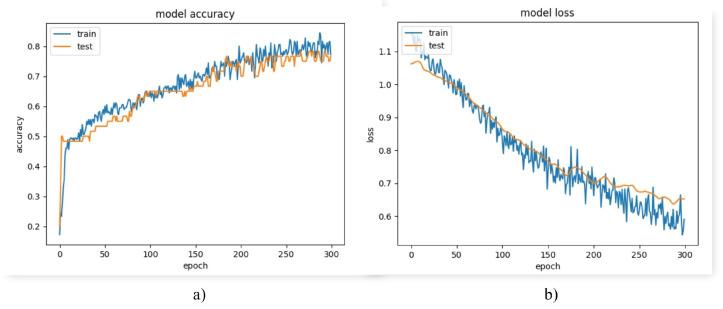
About 8% of the Ecuadorian population suffers some type of amputation of upper or lower limbs. Due to the high cost of a prosthesis and the fact that the salary of an average worker in the country reached 248 USD in August 2021, they experience a great labor disadvantage and only 17% of them are employed. Thanks to advances in 3D printing and the accessibility of bioelectric sensors, it is now possible to create economically accessible proposals. This work proposes the design of a hand prosthesis that uses electromyography (EMG) signals and neural networks for real-time control. The integrated system has a mechanical and electronic design, and the latter integrates artificial intelligence for control. To train the algorithm, an experimental methodology was developed to record muscle activity in upper extremities associated with specific tasks, using three EMG surface sensors. These data were used to train a five-layer neural network. the trained model was compressed and exported using TensorflowLite. The prosthesis consisted of a gripper and a pivot base, which were designed in Fusion 360 considering the movement restrictions and the maximum loads. It was actuated in real time thanks to the design of an electronic circuit that used an ESP32 development board, which was responsible for recording, processing and classifying the EMG signals associated with a motor intention, and to actuate the hand prosthesis. As a result of this work, a database with 60 electromyographic activity records from three tasks was released. The classification algorithm was able to detect the three muscle tasks with an accuracy of 78.67% and a response time of 80 ms. Finally, the 3D printed prosthesis was able to support a weight of 500 g with a safety factor equal to 15.
约8%的厄瓜多尔人口患有某种类型的上肢或下肢截肢。由于假肢成本高昂,且该国普通工人2021年8月的工资仅为248美元,他们在劳动力方面处于极大劣势,其中只有17%的人就业。得益于3D打印技术的进步和生物电传感器的普及,现在有可能提出经济上可承受的方案。这项工作提出了一种使用肌电图(EMG)信号和神经网络进行实时控制的手部假肢设计。该集成系统具有机械和电子设计,后者集成了人工智能用于控制。为了训练算法,开发了一种实验方法,使用三个EMG表面传感器记录与特定任务相关的上肢肌肉活动。这些数据被用于训练一个五层神经网络。训练好的模型使用TensorflowLite进行压缩和导出。假肢由一个抓手和一个枢轴底座组成,在Fusion 360中设计时考虑了运动限制和最大负载。由于设计了一个使用ESP32开发板的电子电路,假肢能够实时驱动,该开发板负责记录、处理和分类与运动意图相关的EMG信号,并驱动手部假肢。这项工作的成果是发布了一个包含来自三项任务的60条肌电活动记录的数据库。分类算法能够以78.67%的准确率和80毫秒的响应时间检测出这三项肌肉任务。最后,3D打印的假肢能够承受500克的重量,安全系数为15。










 Zotero 插件