Arrotti Salvatore, Sgura Fabio Alfredo, Monopoli Daniel Enrique, Siena Valerio, Leo Giulio, Morgante Vernizia, Cataldo Paolo, Magnavacchi Paolo, Gabbieri Davide, Guiducci Vincenzo, Benatti Giorgio, Vignali Luigi, Boriani Giuseppe, Rossi Rosario
Cardiology Division, Department of Biomedical, Metabolic and Neural Sciences, University of Modena and Reggio Emilia, Policlinico di Modena, 41124 Modena, Italy.
Cardiology Division, Baggiovara Hospital, 41100 Modena, Italy.
J Cardiovasc Dev Dis. 2023 May 24;10(6):228. doi: 10.3390/jcdd10060228.
Transcatheter aortic valve implantation (TAVI) has developed as an alternative to surgery for symptomatic high-risk patients with aortic stenosis (AS). An important complication of TAVI is acute kidney injury. The purpose of the study was to investigate if the Mehran Score (MS) could be used to predict acute kidney injury (AKI) in TAVI patients.
This is a multicenter, retrospective, observational study including 1180 patients with severe AS. The MS comprised eight clinical and procedural variables: hypotension, congestive heart failure class, glomerular filtration rate, diabetes, age >75 years, anemia, need for intra-aortic balloon pump, and contrast agent volume use. We assessed the sensitivity and specificity of the MS in predicting AKI following TAVI, as well as the predictive value of MS with each AKI-related characteristic.
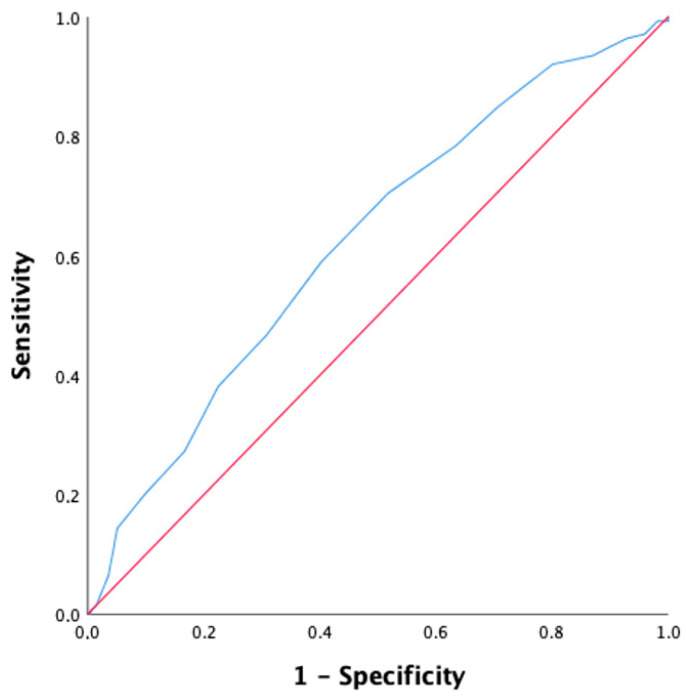
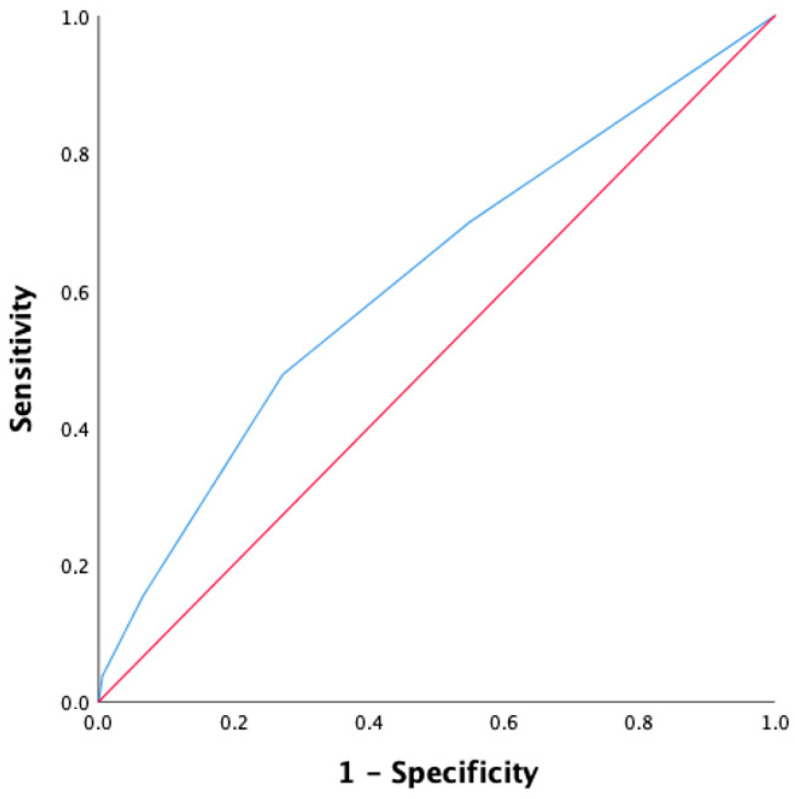
Patients were categorized into four risk groups based on MS: low (≤5), moderate (6-10), high (11-15), and very high (≥16). Post-procedural AKI was observed in 139 patients (11.8%). MS classes had a higher risk of AKI in the multivariate analysis (HR 1.38, 95% CI, 1.43-1.63, < 0.01). The best cutoff for MS to predict the onset of AKI was 13.0 (AUC, 0.62; 95% CI, 0.57-0.67), whereas the best cutoff for eGFR was 42.0 mL/min/1.73 m (AUC, 0.61; 95% CI, 0.56-0.67).
MS was shown to be a predictor of AKI development in TAVI patients.
经导管主动脉瓣植入术(TAVI)已发展成为有症状的高危主动脉瓣狭窄(AS)患者手术治疗的替代方法。TAVI的一个重要并发症是急性肾损伤。本研究的目的是调查梅兰评分(MS)是否可用于预测TAVI患者的急性肾损伤(AKI)。
这是一项多中心、回顾性、观察性研究,纳入了1180例重度AS患者。MS包括八个临床和手术变量:低血压、充血性心力衰竭分级、肾小球滤过率、糖尿病、年龄>75岁、贫血、是否需要主动脉内球囊泵以及造影剂用量。我们评估了MS在预测TAVI术后AKI方面的敏感性和特异性,以及MS对每个与AKI相关特征的预测价值。
根据MS将患者分为四个风险组:低风险(≤5分)、中度风险(6 - 10分)、高风险(11 - 15分)和极高风险(≥16分)。139例患者(11.8%)术后发生AKI。在多变量分析中,MS分级的患者发生AKI的风险更高(HR 1.38,95% CI,1.43 - 1.63,P < 0.01)。MS预测AKI发生的最佳截断值为13.0(AUC,0.62;95% CI,0.57 - 0.67),而估算肾小球滤过率(eGFR)的最佳截断值为42.0 mL/min/##m(AUC,0.61;95% CI,0.56 - 0.67)。
MS被证明是TAVI患者发生AKI的一个预测指标。