Yang Li, Ma Jiahui, Lei Pengyu, Yi Jia, Ma Yilei, Huang Zhongke, Wang Tingjue, Ping Haiyan, Ruan Danping, Sun Da, Pan Hongying
Sir Run Run Shaw Hospital, Zhejiang University, Hangzhou 310016, China.
Institute of Life Sciences & Biomedical Collaborative Innovation Center of Zhejiang Province, Wenzhou University, Wenzhou 325035, China.
Toxics. 2023 Jun 13;11(6):529. doi: 10.3390/toxics11060529.
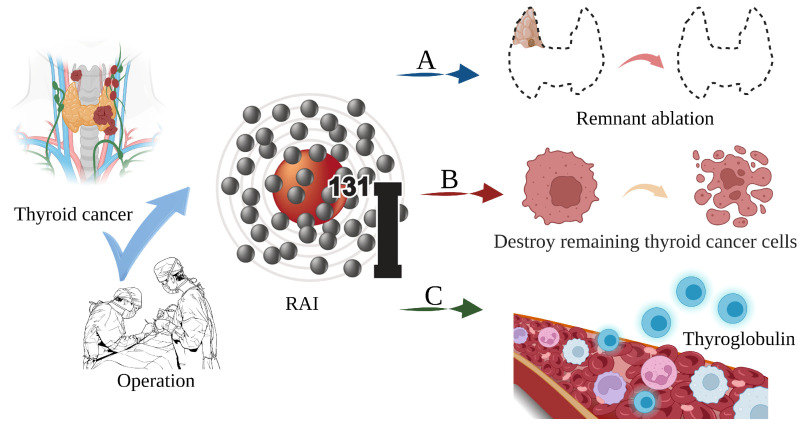
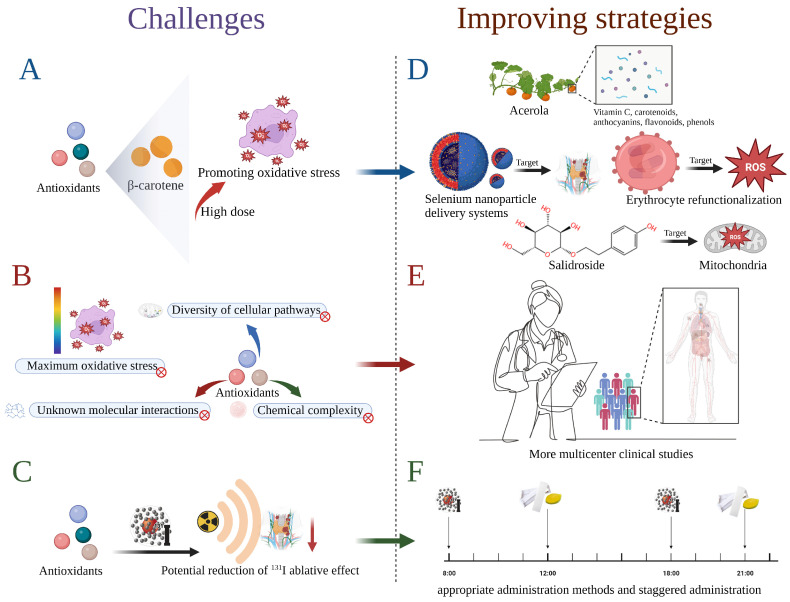
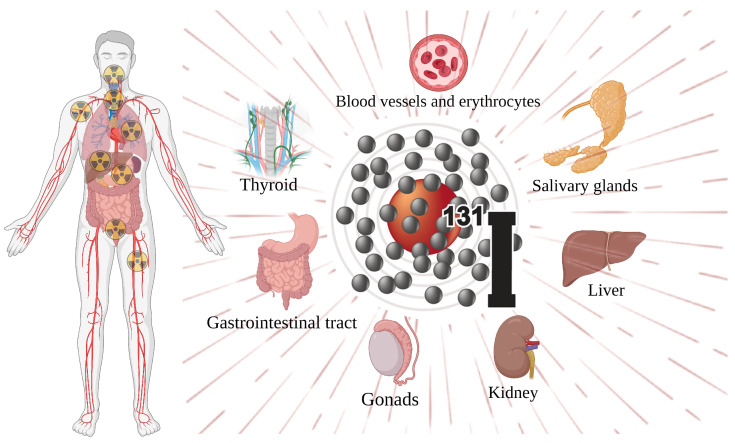
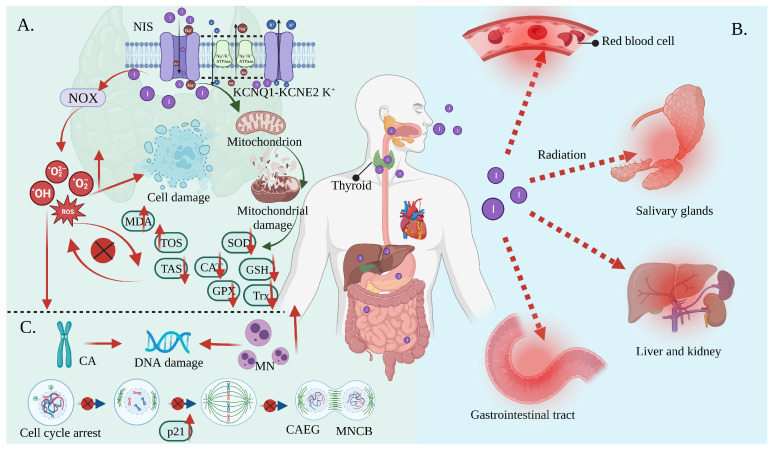
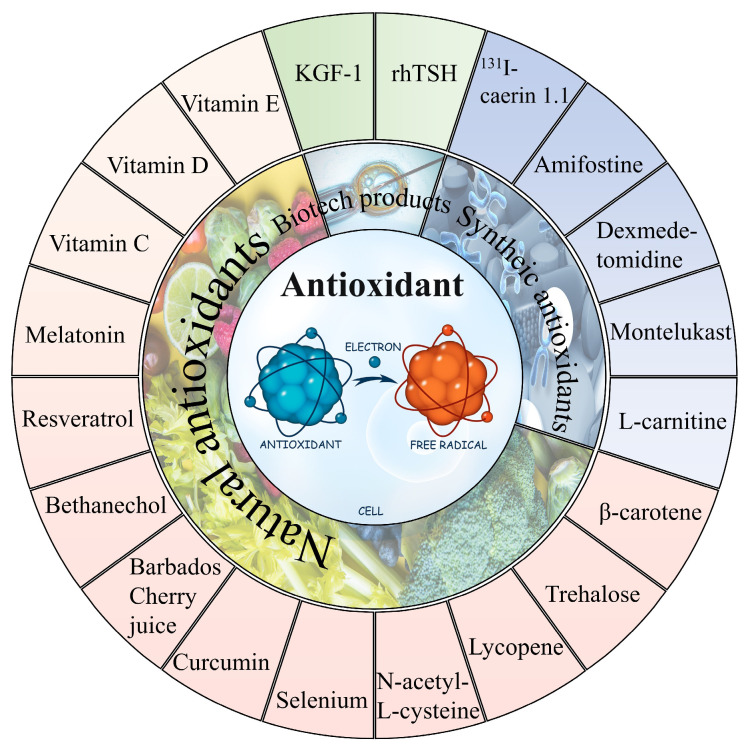
Thyroid cancer is the most common endocrine cancer, and its prevalence has been increasing for decades. Approx. 95% of differentiated thyroid carcinomas are treated using iodine (I), a radionuclide with a half-life of 8 days, to achieve optimal thyroid residual ablation following thyroidectomy. However, while I is highly enriched in eliminating thyroid tissue, it can also retain and damage other body parts (salivary glands, liver, etc.) without selectivity, and even trigger salivary gland dysfunction, secondary cancer, and other side effects. A significant amount of data suggests that the primary mechanism for these side effects is the excessive production of reactive oxygen species, causing a severe imbalance of oxidant/antioxidant in the cellular components, resulting in secondary DNA damage and abnormal vascular permeability. Antioxidants are substances that are capable of binding free radicals and reducing or preventing the oxidation of the substrate in a significant way. These compounds can help prevent damage caused by free radicals, which can attack lipids, protein amino acids, polyunsaturated fatty acids, and double bonds of DNA bases. Based on this, the rational utilization of the free radical scavenging function of antioxidants to maximize a reduction in I side effects is a promising medical strategy. This review provides an overview of the side effects of I, the mechanisms by which I causes oxidative stress-mediated damage, and the potential of natural and synthetic antioxidants in ameliorating the side effects of I. Finally, the disadvantages of the clinical application of antioxidants and their improving strategies are prospected. Clinicians and nursing staff can use this information to alleviate I side effects in the future, both effectively and reasonably.
甲状腺癌是最常见的内分泌癌,其发病率数十年来一直在上升。大约95%的分化型甲状腺癌在甲状腺切除术后使用碘(I)进行治疗,碘是一种半衰期为8天的放射性核素,以实现最佳的甲状腺残余消融。然而,虽然碘在消除甲状腺组织方面高度富集,但它也会无选择性地滞留并损害身体的其他部位(唾液腺、肝脏等),甚至引发唾液腺功能障碍、继发性癌症和其他副作用。大量数据表明,这些副作用的主要机制是活性氧的过度产生,导致细胞成分中氧化剂/抗氧化剂严重失衡,进而造成继发性DNA损伤和血管通透性异常。抗氧化剂是能够结合自由基并显著减少或防止底物氧化的物质。这些化合物有助于预防自由基造成的损伤,自由基会攻击脂质、蛋白质氨基酸、多不饱和脂肪酸以及DNA碱基的双键。基于此,合理利用抗氧化剂的自由基清除功能以最大程度减少碘的副作用是一种有前景的医学策略。本综述概述了碘的副作用、碘导致氧化应激介导损伤的机制,以及天然和合成抗氧化剂在减轻碘副作用方面的潜力。最后,展望了抗氧化剂临床应用的弊端及其改进策略。临床医生和护理人员可利用这些信息,在未来有效且合理地减轻碘的副作用。