Department of Microbiology and Cell Biology, Montana State University, Bozeman, MT 59717, USA.
O.V. Bogatsky Physico-Chemical Institute, National Academy of Sciences of Ukraine, 65080 Odesa, Ukraine.
Molecules. 2023 Jun 16;28(12):4806. doi: 10.3390/molecules28124806.
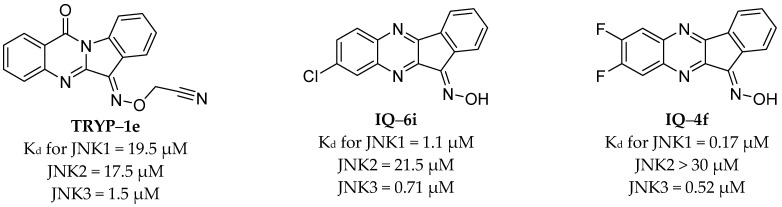
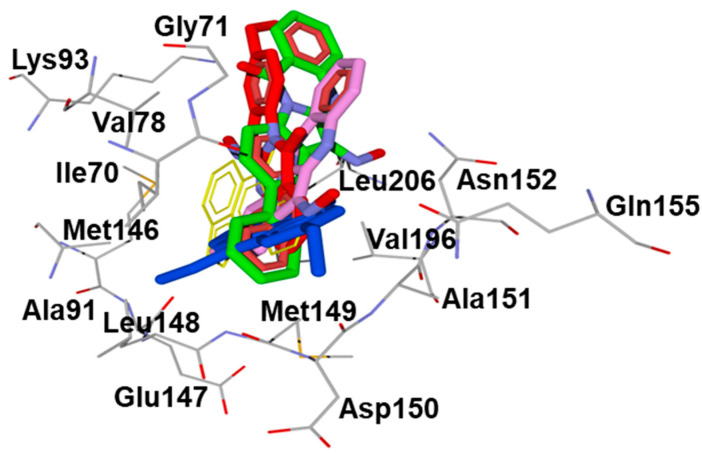
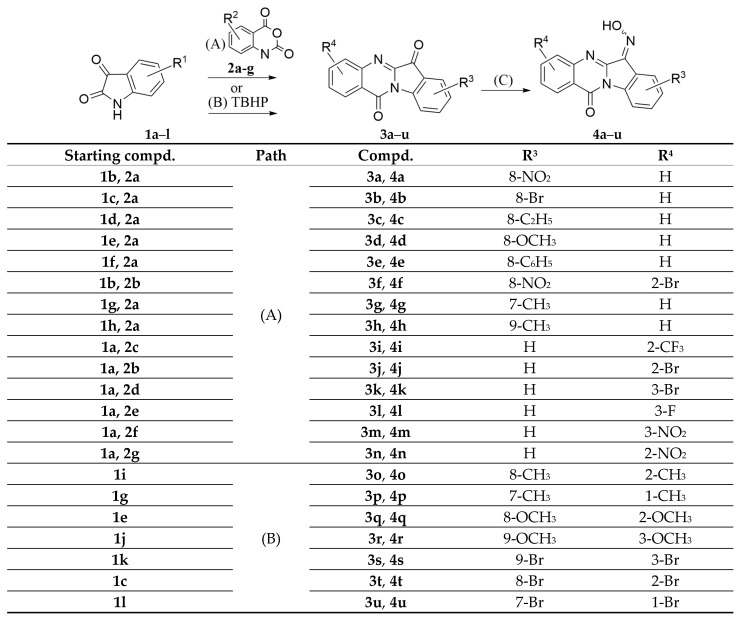
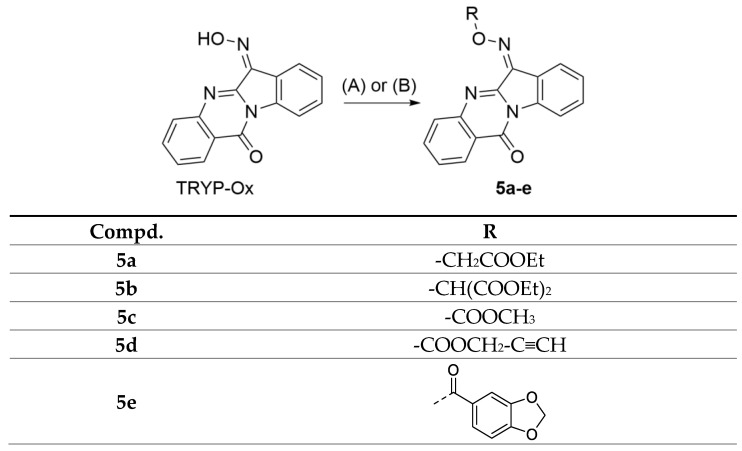
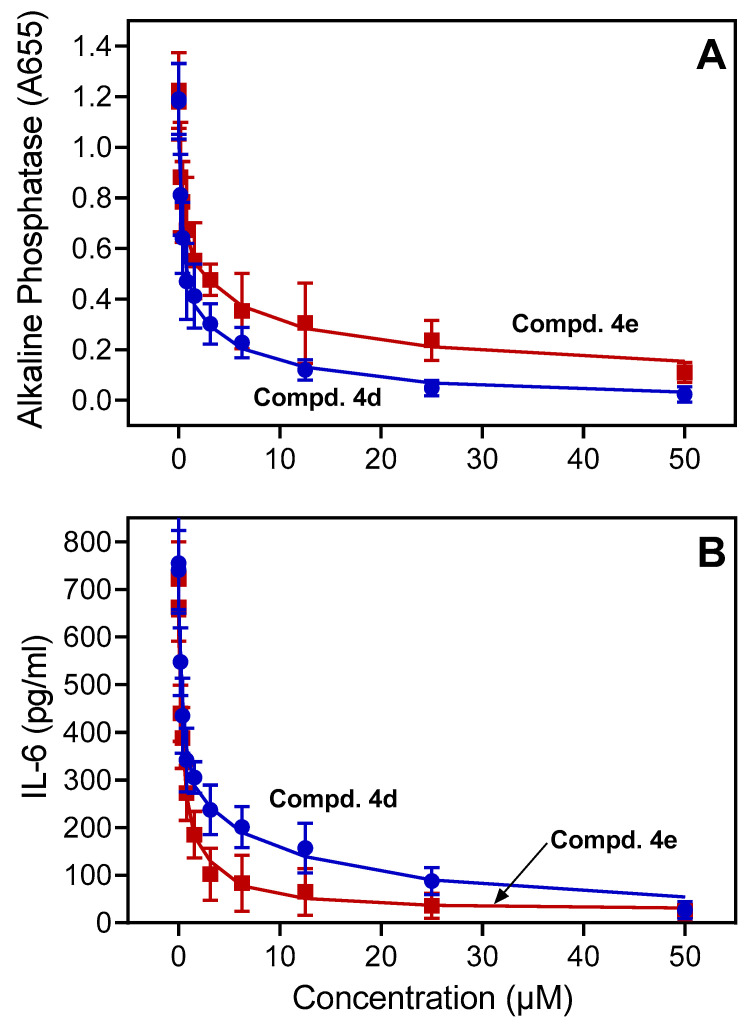
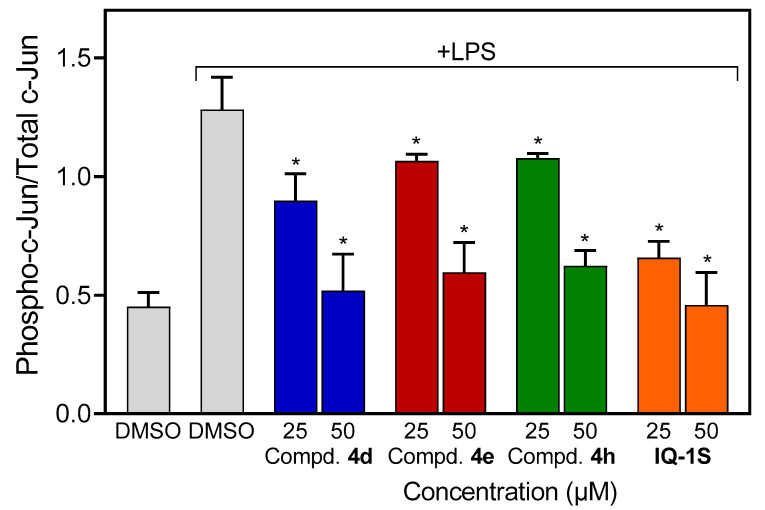
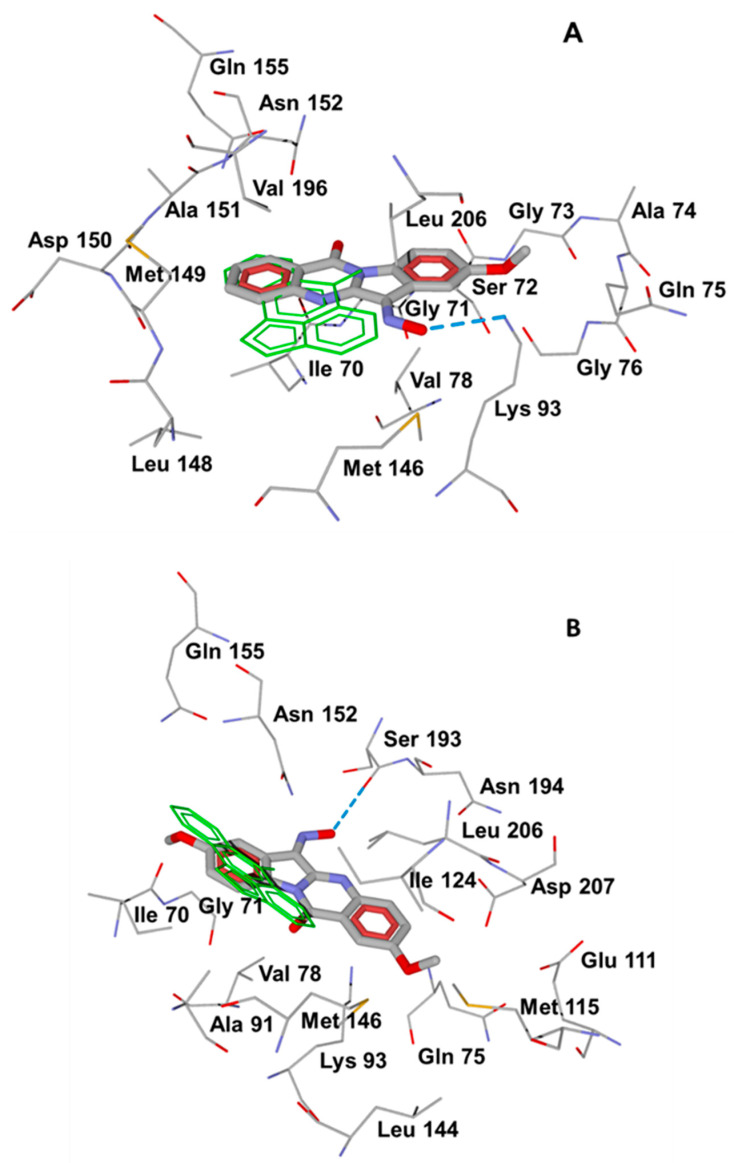
The -Jun N-terminal kinase (JNK) family includes three proteins (JNK1-3) that regulate many physiological processes, including cell proliferation and differentiation, cell survival, and inflammation. Because of emerging data suggesting that JNK3 may play an important role in neurodegenerative diseases, such as Alzheimer's disease (AD) and Parkinson's disease, as well as cancer pathogenesis, we sought to identify JNK inhibitors with increased selectivity for JNK3. A panel of 26 novel tryptanthrin-6-oxime analogs was synthesized and evaluated for JNK1-3 binding (K) and inhibition of cellular inflammatory responses. Compounds (8-methoxyindolo[2,1-]quinazolin-6,12-dione oxime) and (8-phenylindolo[2,1-]quinazolin-6,12-dione oxime) had high selectivity for JNK3 versus JNK1 and JNK2 and inhibited lipopolysaccharide (LPS)-induced nuclear factor-κB/activating protein 1 (NF-κB/AP-1) transcriptional activity in THP-1Blue cells and interleukin-6 (IL-6) production by MonoMac-6 monocytic cells in the low micromolar range. Likewise, compounds , , and pan-JNK inhibitor (9-methylindolo[2,1-]quinazolin-6,12-dione oxime) decreased LPS-induced -Jun phosphorylation in MonoMac-6 cells, directly confirming JNK inhibition. Molecular modeling suggested modes of binding interaction of these compounds in the JNK3 catalytic site that were in agreement with the experimental data on JNK3 binding. Our results demonstrate the potential for developing anti-inflammatory drugs based on these nitrogen-containing heterocyclic systems with selectivity for JNK3.
-JNK 家族包括三种蛋白(JNK1-3),它们调节许多生理过程,包括细胞增殖和分化、细胞存活和炎症。由于新出现的数据表明 JNK3 可能在神经退行性疾病(如阿尔茨海默病(AD)和帕金森病)以及癌症发病机制中发挥重要作用,我们试图确定对 JNK3 具有更高选择性的 JNK 抑制剂。我们合成并评估了一组 26 种新型色胺酮-6-肟类似物,以评估它们对 JNK1-3 的结合(K)和对细胞炎症反应的抑制作用。化合物 (8-甲氧基吲哚并[2,1-]喹唑啉-6,12-二酮肟)和 (8-苯基吲哚并[2,1-]喹唑啉-6,12-二酮肟)对 JNK3 具有很高的选择性,与 JNK1 和 JNK2 相比,并且抑制脂多糖(LPS)诱导的 THP-1Blue 细胞中核因子-κB/激活蛋白 1(NF-κB/AP-1)转录活性和单核细胞-6 单核细胞中白细胞介素-6(IL-6)的产生在低微摩尔范围内。同样,化合物 、 、和 pan-JNK 抑制剂 (9-甲基吲哚并[2,1-]喹唑啉-6,12-二酮肟)降低了 LPS 诱导的 MonoMac-6 细胞中-Jun 的磷酸化,直接证实了 JNK 的抑制作用。分子建模表明,这些化合物在 JNK3 催化位点的结合相互作用模式与 JNK3 结合的实验数据一致。我们的结果表明,基于这些含氮杂环系统开发对 JNK3 具有选择性的抗炎药物具有潜力。