Aguilera-Rodríguez Fany Renata, Zamora-Perez Ana Lourdes, Gutiérrez-Hernández Rosalinda, Quirarte-Báez Sol María, Reyes Estrada Claudia Araceli, Ortiz-García Yveth Marlene, Lazalde-Ramos Blanca Patricia
Maestría en Ciencias y Tecnología Química, Unidad Académica de Ciencias Químicas, Universidad Autónoma de Zacatecas, Zacatecas 98000, Mexico.
Instituto de Investigación en Odontología, Centro Universitario de Ciencias de la Salud, Universidad de Guadalajara, Jalisco 44340, Mexico.
Plants (Basel). 2023 Jun 20;12(12):2388. doi: 10.3390/plants12122388.
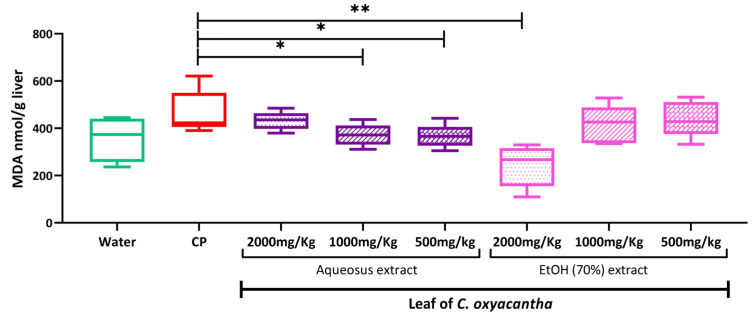
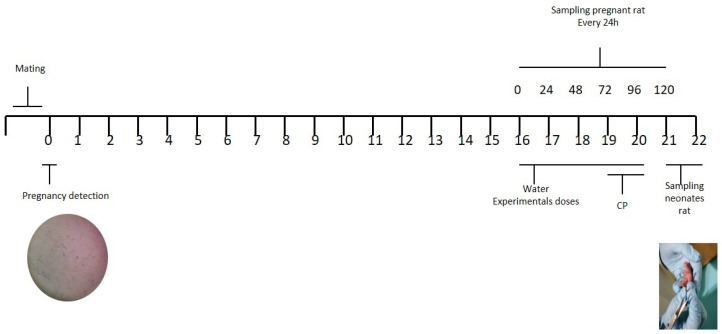
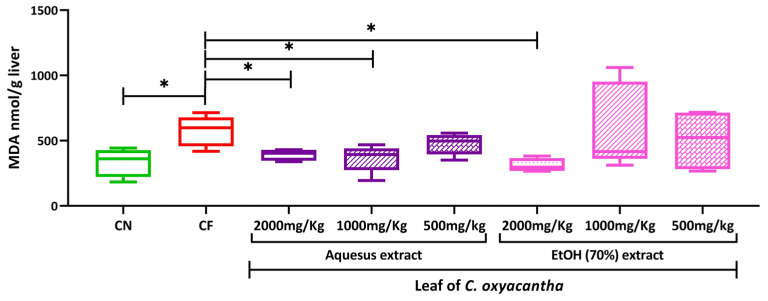
is used in the treatment of cardiovascular diseases. The aim of this study was to evaluate the transplacental genotoxicity effect of aqueous (AE) and hydroalcoholic extract (HE) of leaves in a rat model and the quantification of malondialdehyde (MDA) in the liver. Three different doses of the AE and HE of the leaf were administered orally (500, 1000 and 2000 mg/kg) to Wistar rats during 5 days through the pregnancy term (16-21 days), and sampling in rats occurred every 24 h during the last 6 days of gestation, while only one sample was taken in neonates at birth. A sample of the mother's and the neonate's liver was taken for the determination of MDA. The results show that, at the hepatic level, the evaluated doses of extracts in pregnant rats and their pups did not show cytotoxicity. However, the AE and HE generated cytotoxic and genotoxic damage in the short term. On the other hand, only the AE showed a teratogenic effect. Based on these results, the AE and HE of the leaf should not be administered during pregnancy.
用于治疗心血管疾病。本研究的目的是评估叶水提取物(AE)和水醇提取物(HE)在大鼠模型中的经胎盘遗传毒性作用以及肝脏中丙二醛(MDA)的定量。在妊娠期间(16 - 21天),通过口服方式给Wistar大鼠连续5天给予三种不同剂量的叶AE和HE(500、1000和2000 mg/kg),在妊娠的最后6天,每24小时对大鼠进行采样,而在新生仔鼠出生时仅采集一个样本。采集母鼠和新生仔鼠的肝脏样本用于测定MDA。结果表明,在肝脏水平上,所评估剂量的提取物在妊娠大鼠及其幼崽中未显示出细胞毒性。然而,AE和HE在短期内产生了细胞毒性和遗传毒性损伤。另一方面,只有AE表现出致畸作用。基于这些结果,妊娠期间不应给予叶的AE和HE。