Genmab B.V., Utrecht, the Netherlands.
Amsterdam University Medical Center, Vrije Universiteit Amsterdam, Amsterdam, the Netherlands.
EBioMedicine. 2023 Jul;93:104663. doi: 10.1016/j.ebiom.2023.104663. Epub 2023 Jun 26.
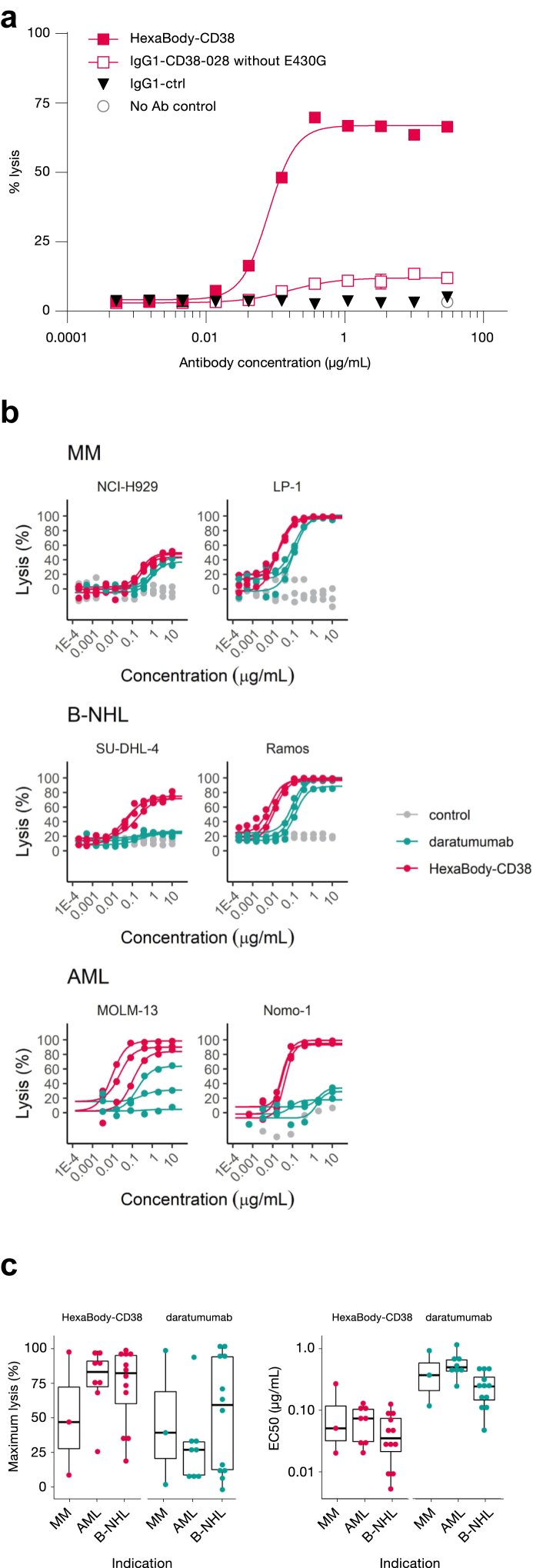
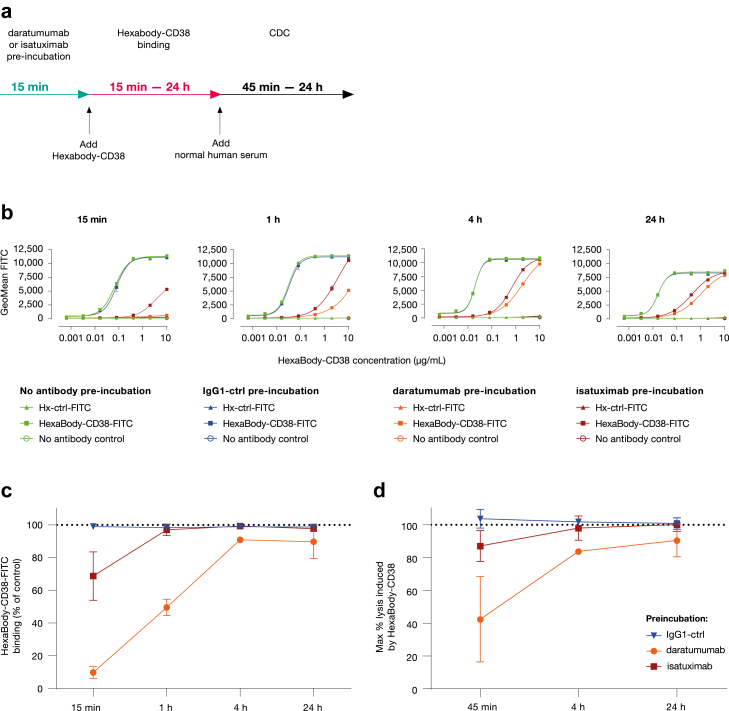
HexaBody®-CD38 (GEN3014) is a hexamerization-enhanced human IgG1 that binds CD38 with high affinity. The E430G mutation in its Fc domain facilitates the natural process of antibody hexamer formation upon binding to the cell surface, resulting in increased binding of C1q and potentiated complement-dependent cytotoxicity (CDC).
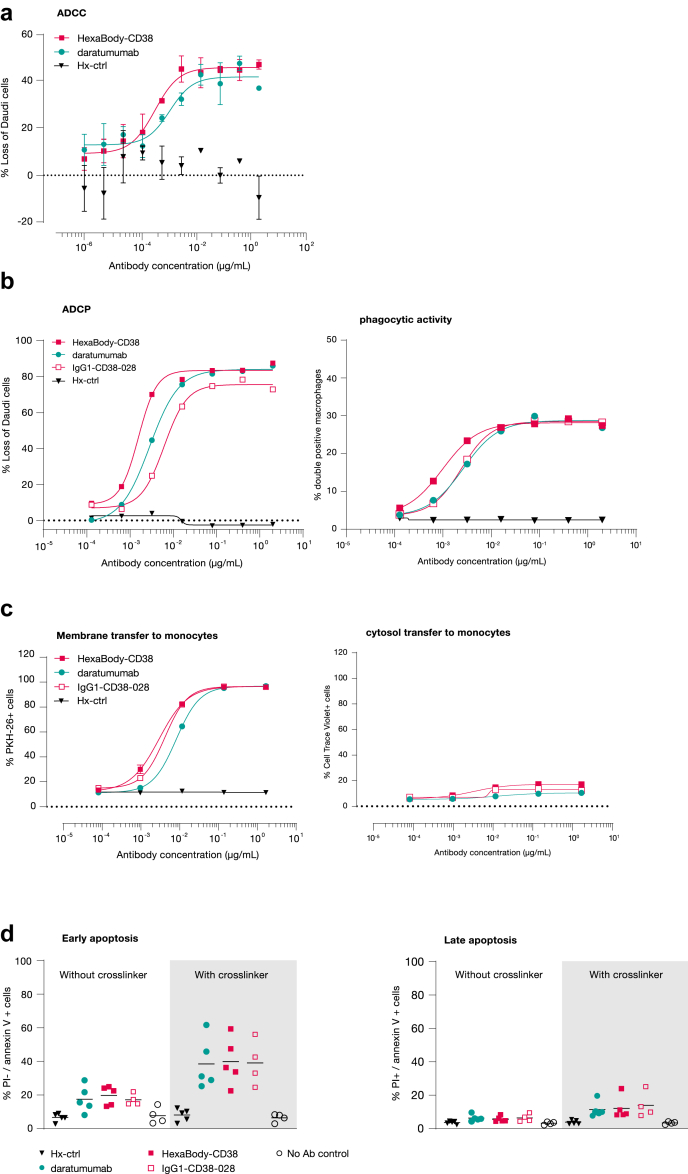
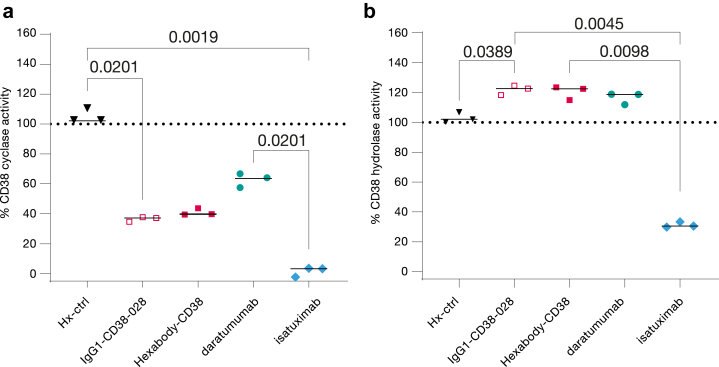
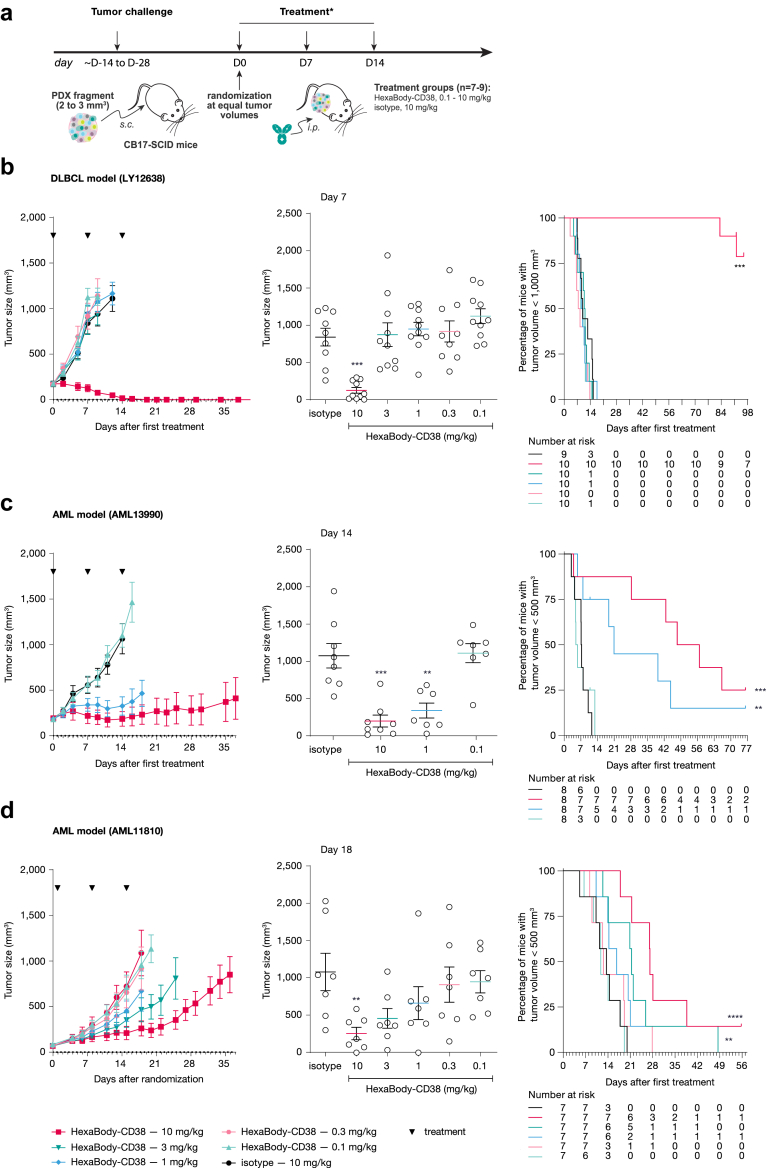
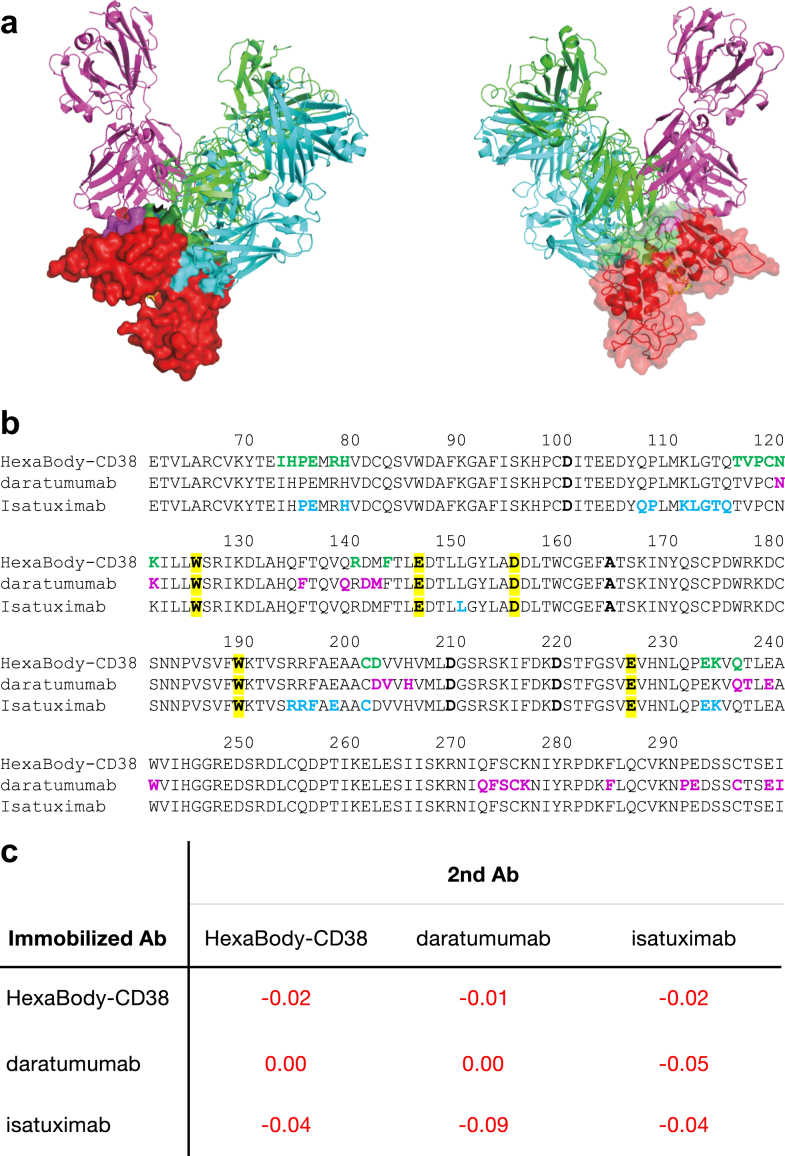
Co-crystallization studies were performed to identify the binding interface of HexaBody-CD38 and CD38. HexaBody-CD38-induced CDC, antibody-dependent cellular cytotoxicity (ADCC), antibody-dependent cellular phagocytosis (ADCP), trogocytosis, and apoptosis were assessed using flow cytometry assays using tumour cell lines, and MM patient samples (CDC). CD38 enzymatic activity was measured using fluorescence spectroscopy. Anti-tumour activity of HexaBody-CD38 was assessed in patient-derived xenograft mouse models in vivo.
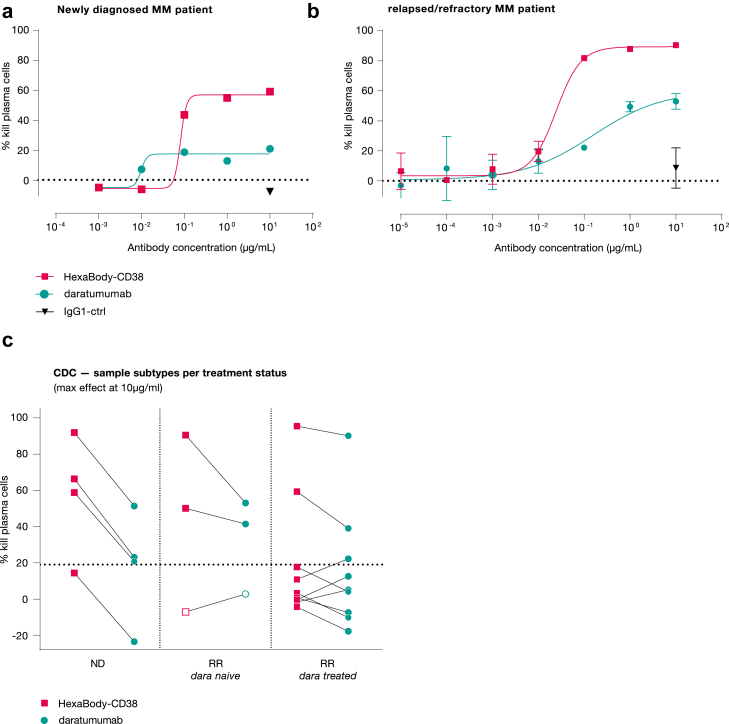
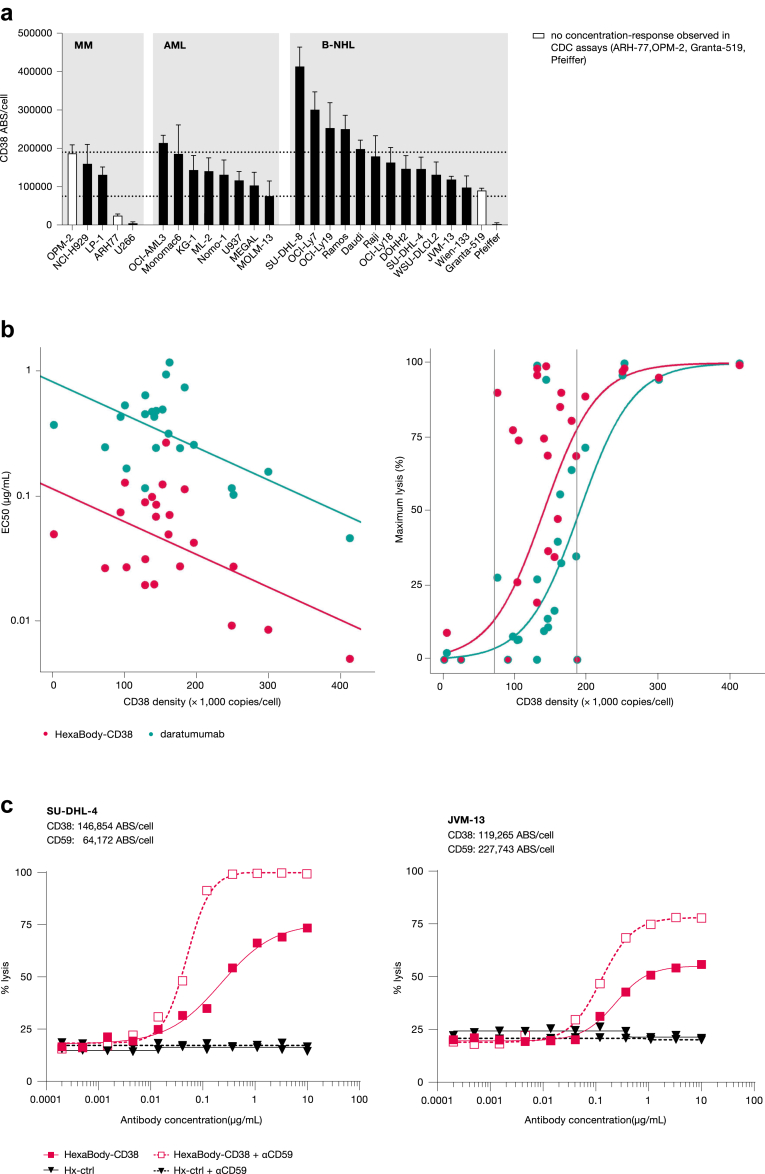
HexaBody-CD38 binds a unique epitope on CD38 and induced potent CDC in multiple myeloma (MM), acute myeloid leukaemia (AML), and B-cell non-Hodgkin lymphoma (B-NHL) cells. Anti-tumour activity was confirmed in patient-derived xenograft models in vivo. Sensitivity to HexaBody-CD38 correlated with CD38 expression level and was inversely correlated with expression of complement regulatory proteins. Compared to daratumumab, HexaBody-CD38 showed enhanced CDC in cell lines with lower levels of CD38 expression, without increasing lysis of healthy leukocytes. More effective CDC was also confirmed in primary MM cells. Furthermore, HexaBody-CD38 efficiently induced ADCC, ADCP, trogocytosis, and apoptosis after Fc-crosslinking. Moreover, HexaBody-CD38 strongly inhibited CD38 cyclase activity, which is hypothesized to relieve immune suppression in the tumour microenvironment.
Based on these preclinical studies, a clinical trial was initiated to assess the clinical safety of HexaBody-CD38 in patients with MM.
Genmab.
HexaBody®-CD38(GEN3014)是一种六聚体增强的人 IgG1,与 CD38 具有高亲和力。其 Fc 结构域中的 E430G 突变促进了抗体六聚体在与细胞表面结合时的自然形成过程,导致 C1q 结合增加,并增强补体依赖性细胞毒性(CDC)。
进行共结晶研究以确定 HexaBody-CD38 与 CD38 的结合界面。使用流式细胞术检测肿瘤细胞系和 MM 患者样本(CDC)评估 HexaBody-CD38 诱导的 CDC、抗体依赖性细胞毒性(ADCC)、抗体依赖性细胞吞噬作用(ADCP)、trogoctosis 和细胞凋亡。使用荧光光谱法测量 CD38 酶活性。在体内患者来源的异种移植小鼠模型中评估 HexaBody-CD38 的抗肿瘤活性。
HexaBody-CD38 结合 CD38 上的独特表位,并在多发性骨髓瘤(MM)、急性髓细胞白血病(AML)和 B 细胞非霍奇金淋巴瘤(B-NHL)细胞中诱导强烈的 CDC。在体内患者来源的异种移植模型中证实了抗肿瘤活性。对 HexaBody-CD38 的敏感性与 CD38 表达水平相关,与补体调节蛋白的表达呈负相关。与 daratumumab 相比,HexaBody-CD38 在 CD38 表达水平较低的细胞系中显示出增强的 CDC,而不会增加健康白细胞的溶解。在原发性 MM 细胞中也证实了更有效的 CDC。此外,在 Fc 交联后,HexaBody-CD38 还能有效诱导 ADCC、ADCP、trogoctosis 和细胞凋亡。此外,HexaBody-CD38 强烈抑制 CD38 环化酶活性,这假设可以减轻肿瘤微环境中的免疫抑制。
基于这些临床前研究,启动了一项临床试验以评估 HexaBody-CD38 在 MM 患者中的临床安全性。
Genmab。