Kang Ji-Yeon, Kim Sang-Yup, Lim Jae-Seok, Kim Jwa-Young, Jin Ga-Youn, Lee Yeon-Jung, Lee Eun-Young
Department of Oral & Maxillofacial Surgery, College of Medicine, Chungnam National University, Moonhwa-ro 282, Jung-Gu, Daejeon, 35015, Korea.
Department of Oral & Maxillofacial Surgery, College of Medicine and Medical Research Institute Chungbuk, National University, Chungdae-ro 1, Seowon-Gu, Cheongju, 28644, Chungbuk, Korea.
Maxillofac Plast Reconstr Surg. 2023 Jun 30;45(1):23. doi: 10.1186/s40902-023-00391-9.
Denosumab (DMB) is a bone antiresorptive agent used to treat osteoporosis or metastatic cancer of the bones. However, denosumab-associated osteonecrosis of the jaw (DRONJ) has become a common complication in cancer patients. The prevalence of osteonecrosis of the jaw (ONJ) in cancer patients is estimated to be similar for both bisphosphonate-related cases (1.1 to 1.4%) and denosumab-related cases (0.8 to 2%), with the addition of adjunctive therapy with anti-angiogenic agents reportedly increasing its prevalence to 3%. (Spec Care Dentist 36(4):231-236, 2016). The aim of this study is to report on DRONJ in cancer patients treated with DMB (Xgeva®, 120mg).
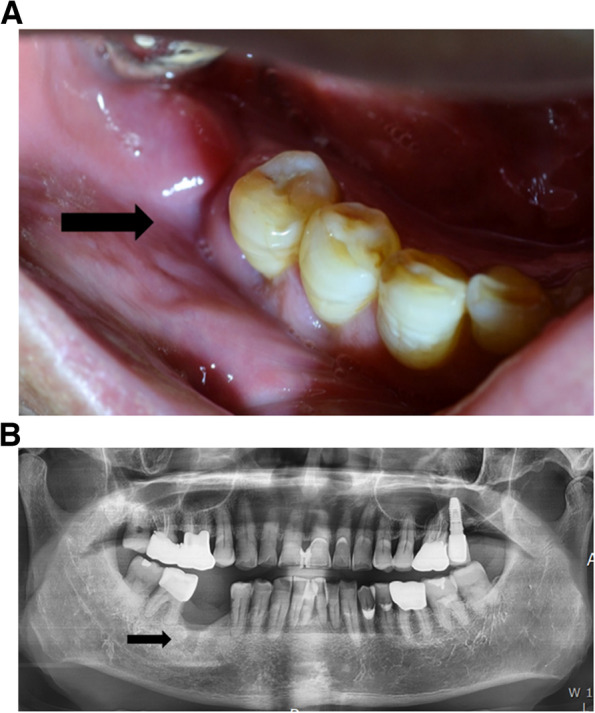
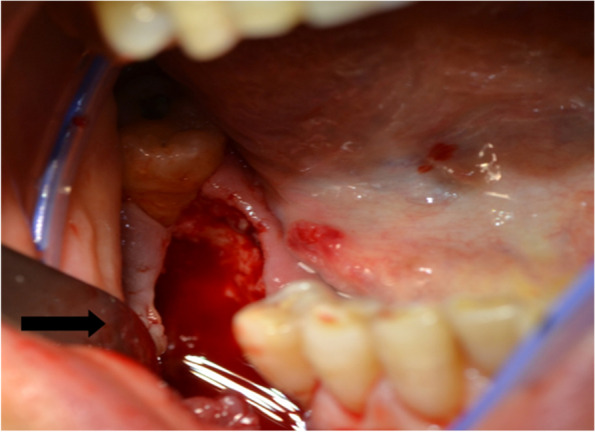
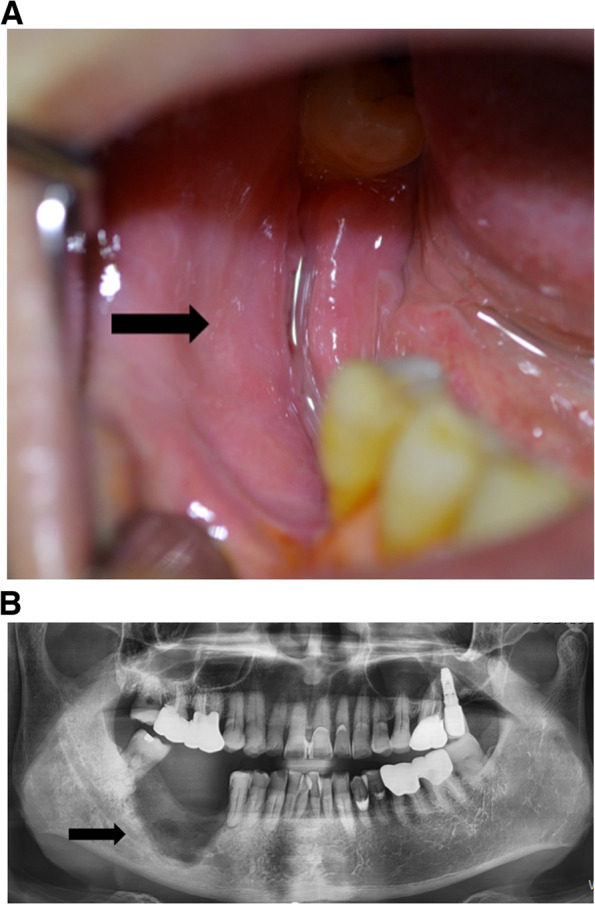
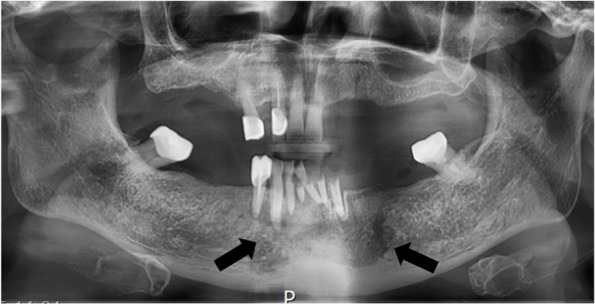
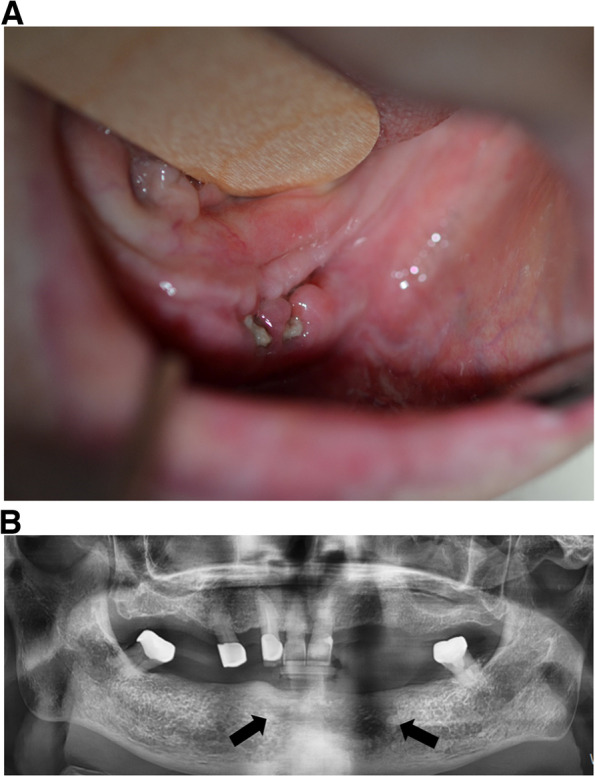
In this study, we identified four cases of ONJ among 74 patients receiving DMB therapy for metastatic cancer. Of the four patients, three had prostate cancer and one had breast cancer. Preceding tooth extraction within 2 months of the last DMB injection was found to be a risk factor for DRONJ. Pathological examination revealed that three patients had acute and chronic inflammation, including actinomycosis colonies. Among the four patients with DRONJ referred to us, three were successfully treated without complications and had no recurrence following surgical treatment, while one did not follow up. After healing, one patient experienced a recurrence at a different site. Sequestrectomy in conjunction with antibiotic therapy and cessation of DMB use proved to be effective in managing the condition, and the ONJ site healed after an average 5-month follow-up period.
Conservative surgery, along with antibiotic therapy and discontinuation of DMB, was found to be effective in managing the condition. Additional studies are needed to investigate the contribution of steroids and anticancer drugs to jaw bone necrosis, the prevalence of multicenter cases, and whether there is any drug interaction with DMB.
地诺单抗(DMB)是一种用于治疗骨质疏松症或骨转移性癌症的骨吸收抑制剂。然而,地诺单抗相关的颌骨坏死(DRONJ)已成为癌症患者的常见并发症。据估计,癌症患者中双膦酸盐相关颌骨坏死(ONJ)的患病率(1.1%至1.4%)与地诺单抗相关病例(0.8%至2%)相似,据报道,联合使用抗血管生成药物进行辅助治疗会使其患病率增至3%。(《特殊护理牙科》36(4):231 - 236, 2016)。本研究的目的是报告接受DMB(Xgeva®,120mg)治疗的癌症患者中的DRONJ情况。
在本研究中,我们在74例接受DMB治疗转移性癌症的患者中发现了4例ONJ。这4例患者中,3例患有前列腺癌,1例患有乳腺癌。发现最后一次注射DMB后2个月内拔牙是DRONJ的一个危险因素。病理检查显示,3例患者有急性和慢性炎症,包括放线菌菌落。在转诊给我们的4例DRONJ患者中,3例经手术治疗后成功治愈,无并发症,且无复发,而1例未进行随访。愈合后,1例患者在不同部位复发。死骨切除术联合抗生素治疗以及停用DMB被证明对控制病情有效,ONJ部位在平均5个月的随访期后愈合。
保守手术、抗生素治疗以及停用DMB被发现对控制病情有效。需要进一步研究来调查类固醇和抗癌药物对颌骨坏死的影响、多中心病例的患病率以及是否存在与DMB的药物相互作用。