Yao Wangjing, Zhang Tao, Chen Qianshen, Sun Jiuchun, Xu Sifa, Ding Zhouxiang, Wang Zhe
Institute of Geotechnical Engineering, Zhejiang University of Technology, Hangzhou, China.
Tengda Construction Group Co. Ltd., Shanghai, China.
Sci Rep. 2023 Jul 1;13(1):10686. doi: 10.1038/s41598-023-37854-y.
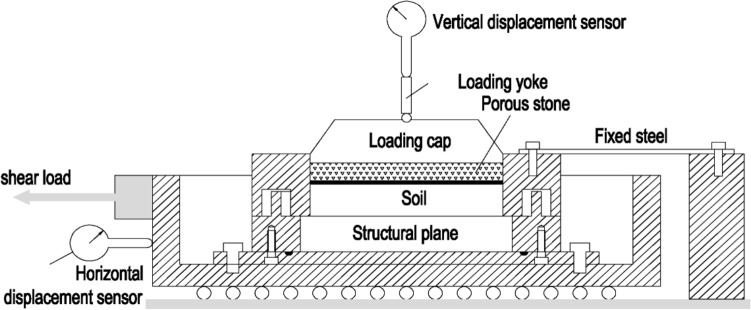
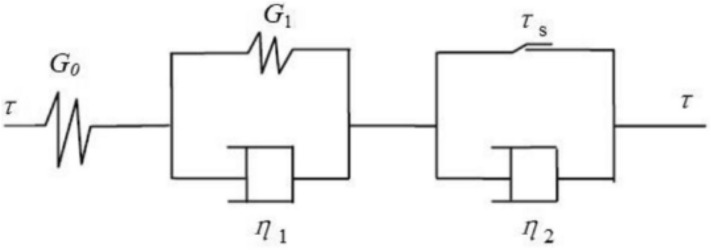
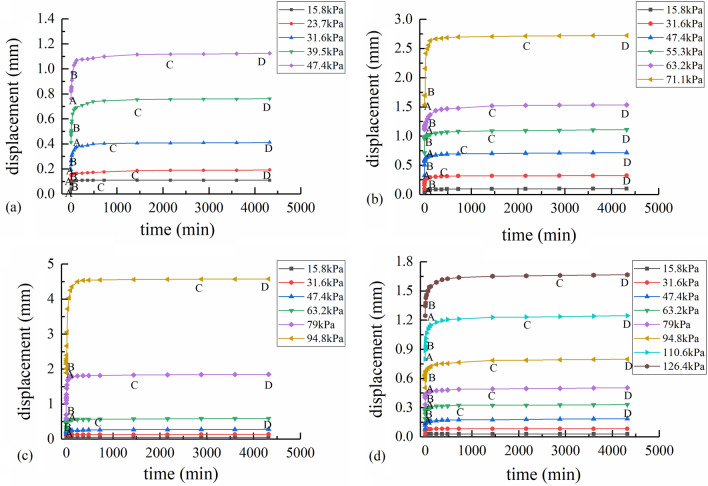
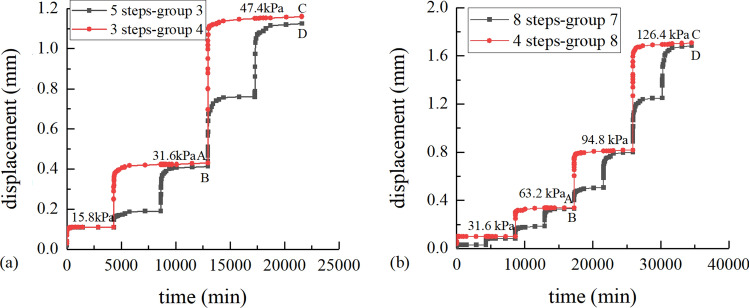
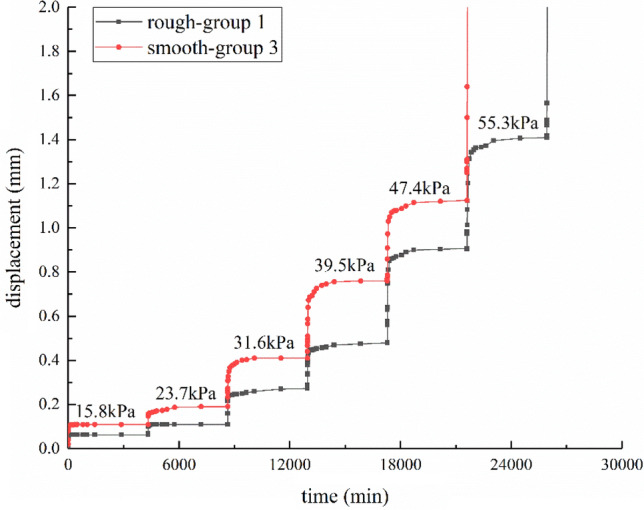
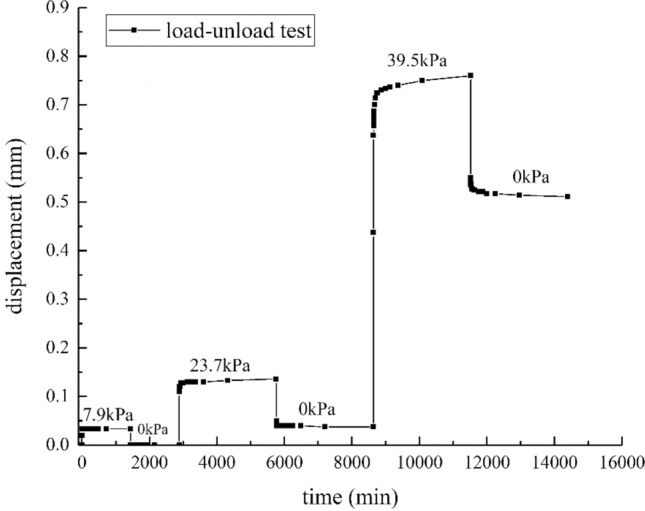
Floating piles have been widely employed as foundations in coastal regions abounding with marine clay. A growing concern for these floating piles is their long-term performance of bearing capacity. To better understand the time-dependent mechanisms behind the bearing capacity, in this paper a series of shear creep tests was conducted to study the effects of load paths/steps and roughness on shear strain of the marine clay-concrete interface. Four main empirical features were observed from the experimental results. First, the creep process of the marine clay-concrete interface can be largely decomposed into the instantaneous creep stage, the attenuation creep stage and the uniform creep stage. Second, the creep stability time and the shear creep displacement generally increase as the shear stress level increases. Third, the shear displacement rises as the number of loading steps drops under the same shear stress. The fourth feature is that under the shear stress condition, the rougher the interface is, the smaller the shear displacement is. Besides, the load-unloading shear creep tests suggest that: (a) shear creep displacement typically contains both viscoelastic and viscoplastic deformation; and (b) the proportion of unrecoverable plastic deformation increases with increasing shear stress. These tests confirm that the Nishihara model can provide a well-defined description of the shear creep behavior of marine clay-concrete interfaces.
在富含海相黏土的沿海地区,浮桩已被广泛用作基础。人们对这些浮桩的长期承载能力越来越关注。为了更好地理解承载能力背后的时间相关机制,本文进行了一系列剪切蠕变试验,以研究加载路径/步骤和粗糙度对海相黏土 - 混凝土界面剪切应变的影响。从实验结果中观察到四个主要的经验特征。首先,海相黏土 - 混凝土界面的蠕变过程在很大程度上可分解为瞬时蠕变阶段、衰减蠕变阶段和均匀蠕变阶段。其次,蠕变稳定时间和剪切蠕变位移通常随着剪应力水平的增加而增加。第三,在相同剪应力下,随着加载步骤数量的减少,剪切位移增加。第四个特征是,在剪应力条件下,界面越粗糙,剪切位移越小。此外,加载 - 卸载剪切蠕变试验表明:(a)剪切蠕变位移通常包含粘弹性和粘塑性变形;(b)不可恢复塑性变形的比例随着剪应力的增加而增加。这些试验证实,西原模型可以很好地描述海相黏土 - 混凝土界面的剪切蠕变行为。