Li Feiran, Huang Huiying, Xu Jing, Tao Lei, Zhou Liang, Hsueh Chiyao, Gong Hongli, Zhang Ming
Department of Otorhinolaryngology, Eye & ENT Hospital, Fudan University, 83 Fen Yang Road, Shanghai, China.
Department of Nursing, Eye & ENT Hospital, Fudan University, 83 Fen Yang Road, Shanghai, China.
Discov Oncol. 2023 Jul 2;14(1):120. doi: 10.1007/s12672-023-00727-x.
Fusobacterium nucleatum (F. nucleatum) is a vital pro-oncogenic bacterium. Our previous study revealed that a high abundance of F. nucleatum in head and neck squamous cell carcinoma (HNSCC) is correlated with poor patient prognosis. However, the impact of F. nucleatum on metabolic reprogramming and tumor progression in HNSCC awaits more exploration.
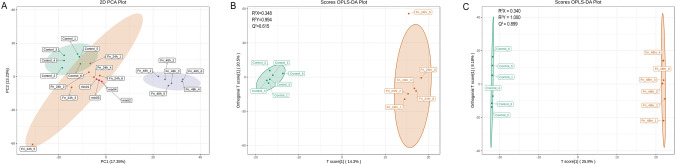
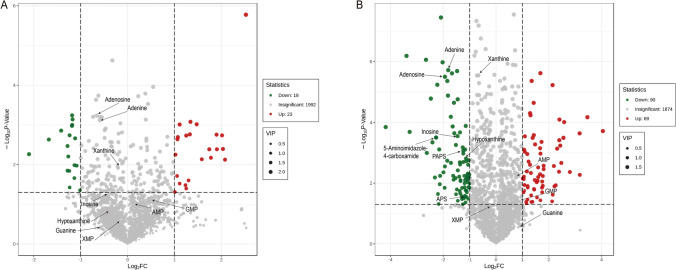
Liquid chromatography‒mass spectrometry (LC‒MS) was applied to analyze the altered metabolites in a head and neck carcinoma cell line (AMC-HN-8) after coculture with F. nucleatum for 24 hrs and 48 hrs. Both univariate and multivariate analyses were used to screen for differential metabolites. Kyoto Encyclopedia of Genes and Genomes (KEGG) metabolic pathway enrichment analysis was further used to explore the metabolic changes.
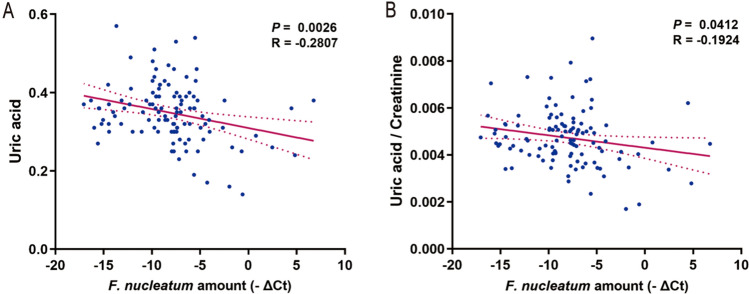
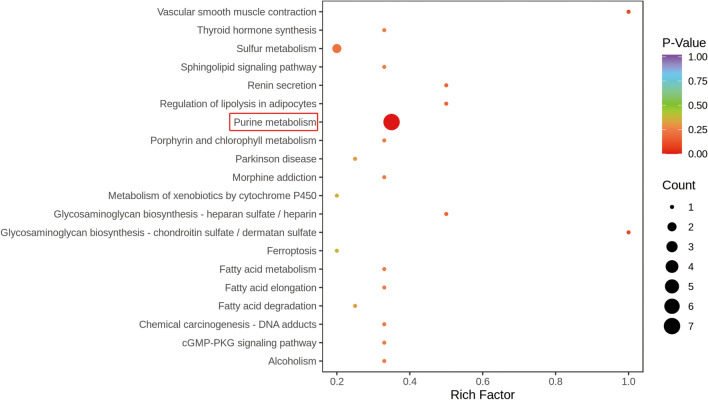
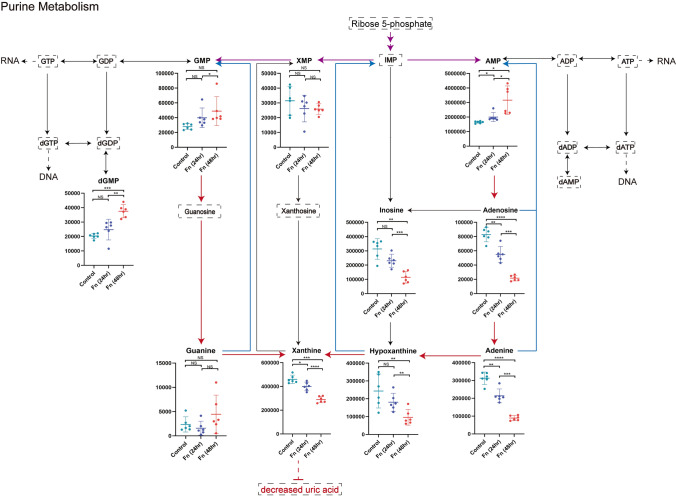
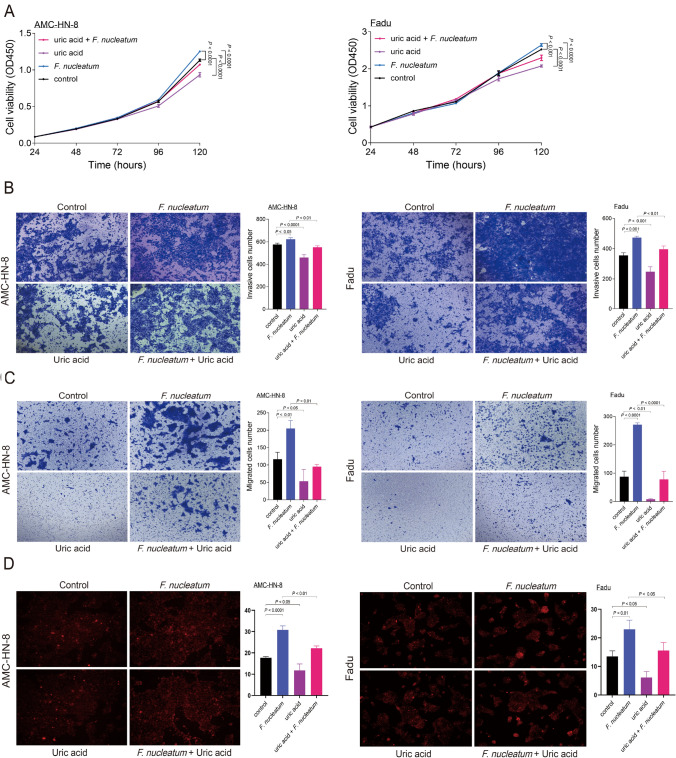
We observed a significantly altered metabolic profile in AMC-HN-8 cells over time after coculture with F. nucleatum. Among the several enriched pathways, the purine metabolic pathway was the most significantly enriched (P = 0.0005), with downregulation of purine degradation. Furthermore, uric acid, the end product of purine metabolism, significantly reversed F. nucleatum-triggered tumor progression and altered the intracellular reactive oxygen species (ROS) level. Moreover, the negative correlation between the serum uric acid level and the abundance of F. nucleatum was verified in 113 HNSCC patients (P = 0.0412, R = - 0.1924).
Our study revealed obviously aberrant purine metabolism driven by F. nucleatum in HNSCC, which was closely related to tumor progression and patient prognosis. These findings indicate the possibility of targeting F. nucleatum-induced purine metabolism reprogramming in the future treatment of HNSCC.
具核梭杆菌(F. nucleatum)是一种重要的促癌细菌。我们之前的研究表明,头颈部鳞状细胞癌(HNSCC)中具核梭杆菌的高丰度与患者预后不良相关。然而,具核梭杆菌对HNSCC代谢重编程和肿瘤进展的影响仍有待进一步探索。
应用液相色谱 - 质谱联用(LC - MS)分析头颈部癌细胞系(AMC - HN - 8)与具核梭杆菌共培养24小时和48小时后代谢物的变化。采用单变量和多变量分析筛选差异代谢物。进一步使用京都基因与基因组百科全书(KEGG)代谢途径富集分析来探索代谢变化。
我们观察到AMC - HN - 8细胞与具核梭杆菌共培养后,其代谢谱随时间发生了显著变化。在几条富集途径中,嘌呤代谢途径富集最为显著(P = 0.0005),嘌呤降解下调。此外,嘌呤代谢的终产物尿酸显著逆转了具核梭杆菌引发的肿瘤进展,并改变了细胞内活性氧(ROS)水平。此外,在113例HNSCC患者中验证了血清尿酸水平与具核梭杆菌丰度之间的负相关(P = 0.0412,R = - 0.1924)。
我们的研究揭示了HNSCC中具核梭杆菌驱动的明显异常嘌呤代谢,这与肿瘤进展和患者预后密切相关。这些发现表明,在未来HNSCC的治疗中,靶向具核梭杆菌诱导的嘌呤代谢重编程具有可能性。