Song Limei, Ren Yudan, Wang Kexin, Hou Yuqing, Nie Jingsi, He Xiaowei
School of Information Science and Technology, Northwest University, Xi'an, China.
School of Foreign Studies, Xi'an Jiaotong University, Xi'an, China.
Front Neurosci. 2023 Jun 16;17:1199150. doi: 10.3389/fnins.2023.1199150. eCollection 2023.
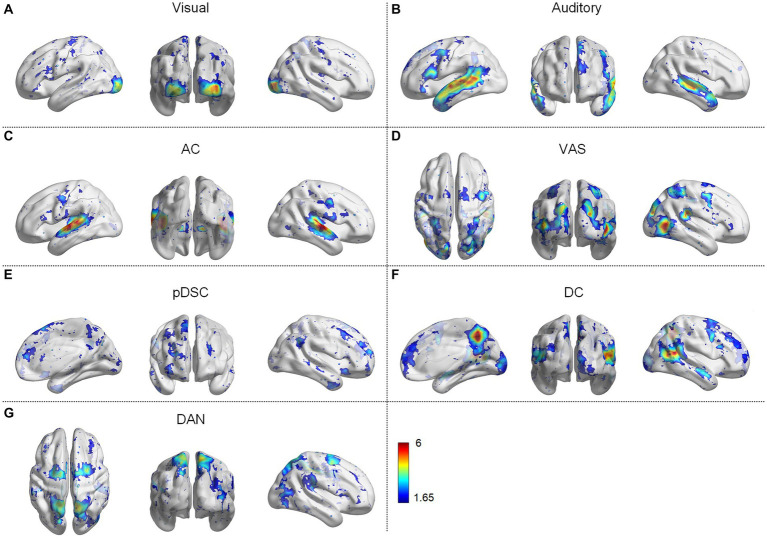
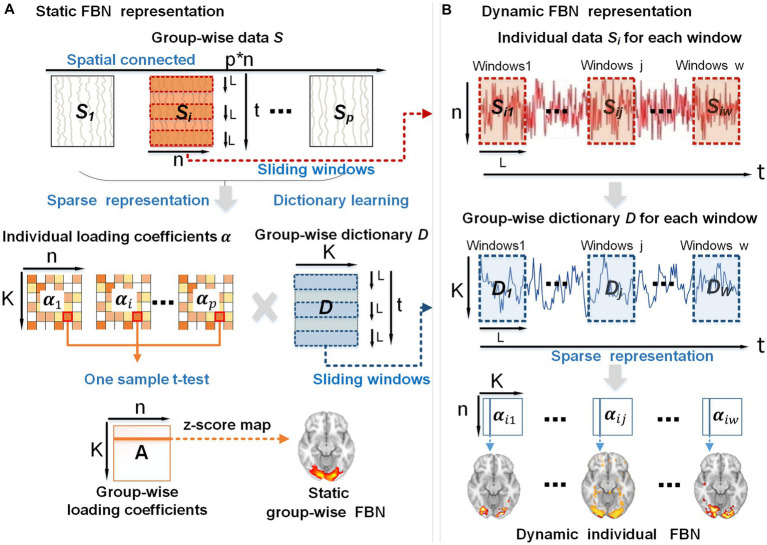
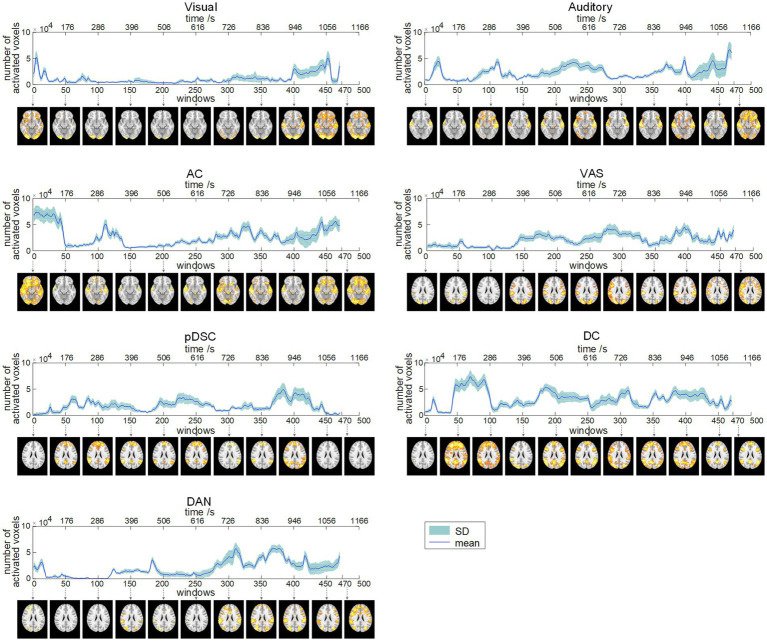
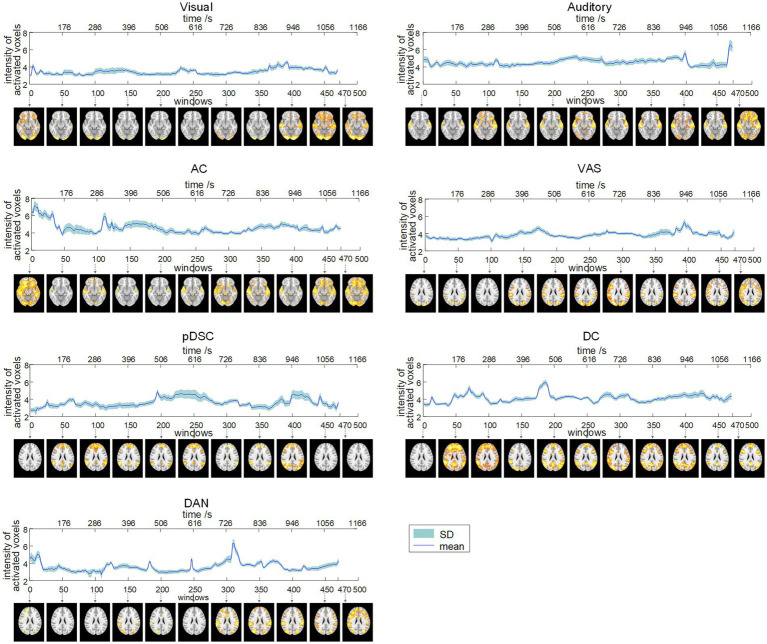
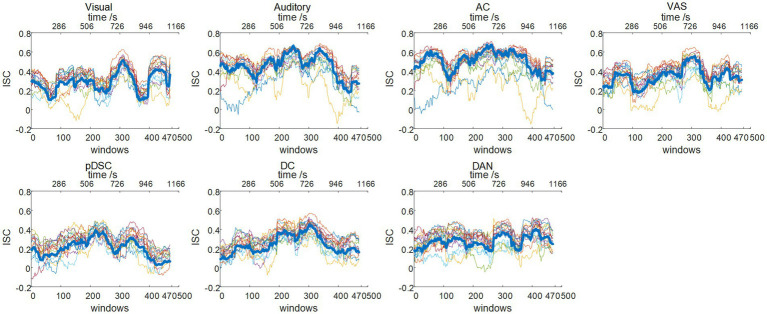
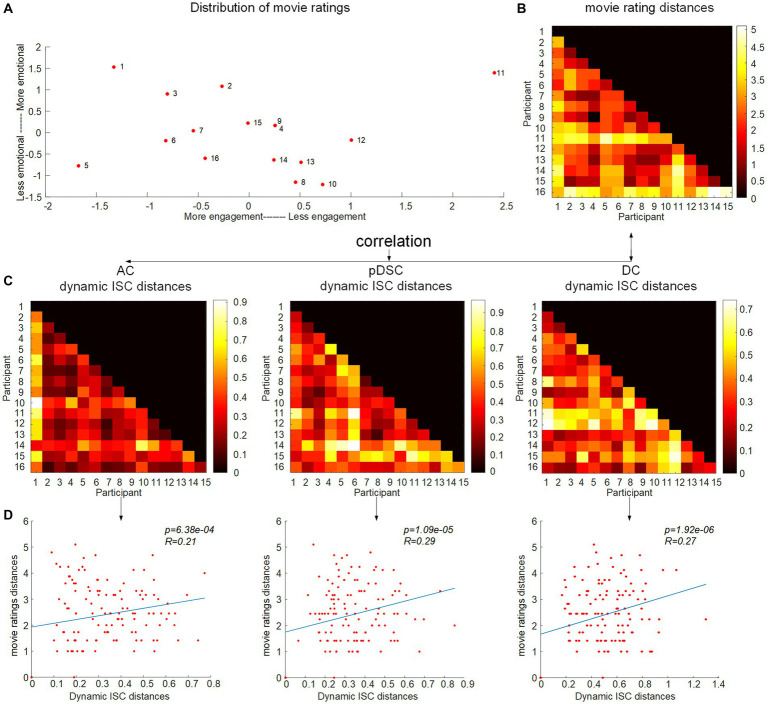
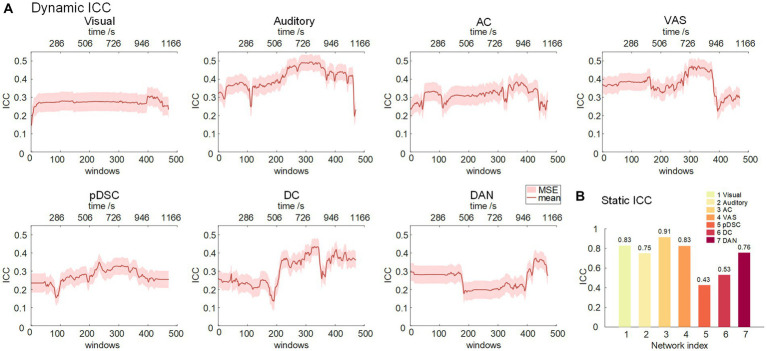
One of human brain's remarkable traits lies in its capacity to dynamically coordinate the activities of multiple brain regions or networks, adapting to an externally changing environment. Studying the dynamic functional brain networks (DFNs) and their role in perception, assessment, and action can significantly advance our comprehension of how the brain responds to patterns of sensory input. Movies provide a valuable tool for studying DFNs, as they offer a naturalistic paradigm that can evoke complex cognitive and emotional experiences through rich multimodal and dynamic stimuli. However, most previous research on DFNs have predominantly concentrated on the resting-state paradigm, investigating the topological structure of temporal dynamic brain networks generated chosen templates. The dynamic spatial configurations of the functional networks elicited by naturalistic stimuli demand further exploration. In this study, we employed an unsupervised dictionary learning and sparse coding method combing with a sliding window strategy to map and quantify the dynamic spatial patterns of functional brain networks (FBNs) present in naturalistic functional magnetic resonance imaging (NfMRI) data, and further evaluated whether the temporal dynamics of distinct FBNs are aligned to the sensory, cognitive, and affective processes involved in the subjective perception of the movie. The results revealed that movie viewing can evoke complex FBNs, and these FBNs were time-varying with the movie storylines and were correlated with the movie annotations and the subjective ratings of viewing experience. The reliability of DFNs was also validated by assessing the Intra-class coefficient (ICC) among two scanning sessions under the same naturalistic paradigm with a three-month interval. Our findings offer novel insight into comprehending the dynamic properties of FBNs in response to naturalistic stimuli, which could potentially deepen our understanding of the neural mechanisms underlying the brain's dynamic changes during the processing of visual and auditory stimuli.
人类大脑的显著特征之一在于其能够动态协调多个脑区或网络的活动,以适应外部不断变化的环境。研究动态功能脑网络(DFNs)及其在感知、评估和行动中的作用,能够显著推进我们对大脑如何响应感觉输入模式的理解。电影为研究DFNs提供了一个有价值的工具,因为它们提供了一种自然主义范式,能够通过丰富的多模态和动态刺激唤起复杂的认知和情感体验。然而,此前大多数关于DFNs的研究主要集中在静息状态范式,研究由选定模板生成的时间动态脑网络的拓扑结构。自然主义刺激引发的功能网络的动态空间配置需要进一步探索。在本研究中,我们采用了一种无监督字典学习和稀疏编码方法,并结合滑动窗口策略,来映射和量化自然主义功能磁共振成像(NfMRI)数据中存在的功能脑网络(FBNs)的动态空间模式,并进一步评估不同FBNs的时间动态是否与电影主观感知中涉及的感觉、认知和情感过程相一致。结果显示,观看电影能够唤起复杂的FBNs,并且这些FBNs随电影故事情节而随时间变化,并且与电影注释和观看体验的主观评分相关。通过评估在间隔三个月的相同自然主义范式下的两次扫描会话之间的组内系数(ICC),也验证了DFNs的可靠性。我们的研究结果为理解FBNs对自然主义刺激的动态特性提供了新的见解,这可能会加深我们对大脑在视觉和听觉刺激处理过程中动态变化背后神经机制的理解。