Xiang Xixi, Li Fu, Zhou Sha, Zeng Yunjing, Deng Xiaojuan, Zhang Hongyang, Li Jiali, Liu Hongyun, Rao Jun, Gao Lei, Zhang Cheng, Wen Qin, Gao Li, Zhang Xi
State Key Laboratory of Trauma, Burns and Combined Injury, Medical Center of Hematology, Xinqiao Hospital of Army Medical University, Key Subject of Chongqing, Chongqing 400037, China.
PPAR Res. 2023 Jun 26;2023:8456833. doi: 10.1155/2023/8456833. eCollection 2023.
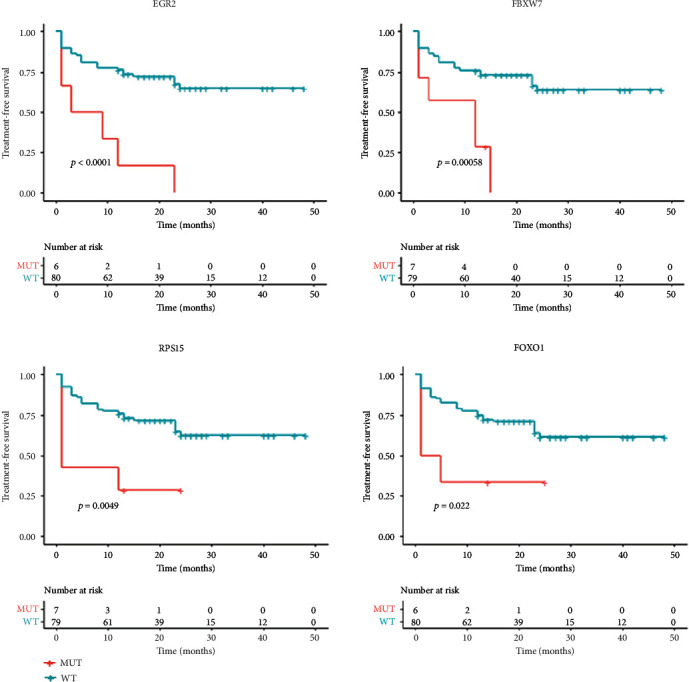
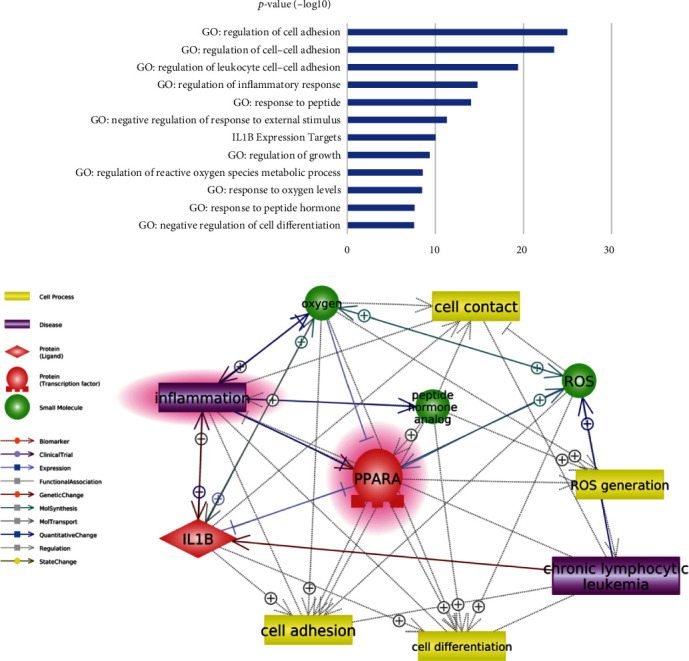
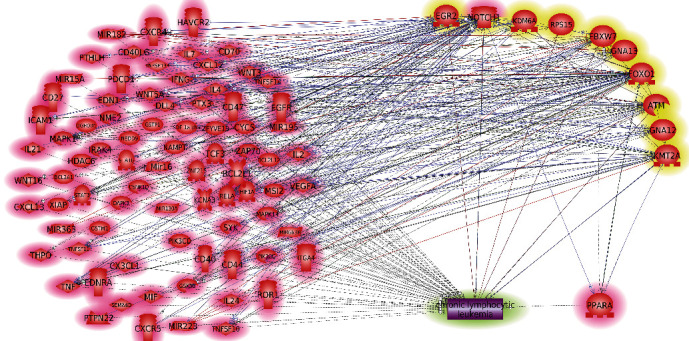
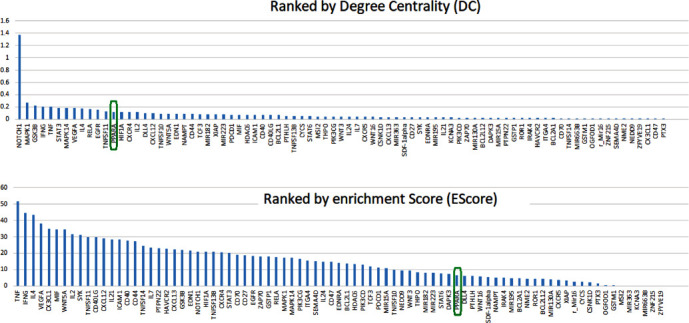
Peroxisome proliferator-activated receptor alpha (PPARA) has been suggested as a therapeutic target for chronic lymphocytic leukemia (CLL). However, the underlying molecular mechanism remains largely unclear. In this study, we analyzed DNA next-generation sequencing (NGS) data and clinical information from 86 CLL patients to identify gene markers related to treatment-free survival (TFS) length. We then constructed a genetic network that includes CLL promoters, treatment targets, and TFS-related marker genes. To assess the significance of PPARA within the network, we utilized degree centrality (DC) and pathway enrichment score (EScore). Clinical and NGS data revealed 10 TFS length-related gene markers, including RPS15, FOXO1, FBXW7, KMT2A, NOTCH1, GNA12, EGR2, GNA13, KDM6A, and ATM. Through literature data mining, 83 genes were identified as CLL upstream promoters and treatment targets. Among them, PPARA exhibited a stronger connection to CLL and TFS-related gene markers, as evidenced by its ranking at No. 13 based on DC, compared to most of the other promoters (>84%). Additionally, PPARA co-functions with 70 out of 92 in-network genes in various functional pathways/gene groups related to CLL pathology, such as regulation of cell adhesion, inflammation, reactive oxygen species, and cell differentiation. Based on our findings, PPARA is considered one of the critical genes within a large genetic network that influences the prognosis and TFS of CLL through multiple pathogenic pathways.
过氧化物酶体增殖物激活受体α(PPARA)已被提议作为慢性淋巴细胞白血病(CLL)的治疗靶点。然而,其潜在的分子机制仍 largely 不清楚。在本研究中,我们分析了 86 例 CLL 患者的 DNA 二代测序(NGS)数据和临床信息,以识别与无治疗生存期(TFS)长度相关的基因标志物。然后我们构建了一个遗传网络,该网络包括 CLL 启动子、治疗靶点和 TFS 相关标志物基因。为了评估 PPARA 在该网络中的重要性,我们利用了度中心性(DC)和通路富集分数(EScore)。临床和 NGS 数据揭示了 10 个与 TFS 长度相关的基因标志物,包括 RPS15、FOXO1、FBXW7、KMT2A、NOTCH1、GNA12、EGR2、GNA13、KDM6A 和 ATM。通过文献数据挖掘,83 个基因被鉴定为 CLL 上游启动子和治疗靶点。其中,PPARA 与 CLL 和 TFS 相关基因标志物表现出更强的联系,与大多数其他启动子(>84%)相比,其基于 DC 的排名为第 13 位。此外,PPARA 在与 CLL 病理相关的各种功能通路/基因组中与 92 个网络内基因中的 70 个共同发挥作用,如细胞黏附、炎症、活性氧和细胞分化的调节。基于我们的发现,PPARA 被认为是一个大型遗传网络中的关键基因之一,该网络通过多种致病途径影响 CLL 的预后和 TFS。