Neurodegenerative Diseases Group, Hospital Universitario 12 de Octubre Research Institute (imas12), Madrid, Spain.
Network Center for Biomedical Research, Neurodegenerative Diseases (CIBERNED), Madrid, Spain.
Cell Mol Life Sci. 2023 Jul 5;80(8):196. doi: 10.1007/s00018-023-04845-1.
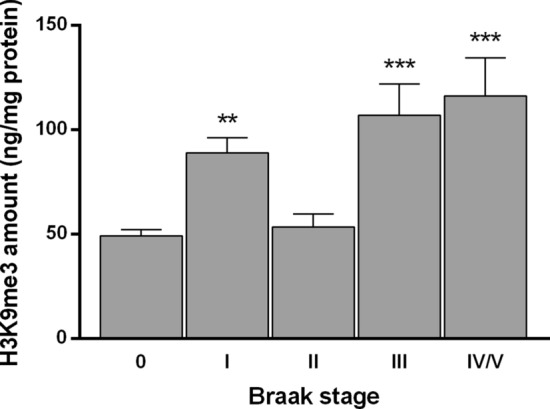
Modulation of brain olfactory (OR) and taste receptor (TASR) expression was recently reported in neurological diseases. However, there is still limited evidence of these genes' expression in the human brain and the transcriptional regulation mechanisms involved remain elusive. We explored the possible expression and regulation of selected OR and TASR in the human orbitofrontal cortex (OFC) of sporadic Alzheimer's disease (AD) and non-demented control specimens using quantitative real-time RT-PCR and ELISA. Global H3K9me3 amounts were measured on OFC total histone extracts, and H3K9me3 binding at each chemoreceptor locus was examined through native chromatin immunoprecipitation. To investigate the potential interactome of the repressive histone mark H3K9me3 in OFC specimens, native nuclear complex co-immunoprecipitation (Co-IP) was combined with reverse phase-liquid chromatography coupled to mass spectrometry analysis. Interaction between H3K9me3 and MeCP2 was validated by reciprocal Co-IP, and global MeCP2 levels were quantitated. We found that OR and TAS2R genes are expressed and markedly downregulated in OFC at early stages of sporadic AD, preceding the progressive reduction in their protein levels and the appearance of AD-associated neuropathology. The expression pattern did not follow disease progression suggesting transcriptional regulation through epigenetic mechanisms. We discovered an increase of OFC global H3K9me3 levels and a substantial enrichment of this repressive signature at ORs and TAS2Rs proximal promoter at early stages of AD, ultimately lost at advanced stages. We revealed the interaction between H3K9me3 and MeCP2 at early stages and found that MeCP2 protein is increased in sporadic AD. Findings suggest MeCP2 might be implicated in OR and TAS2R transcriptional regulation through interaction with H3K9me3, and as an early event, it may uncover a novel etiopathogenetic mechanism of sporadic AD.
最近有研究报道,在神经退行性疾病中,大脑嗅觉(OR)和味觉受体(TASR)的表达会发生变化。然而,目前关于这些基因在人类大脑中的表达仍缺乏证据,其涉及的转录调控机制也尚不清楚。我们采用实时定量 RT-PCR 和 ELISA 技术,探索了选择的 OR 和 TASR 在散发性阿尔茨海默病(AD)和非痴呆对照患者眶额皮质(OFC)中的可能表达和调控情况。我们测量了 OFC 总组蛋白提取物中的 H3K9me3 总量,并通过天然染色质免疫沉淀技术检查了每个化学感受器基因座处 H3K9me3 的结合情况。为了研究 H3K9me3 这种抑制性组蛋白标记在 OFC 标本中的潜在互作网络,我们将天然核复合物免疫共沉淀(Co-IP)与反相液相色谱-质谱联用分析相结合。通过相互 Co-IP 验证了 H3K9me3 与 MeCP2 之间的相互作用,并定量了 MeCP2 的总水平。我们发现,OR 和 TAS2R 基因在散发性 AD 的早期阶段在 OFC 中表达并显著下调,这先于其蛋白水平的逐渐降低和 AD 相关神经病理学的出现。这种表达模式不遵循疾病进展,提示通过表观遗传机制进行转录调控。我们发现 OFC 中 H3K9me3 水平升高,并且在 AD 早期阶段,这种抑制性特征在 OR 和 TAS2R 近端启动子处明显富集,最终在晚期丢失。我们在早期阶段揭示了 H3K9me3 与 MeCP2 之间的相互作用,并发现 MeCP2 蛋白在散发性 AD 中增加。研究结果表明,MeCP2 可能通过与 H3K9me3 相互作用,参与 OR 和 TAS2R 的转录调控,而且作为一个早期事件,它可能揭示了散发性 AD 的一个新的发病机制。