Sultana Tajwar, Hasan Muhammad Abul, Kang Xiaojian, Liou-Johnson Victoria, Adamson Maheen Mausoof, Razi Adeel
Department of Computer and Information Systems Engineering, NED University of Engineering & Technology, Karachi, 75270, Pakistan.
Department of Biomedical Engineering, NED University of Engineering & Technology, Karachi, 75270, Pakistan.
Mol Psychiatry. 2023 Dec;28(12):5150-5158. doi: 10.1038/s41380-023-02159-z. Epub 2023 Jul 6.
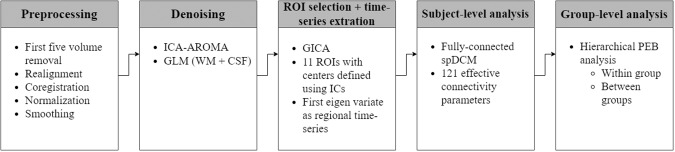
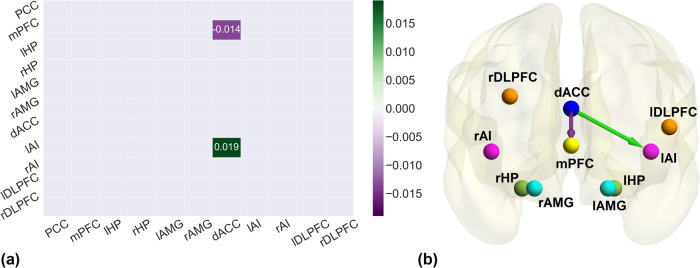
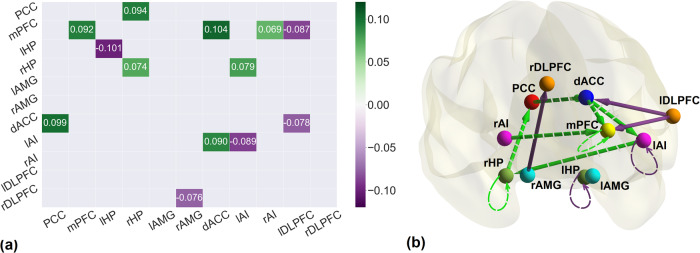
Emotional dysregulation such as that seen in depression, are a long-term consequence of mild traumatic brain injury (TBI), that can be improved by using neuromodulation treatments such as repetitive transcranial magnetic stimulation (rTMS). Previous studies provide insights into the changes in functional connectivity related to general emotional health after the application of rTMS procedures in patients with TBI. However, these studies provide little understanding of the underlying neuronal mechanisms that drive the improvement of the emotional health in these patients. The current study focuses on inferring the effective (causal) connectivity changes and their association with emotional health, after rTMS treatment of cognitive problems in TBI patients (N = 32). Specifically, we used resting state functional magnetic resonance imaging (fMRI) together with spectral dynamic causal model (spDCM) to investigate changes in brain effective connectivity, before and after the application of high frequency (10 Hz) rTMS over left dorsolateral prefrontal cortex. We investigated the effective connectivity of the cortico-limbic network comprised of 11 regions of interest (ROIs) which are part of the default mode, salience, and executive control networks, known to be implicated in emotional processing. The results indicate that overall, among extrinsic connections, the strength of excitatory connections decreased while that of inhibitory connections increased after the neuromodulation. The cardinal region in the analysis was dorsal anterior cingulate cortex (dACC) which is considered to be the most influenced during emotional health disorders. Our findings implicate the altered connectivity of dACC with left anterior insula and medial prefrontal cortex, after the application of rTMS, as a potential neural mechanism underlying improvement of emotional health. Our investigation highlights the importance of these brain regions as treatment targets in emotional processing in TBI.
情绪调节障碍,如在抑郁症中所见,是轻度创伤性脑损伤(TBI)的长期后果,可通过使用重复经颅磁刺激(rTMS)等神经调节治疗来改善。先前的研究深入探讨了TBI患者应用rTMS程序后与一般情绪健康相关的功能连接变化。然而,这些研究对驱动这些患者情绪健康改善的潜在神经元机制了解甚少。当前的研究重点是推断TBI患者(N = 32)在接受rTMS治疗认知问题后有效(因果)连接性的变化及其与情绪健康的关联。具体而言,我们使用静息态功能磁共振成像(fMRI)和频谱动态因果模型(spDCM)来研究在左侧背外侧前额叶皮层施加高频(10 Hz)rTMS前后脑有效连接性的变化。我们研究了由11个感兴趣区域(ROI)组成的皮质-边缘网络的有效连接性,这些区域是默认模式、显著性和执行控制网络的一部分,已知与情绪处理有关。结果表明,总体而言,在外在连接中,神经调节后兴奋性连接的强度降低而抑制性连接的强度增加。分析中的主要区域是背侧前扣带回皮质(dACC),它被认为在情绪健康障碍期间受影响最大。我们的研究结果表明,应用rTMS后,dACC与左侧前岛叶和内侧前额叶皮层之间的连接性改变,是情绪健康改善的潜在神经机制。我们的研究强调了这些脑区作为TBI情绪处理治疗靶点的重要性。