Department of Orthopaedic Surgery, Nara Medical University, Kashihara, Japan.
Department of Rehabilitation Medicine, Nara Medical University, Kashihara, Japan.
Arch Osteoporos. 2023 Jul 7;18(1):91. doi: 10.1007/s11657-023-01293-z.
We investigated the risk factors for mortality of hip fracture in the elderly using the National Database of Health Insurance Claims in Japan, and survival was significantly related to sex, age, fracture type, surgical procedure, delayed operative date, comorbidities, blood transfusions, and pulmonary embolism.
Hip fracture is the most common fracture in the elderly and is known to have a high mortality rate. In Japan, to the best of our knowledge, no studies have reported on mortality risk factors for hip fracture using nationwide registry databases. This study aimed to determine the number of occurrences of hip fracture and factors that increase mortality using the National Database of Health Insurance Claims and Specific Health Checkups of Japan.
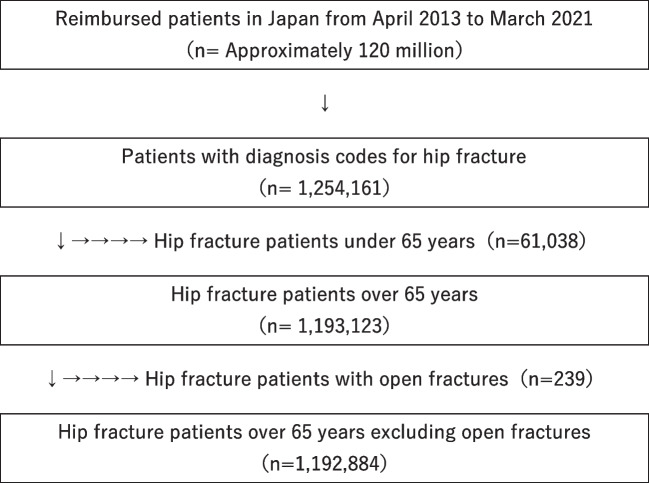
This study included extracted data from patients who were hospitalized and underwent surgical treatment for hip fracture between 2013 and 2021, using a nationwide health insurance claims database in Japan. Patient characteristics, such as sex, age, fracture type, surgical procedure, delayed operative date, comorbidities, blood transfusions, and pulmonary embolism, were tabulated to obtain 1-year and in-hospital mortality rates.
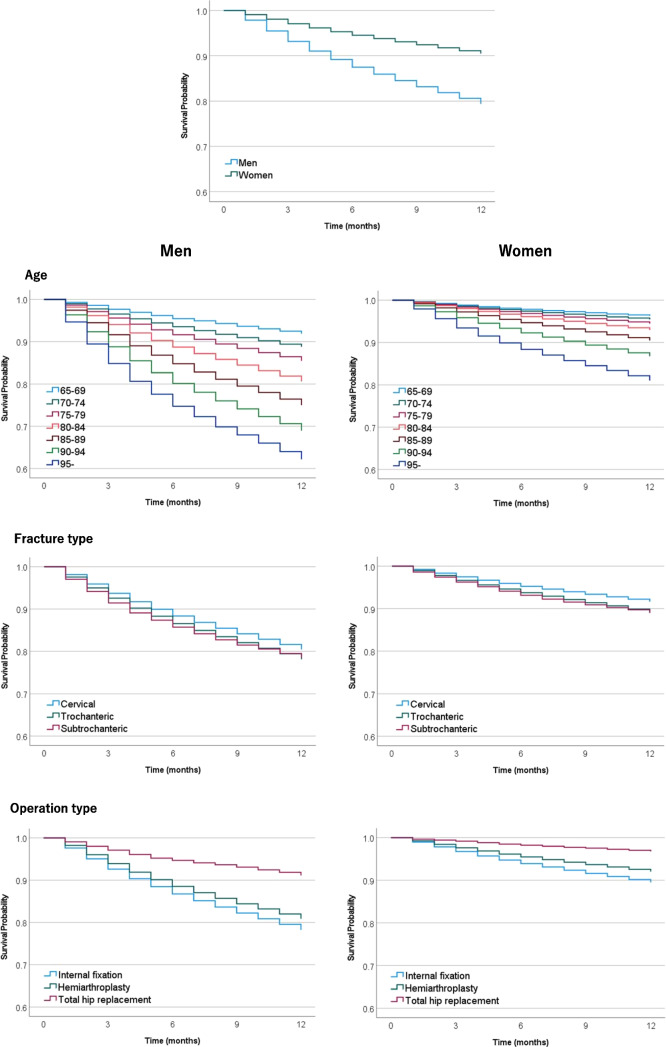
Both 1-year and in-patient survival were significantly lower in men, older patients, patients who underwent surgery after 3 days of admission, and patients with trochanteric and subtrochanteric fractures, internal fixation, more preoperative comorbidities, blood transfusions, and pulmonary embolism.
Survival was significantly related to sex, age, fracture type, surgical procedure, delayed operative date, comorbidities, blood transfusions, and pulmonary embolism. As the number of male patients with hip fracture will increase with the aging of society, medical staff must provide sufficient information before surgery to avoid postoperative mortality.
髋部骨折是老年人最常见的骨折,已知其死亡率较高。在日本,据我们所知,尚无使用全国登记数据库报告髋部骨折死亡率危险因素的研究。本研究旨在使用日本全国健康保险索赔和特定健康检查数据库确定髋部骨折的发生次数和增加死亡率的因素。
本研究从 2013 年至 2021 年期间在日本因髋部骨折住院并接受手术治疗的患者中提取数据,使用全国健康保险索赔数据库。列出患者的特征,如性别、年龄、骨折类型、手术程序、手术延迟日期、合并症、输血和肺栓塞,以获得 1 年和住院死亡率。
男性、年龄较大的患者、入院后 3 天内接受手术的患者以及转子间和转子下骨折、内固定、术前合并症更多、输血和肺栓塞的患者 1 年和住院生存率显著降低。
生存与性别、年龄、骨折类型、手术程序、手术延迟日期、合并症、输血和肺栓塞显著相关。随着社会老龄化,男性髋部骨折患者的数量将会增加,医务人员在手术前必须提供足够的信息,以避免术后死亡。