
基于姿态传感器的 4WID-4WIS 电动汽车轨迹跟踪协调能耗经济性控制
Trajectory Tracking Coordinated Control of 4WID-4WIS Electric Vehicle Considering Energy Consumption Economy Based on Pose Sensors.
机构信息
School of Automotive Studies, Tongji University, Shanghai 201804, China.
出版信息
Sensors (Basel). 2023 Jun 11;23(12):5496. doi: 10.3390/s23125496.
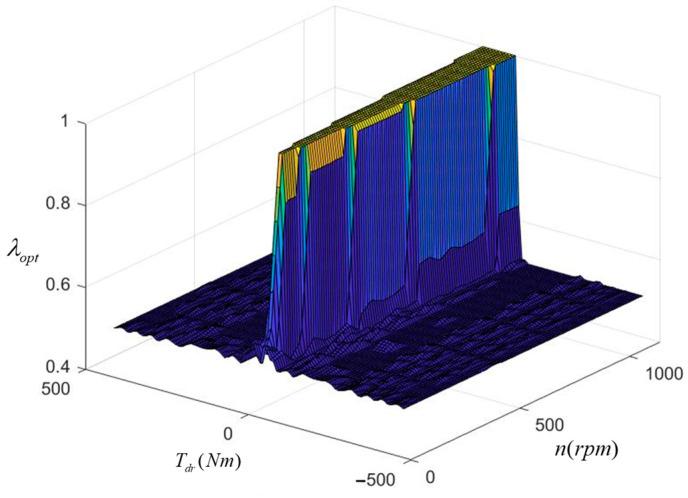
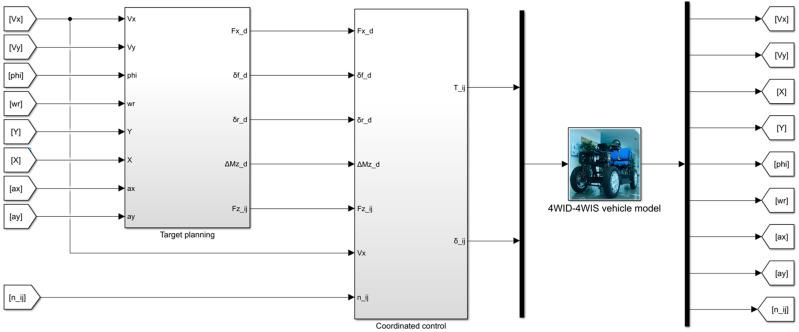
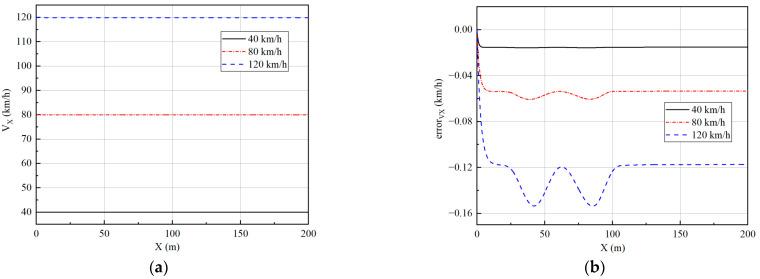
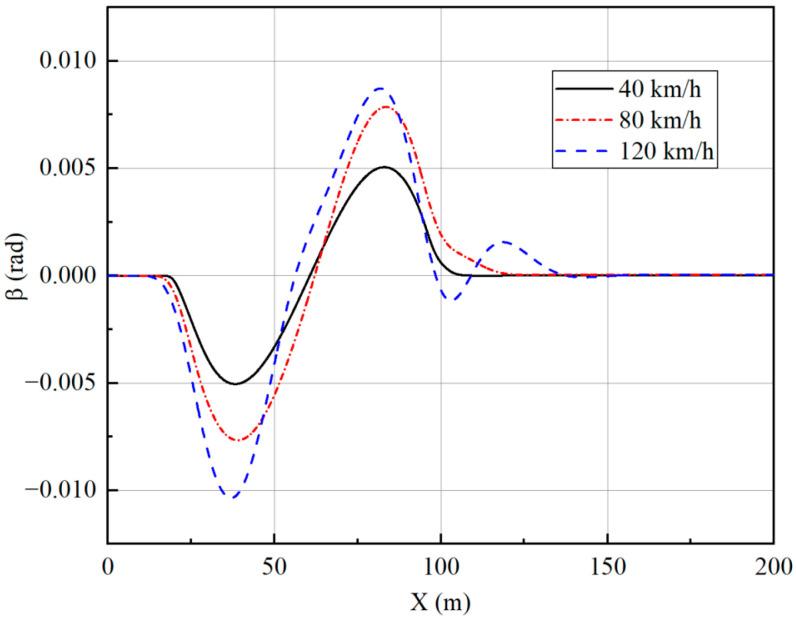
In order to improve the stability and economy of 4WID-4WIS (four-wheel independent drive-four-wheel independent steering) electric vehicles in trajectory tracking, this paper proposes a trajectory tracking coordinated control strategy considering energy consumption economy. First, a hierarchical chassis coordinated control architecture is designed, which includes target planning layer, and coordinated control layer. Then, the trajectory tracking control is decoupled based on the decentralized control structure. Expert PID and Model Predictive Control (MPC) are employed to realize longitudinal velocity tracking and lateral path tracking, respectively, which calculate generalized forces and moments. In addition, with the objective of optimal overall efficiency, the optimal torque distribution for each wheel is achieved using the Mutant Particle Swarm Optimization (MPSO) algorithm. Additionally, the modified Ackermann theory is used to distribute wheel angles. Finally, the control strategy is simulated and verified using Simulink. Comparing the control results of the average distribution strategy and the wheel load distribution strategy, it can be concluded that the proposed coordinated control not only provides good trajectory tracking but also greatly improves the overall efficiency of the motor operating points, which enhances the energy economy and realizes the multi-objective coordinated control of the chassis.
为了提高 4WID-4WIS(四轮独立驱动-四轮独立转向)电动汽车在轨迹跟踪中的稳定性和经济性,本文提出了一种考虑能耗经济性的轨迹跟踪协调控制策略。首先,设计了分层底盘协调控制架构,包括目标规划层和协调控制层。然后,基于分散控制结构对轨迹跟踪控制进行解耦。采用专家 PID 和模型预测控制(MPC)分别实现纵向速度跟踪和横向路径跟踪,计算广义力和力矩。此外,以整体效率最优为目标,采用变异粒子群优化(MPSO)算法实现各轮最优转矩分配。同时,采用修正的阿克曼理论分配车轮转角。最后,利用 Simulink 对控制策略进行仿真验证。通过对比平均分配策略和轮荷分配策略的控制结果,可知所提出的协调控制不仅能提供良好的轨迹跟踪性能,还能显著提高电机工作点的整体效率,从而提高能源经济性,实现底盘的多目标协调控制。






 Zotero 插件