Kalra Andrew, Shou Benjamin L, Zhao David, Wilcox Christopher, Keller Steven P, Whitman Glenn J R, Kim Bo Soo, Cho Sung-Min
Division of Cardiac Surgery, Department of Surgery, Johns Hopkins Hospital, Baltimore, Md.
Division of Neurosciences Critical Care, Department of Neurology, Neurosurgery, Anesthesiology and Critical Care Medicine, Johns Hopkins Hospital, Baltimore, Md.
JTCVS Open. 2023 Mar 1;14:145-170. doi: 10.1016/j.xjon.2023.02.011. eCollection 2023 Jun.
To determine whether there is racial/ethnical discrepancy between pulse oximetry (SpO) and oxygen saturation (SaO) in patients receiving extracorporeal membrane oxygenation (ECMO).
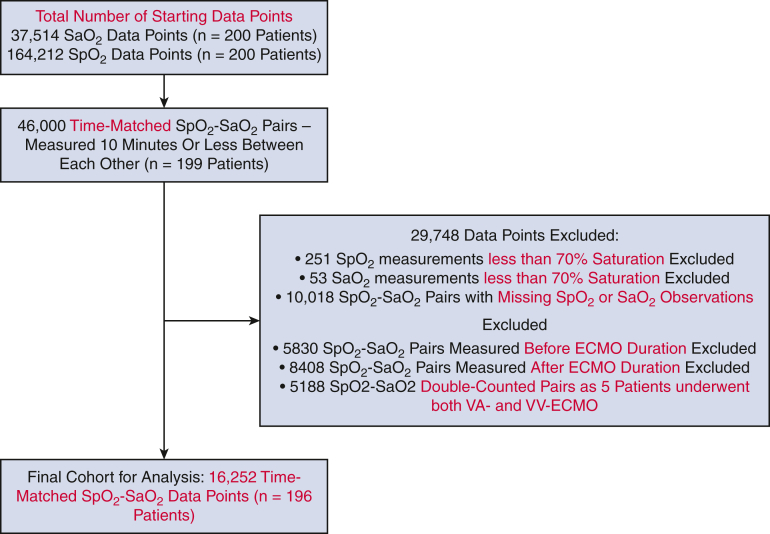
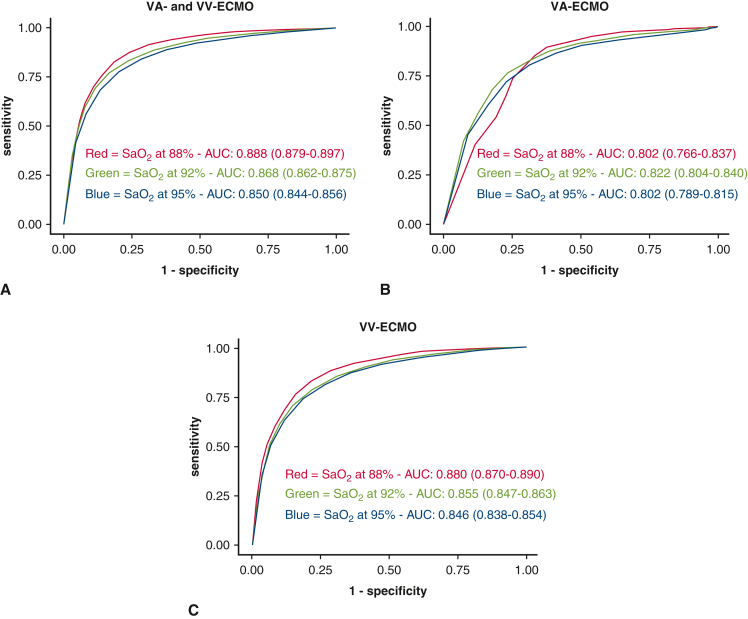
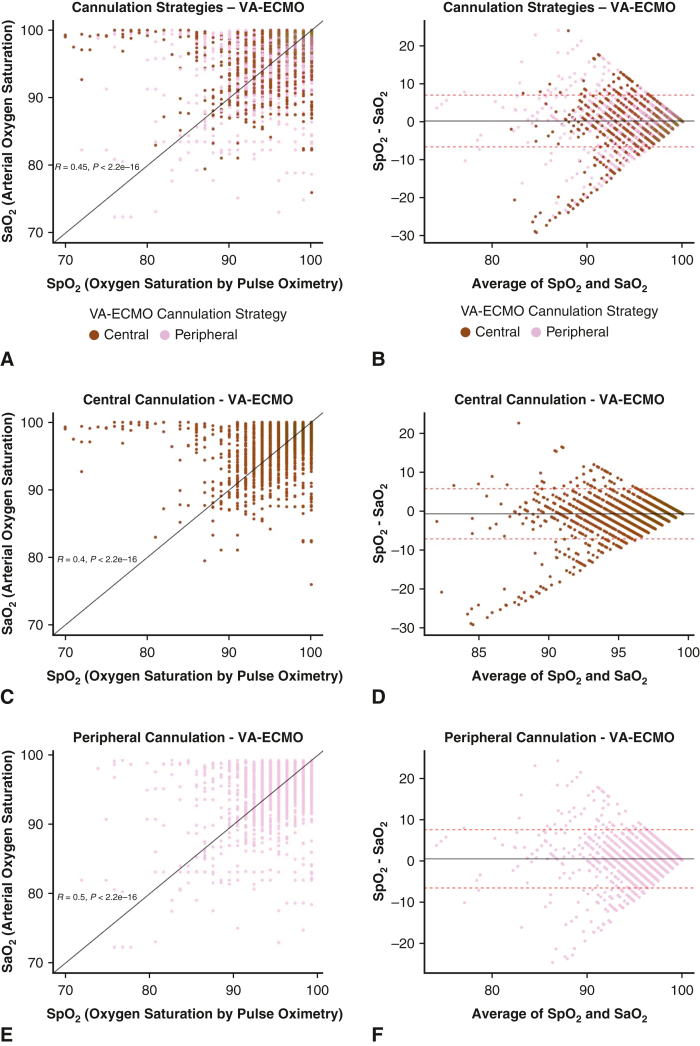
This was a retrospective observational study at a tertiary academic ECMO center with adults (>18 years) on venoarterial (VA) or venovenous (VV) ECMO. Datapoints were excluded if oxygen saturation ≤70% or SpO-SaO pairs were not measured within 10 minutes. The primary outcome was the presence of a SpO-SaO discrepancy between different races/ethnicities. Bland-Altman analyses and linear mixed-effects modeling, adjusting for prespecified covariates, were used to assess the SpO-SaO discrepancy between races/ethnicities. Occult hypoxemia was defined as SaO <88% with a time-matched SpO ≥92%.
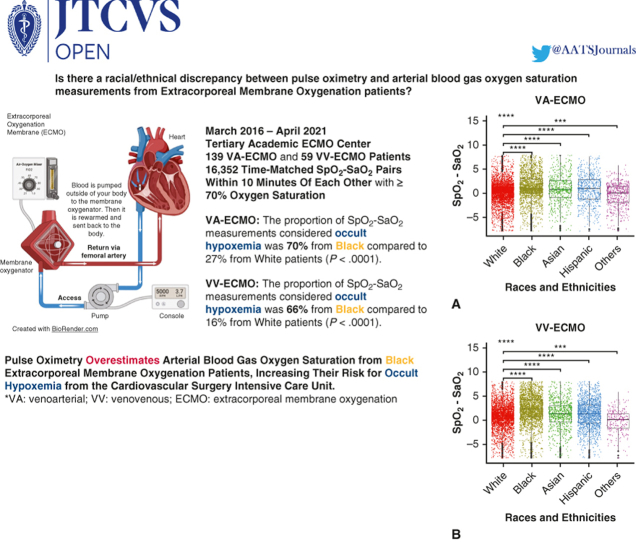
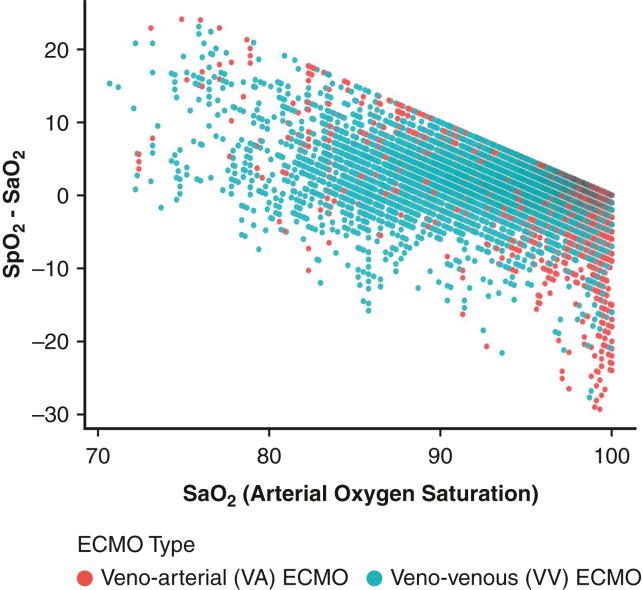
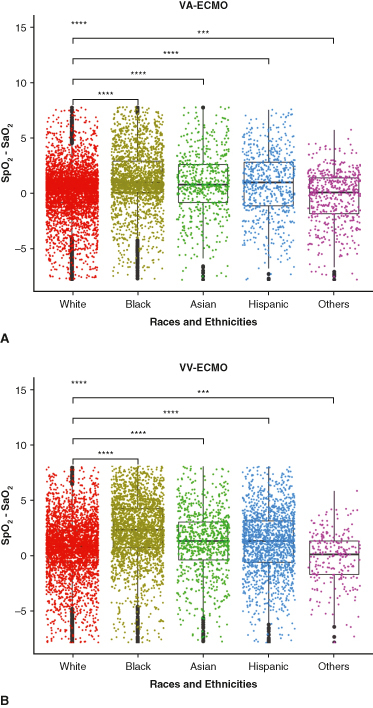
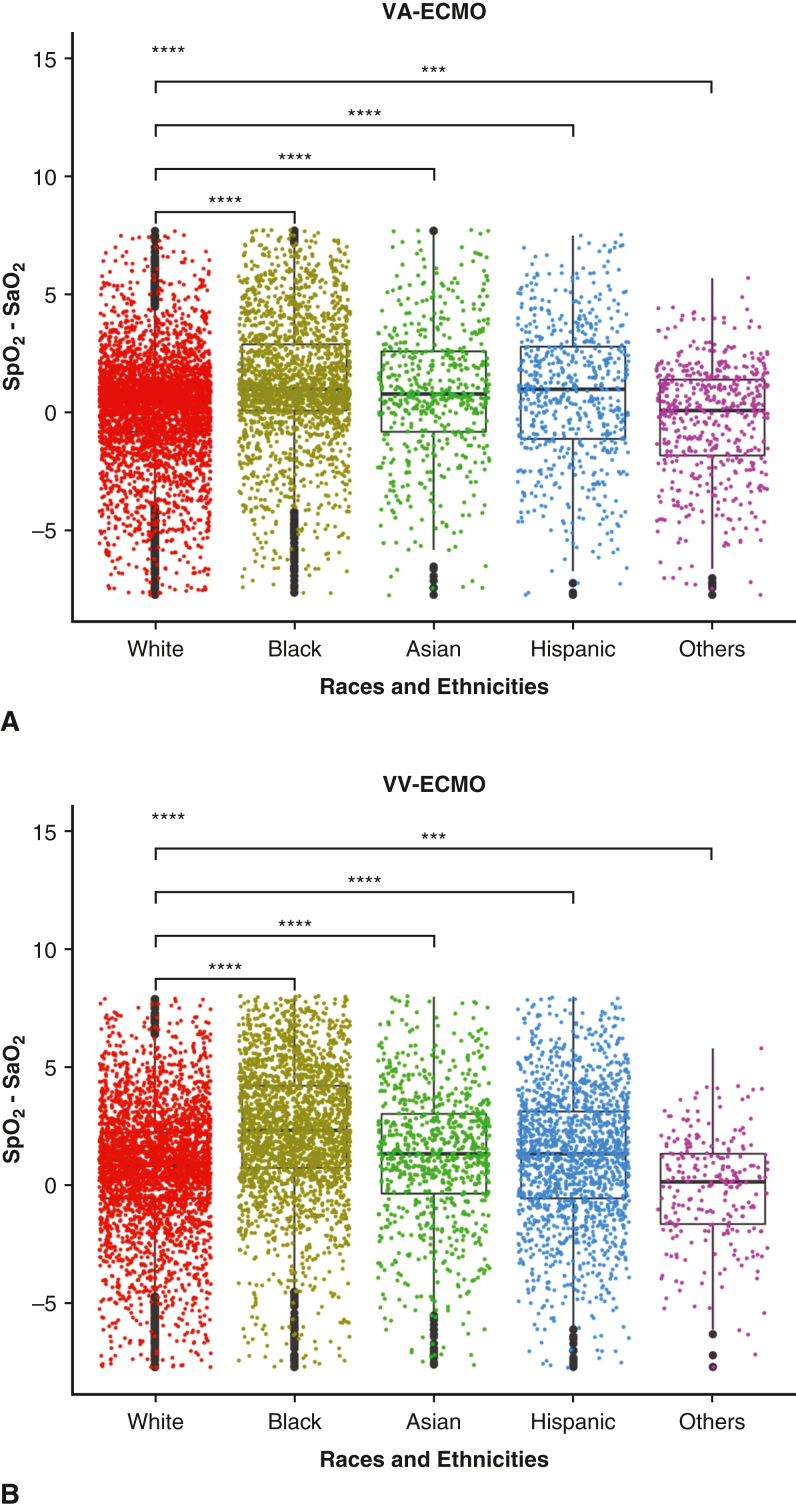
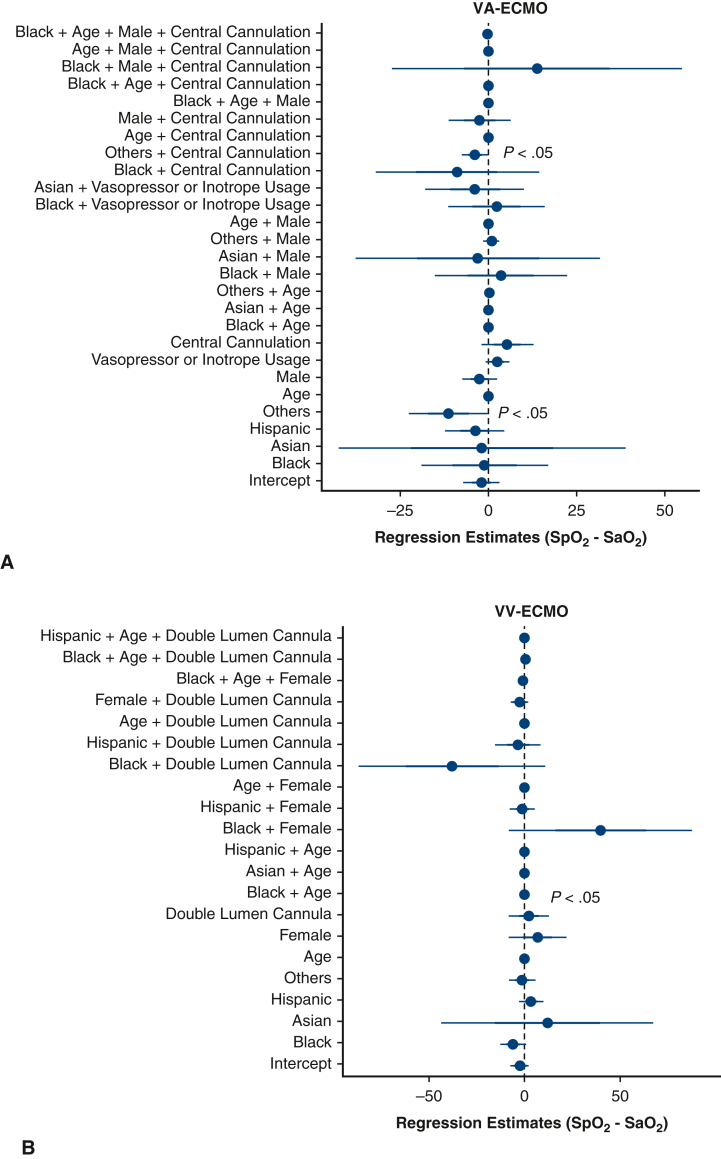
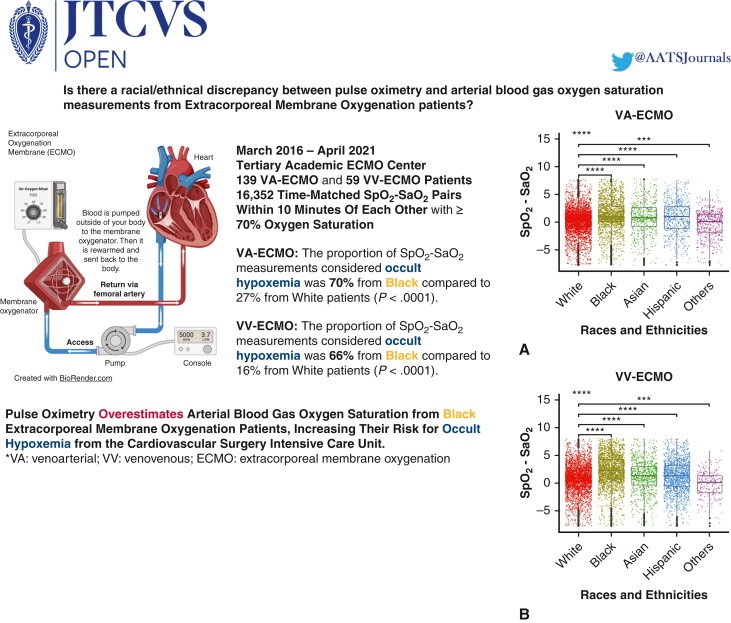
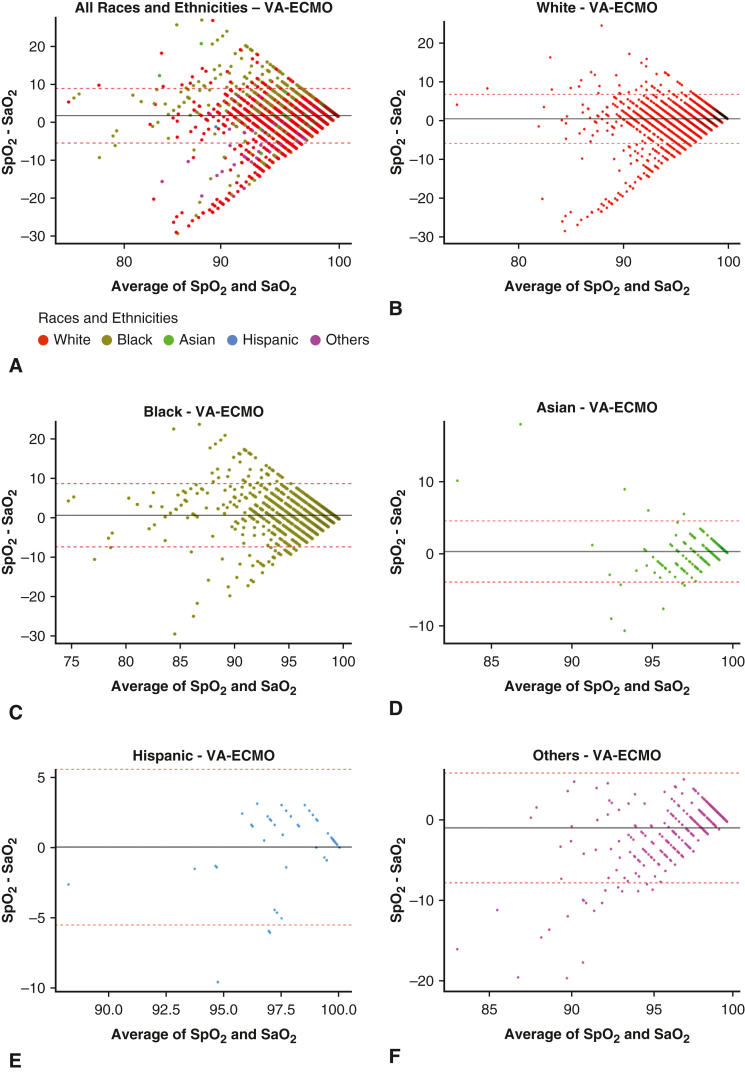
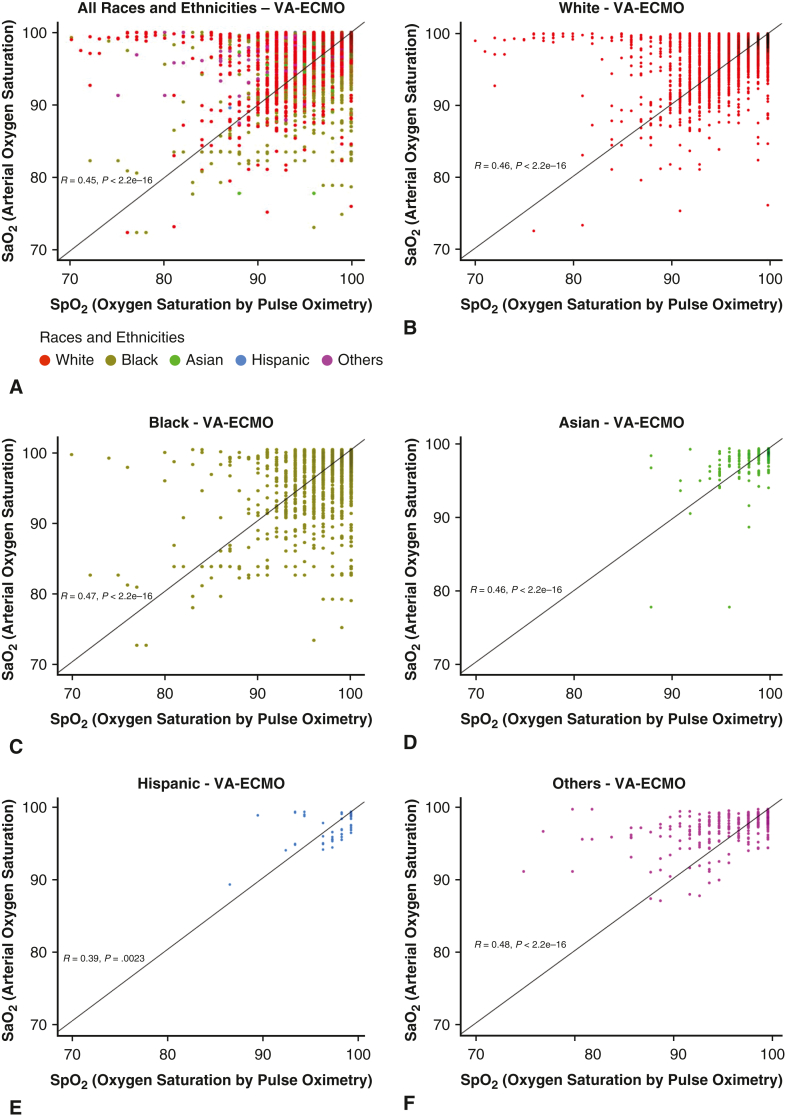
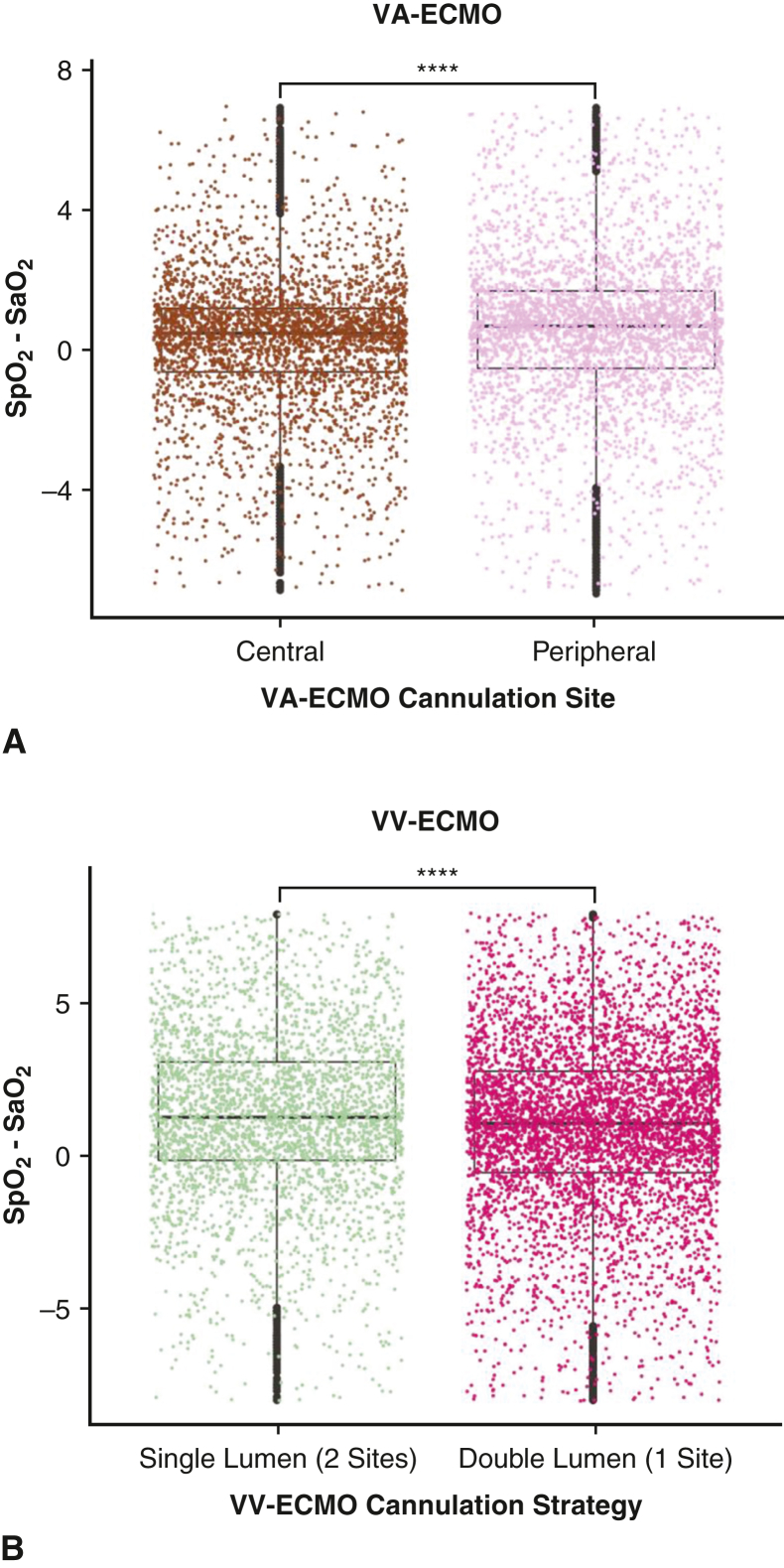
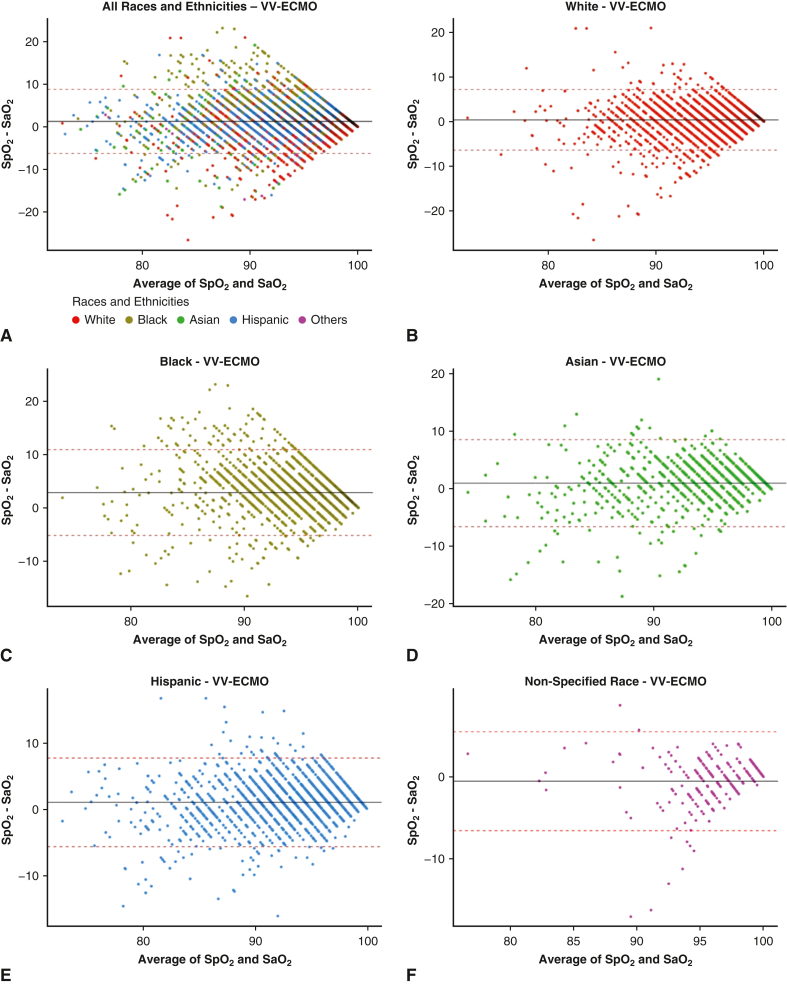
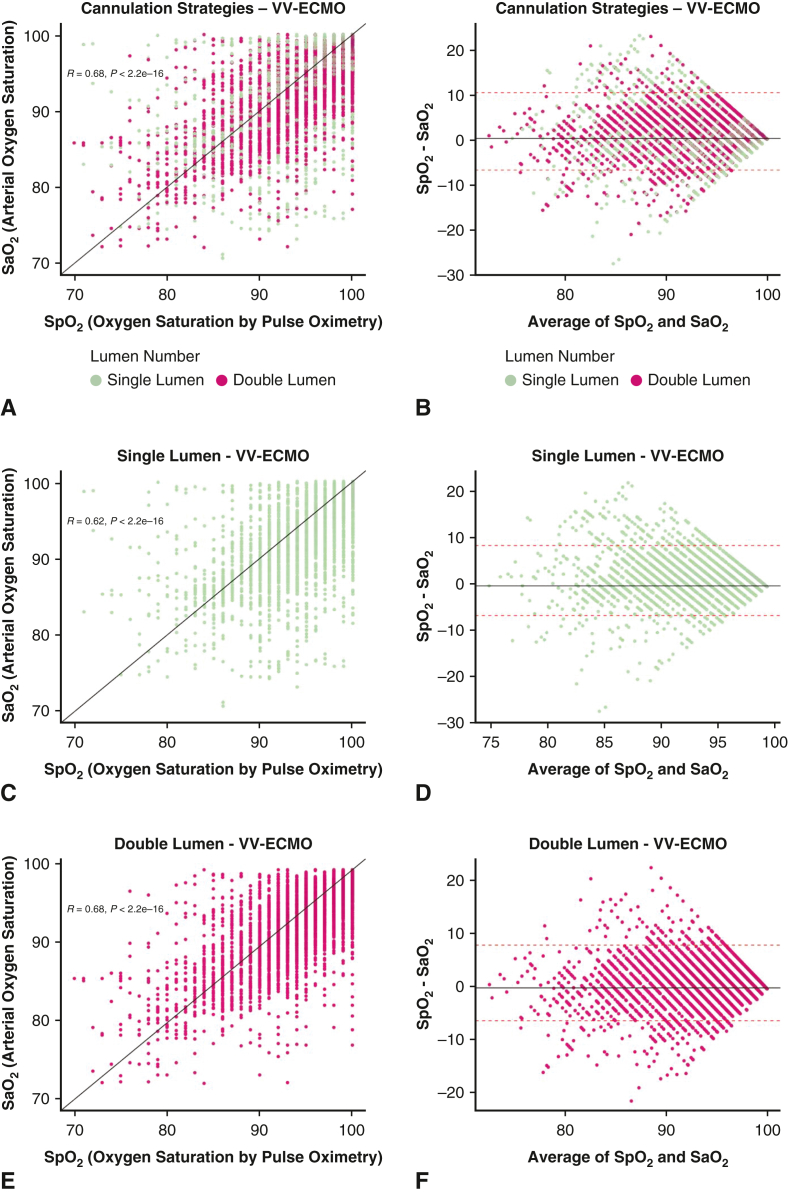
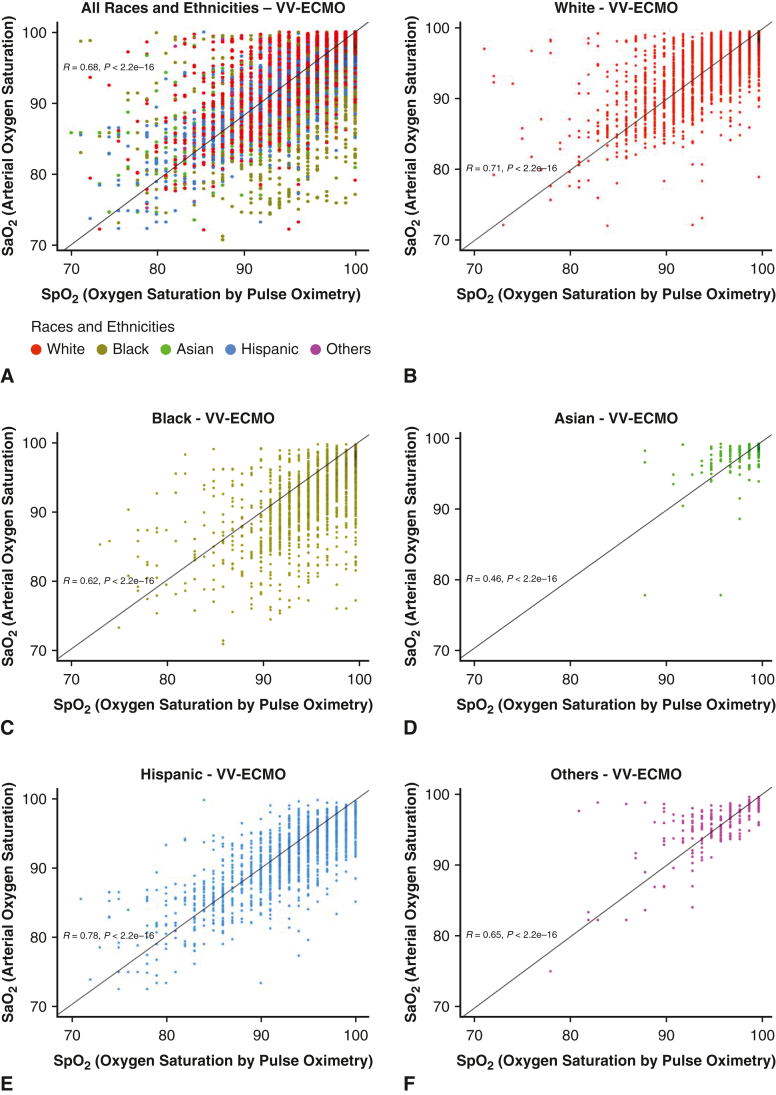
Of 139 patients receiving VA-ECMO and 57 patients receiving VV-ECMO, we examined 16,252 SpO-SaO pairs. The SpO-SaO discrepancy was greater in VV-ECMO (1.4%) versus VA-ECMO (0.15%). In VA-ECMO, SpO overestimated SaO in Asian (0.2%), Black (0.94%), and Hispanic (0.03%) patients and underestimated SaO in White (-0.06%) and nonspecified race (-0.80%) patients. The proportion of SpO-SaO measurements considered occult hypoxemia was 70% from Black compared to 27% from White patients ( < .0001). In VV-ECMO, SpO overestimated SaO in Asian (1.0%), Black (2.9%), Hispanic (1.1%), and White (0.50%) patients and underestimated SaO in nonspecified race patients (-0.53%). In linear mixed-effects modeling, SpO overestimated SaO by 0.19% in Black patients (95% confidence interval, 0.045%-0.33%, = .023). The proportion of SpO-SaO measurements considered occult hypoxemia was 66% from Black compared with 16% from White patients ( < .0001).
SpO overestimates SaO in Asian, Black, and Hispanic versus White patients, and this discrepancy was greater in VV-ECMO versus VA-ECMO, suggesting the need for physiological studies.
确定接受体外膜肺氧合(ECMO)治疗的患者在脉搏血氧饱和度(SpO)与血氧饱和度(SaO)之间是否存在种族差异。
这是一项在三级学术ECMO中心进行的回顾性观察研究,纳入接受静脉-动脉(VA)或静脉-静脉(VV)ECMO治疗的成年患者(>18岁)。若血氧饱和度≤70%或SpO-SaO配对数据未在10分钟内测量,则将这些数据点排除。主要结局是不同种族/族裔之间SpO-SaO的差异。采用Bland-Altman分析和线性混合效应模型,并对预先设定的协变量进行调整,以评估种族/族裔之间的SpO-SaO差异。隐匿性低氧血症定义为SaO<88%且同时测量的SpO≥92%。
在139例接受VA-ECMO治疗的患者和57例接受VV-ECMO治疗的患者中,我们检查了16252对SpO-SaO数据。与VA-ECMO(0.15%)相比,VV-ECMO中SpO-SaO的差异更大(1.4%)。在VA-ECMO中,亚洲患者(0.2%)、黑人患者(0.94%)和西班牙裔患者(0.03%)的SpO高估了SaO,而白人患者(-0.06%)和未明确种族的患者(-0.80%)的SpO低估了SaO。被视为隐匿性低氧血症的SpO-SaO测量比例,黑人患者为70%,而白人患者为27%(P<0.0001)。在VV-ECMO中,亚洲患者(1.0%)、黑人患者(2.9%)、西班牙裔患者(1.1%)和白人患者(0.50%)的SpO高估了SaO,未明确种族的患者的SpO低估了SaO(-0.53%)。在线性混合效应模型中,黑人患者的SpO高估SaO 0.19%(95%置信区间,0.045%-0.33%,P=0.023)。被视为隐匿性低氧血症的SpO-SaO测量比例,黑人患者为66%,而白人患者为16%(P<0.0001)。
与白人患者相比,亚洲、黑人和西班牙裔患者的SpO高估了SaO,且这种差异在VV-ECMO中比在VA-ECMO中更大,提示有必要进行生理学研究。