Cancer Biology Research Center (Key Laboratory of the Ministry of Education), Tongji Hospital, Tongji Medical College, Huazhong University of Science and Technology, Wuhan, 430000, People's Republic of China.
National Clinical Research Center for Obstetrics and Gynecology, Department of Gynecological Oncology, Tongji Hospital, Tongji Medical College, Huazhong University of Science and Technology, Wuhan, Hubei, 430030, China.
J Ovarian Res. 2023 Jul 10;16(1):136. doi: 10.1186/s13048-023-01216-z.
Paclitaxel dose-dense regimen has been controversial in clinical trials in recent years. This systematic review and meta-analysis tried to evaluate the efficacy and safety of paclitaxel dose-dense chemotherapy in primary epithelial ovarian cancer.
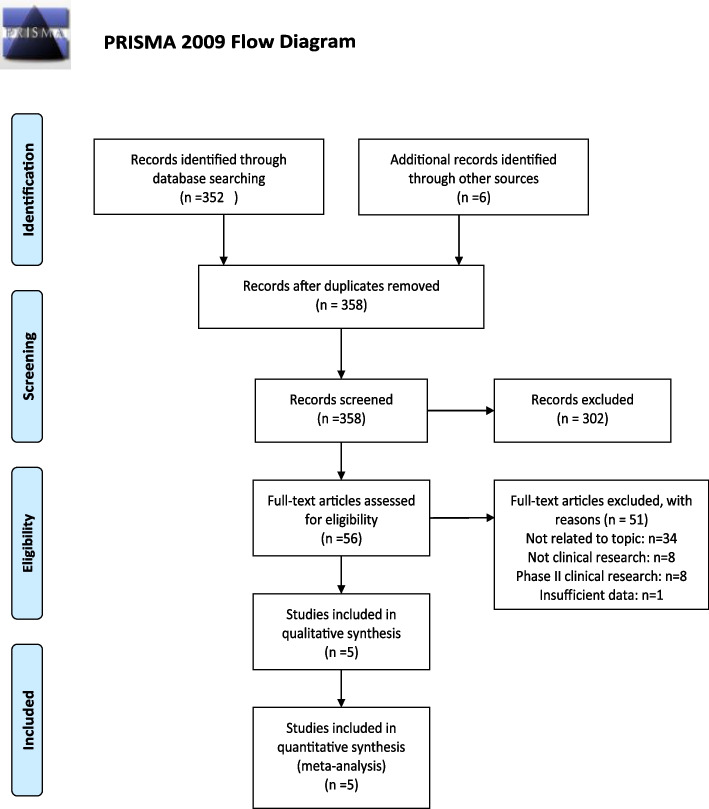
An electronic search following PRISMA guidelines was conducted (Prospero registration number: CRD42020187622), and then a systematic review and meta-analysis of included literature were initiated to determine which regimen was better.
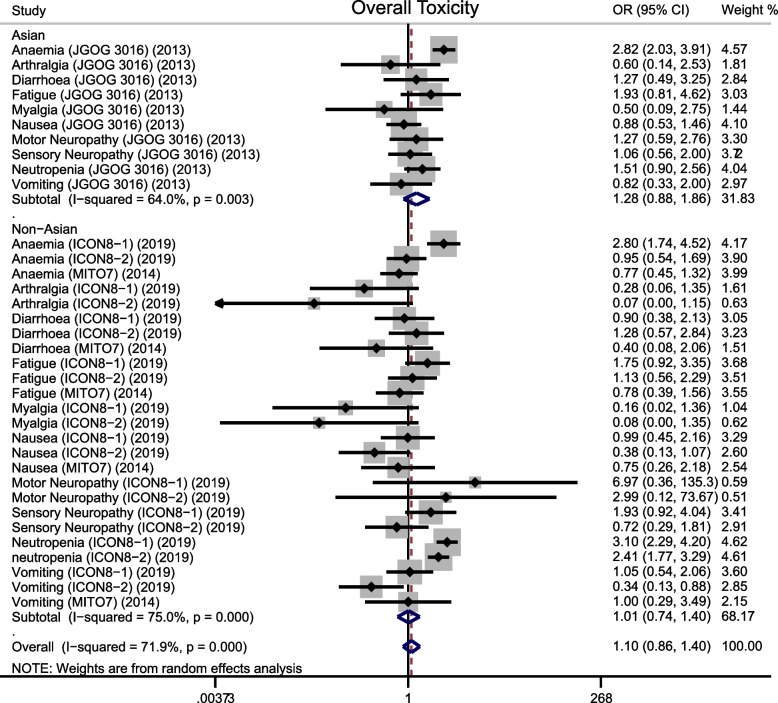
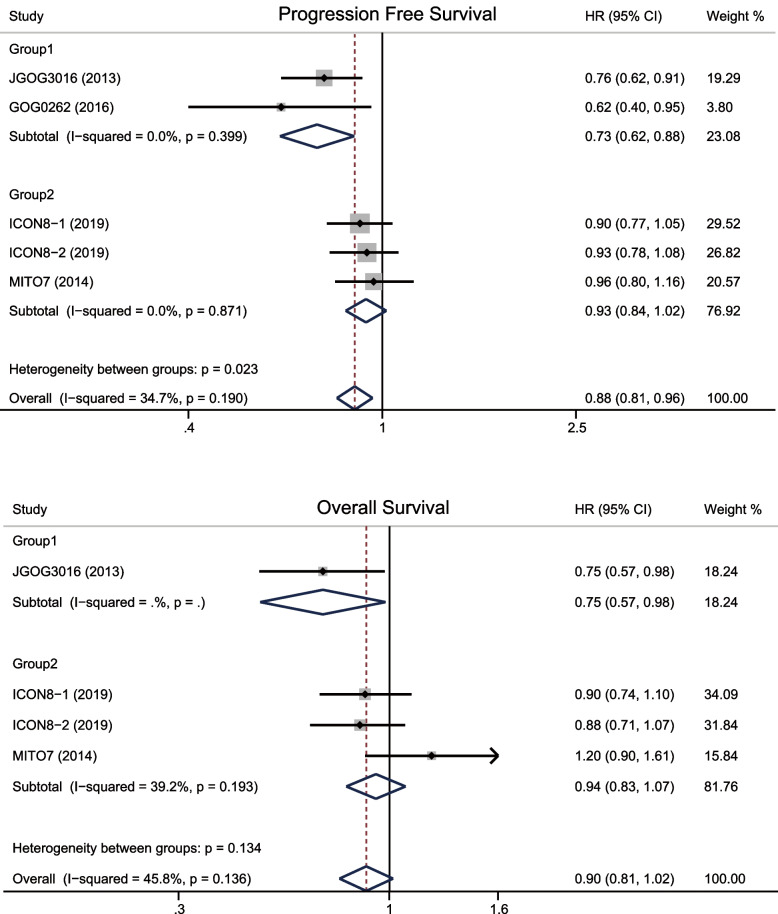
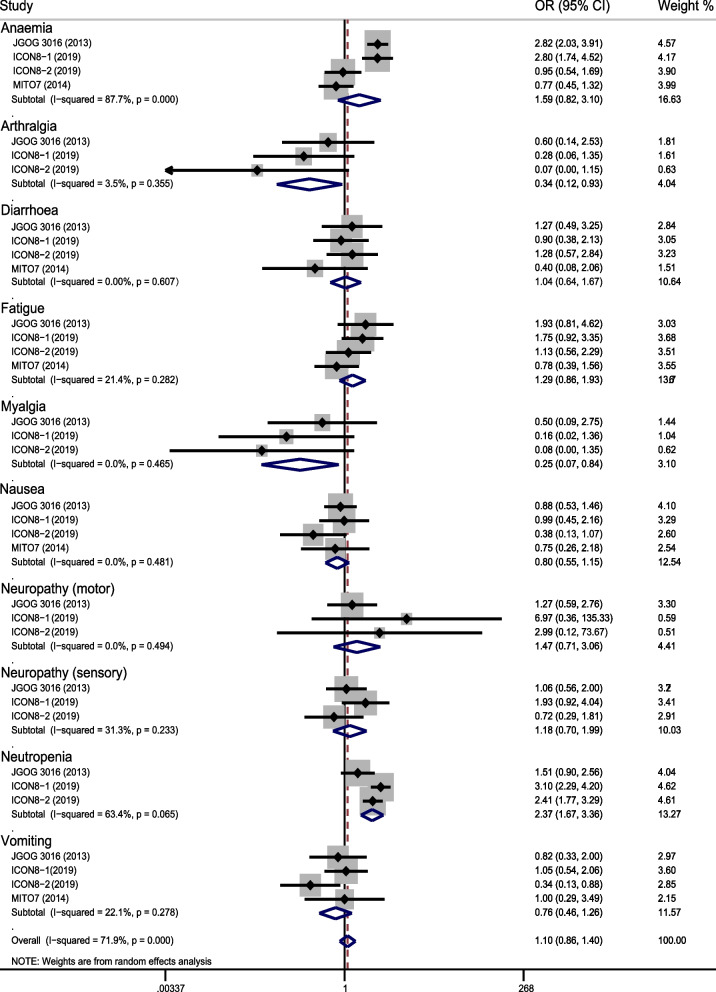
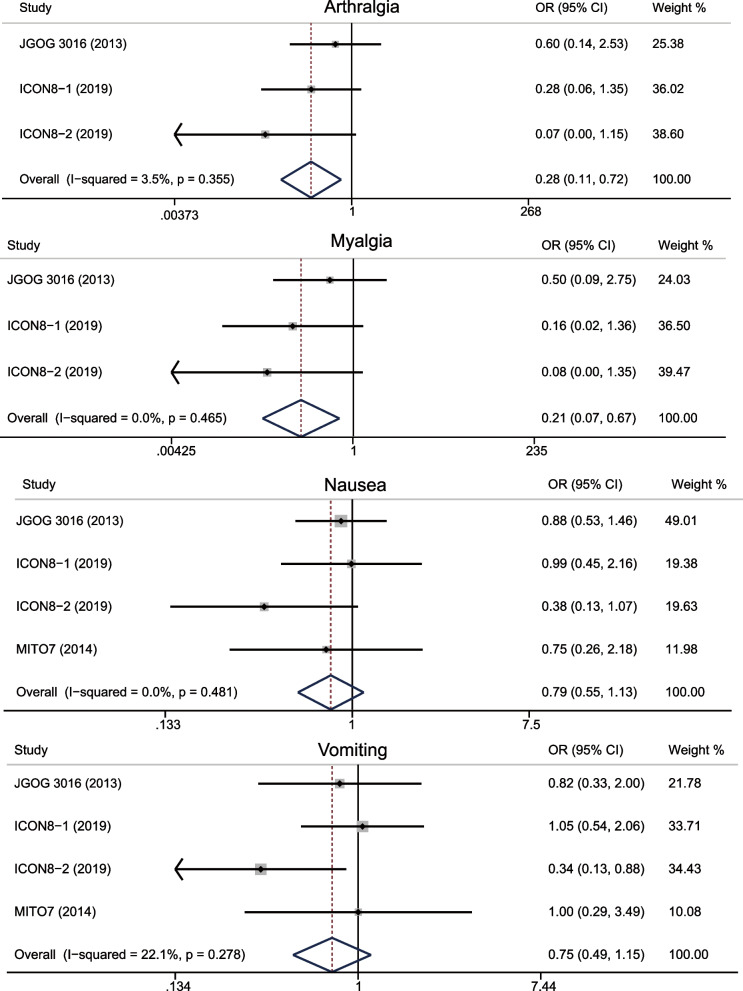
Four randomized controlled trials were included in the qualitative evaluation, and 3699 ovarian cancer patients were included in the meta-analysis. The meta-analysis revealed that the dose-dense regimen could prolong PFS (HR0.88, 95%CI 0.81-0.96; p = 0.002) and OS (HR0.90, 95%CI 0.81-1.02; p = 0.09), but it also increased the overall toxicity (OR = 1.102, 95%CI 0.864-1.405; p = 0.433), especially toxicity of anemia (OR = 1.924, 95%CI 1.548-2.391; p < 0.001), neutropenia (OR = 2.372, 95%CI 1.674-3.361; p < 0.001). Subgroup analysis indicated that the dose-dense regimen could significantly prolong not only PFS (HR0.76, 95%CI 0.63-0.92; p = 0.005 VS HR0.91, 95%CI 0.83-1.00; p = 0.046) but also OS (HR0.75, 95%CI 0.557-0.98; p = 0.037 VS HR0.94, 95%CI 0.83-1.07; p = 0.371) in Asian, and overall toxicity was significantly increased in Asians (OR = 1.28, 95%CI: 0.877-1.858, p = 0.202) compared to non-Asians (OR = 1.02, 95%CI 0.737-1.396, p = 0.929).
Paclitaxel dose-dense regimen could prolong PFS and OS, but it also increased the overall toxicity. Therapeutic benefits and toxicity of dose-dense are more obvious in Asians compared to non-Asians, which need to be further confirmed in clinical trials.
近年来,紫杉醇剂量密集方案在临床试验中备受争议。本系统评价和荟萃分析旨在评估原发性上皮性卵巢癌中紫杉醇剂量密集化疗的疗效和安全性。
按照 PRISMA 指南进行电子检索(Prospéro 注册号:CRD42020187622),然后对纳入文献进行系统评价和荟萃分析,以确定哪种方案更好。
定性评估纳入了 4 项随机对照试验,共有 3699 名卵巢癌患者纳入荟萃分析。荟萃分析显示,剂量密集方案可延长 PFS(HR0.88,95%CI 0.81-0.96;p=0.002)和 OS(HR0.90,95%CI 0.81-1.02;p=0.09),但也增加了总体毒性(OR=1.102,95%CI 0.864-1.405;p=0.433),特别是贫血毒性(OR=1.924,95%CI 1.548-2.391;p<0.001)和中性粒细胞减少毒性(OR=2.372,95%CI 1.674-3.361;p<0.001)。亚组分析表明,剂量密集方案不仅可显著延长 PFS(HR0.76,95%CI 0.63-0.92;p=0.005 VS HR0.91,95%CI 0.83-1.00;p=0.046),而且可延长 OS(HR0.75,95%CI 0.557-0.98;p=0.037 VS HR0.94,95%CI 0.83-1.07;p=0.371),亚洲人群的总体毒性明显增加(OR=1.28,95%CI:0.877-1.858,p=0.202),而非亚洲人群的总体毒性无明显增加(OR=1.02,95%CI 0.737-1.396,p=0.929)。
紫杉醇剂量密集方案可延长 PFS 和 OS,但也增加了总体毒性。与非亚洲人群相比,剂量密集方案的治疗获益和毒性在亚洲人群中更为明显,这需要在临床试验中进一步证实。