Division of Gastroenterology, St. Michael's Hospital, University of Toronto, Toronto, Canada.
Department of Medicine, Queen's University, Kingston, Canada.
PLoS One. 2023 Jul 13;18(7):e0288474. doi: 10.1371/journal.pone.0288474. eCollection 2023.
Self-assessment of a physician's performance in both procedure and non-procedural activities can be used to identify their deficiencies to allow for appropriate corrective measures. Physicians are inaccurate in their self-assessments, which may compromise opportunities for self- development. To improve this accuracy, video-based interventions of physicians watching their own performance, an experts' performance or both, have been proposed to inform their self-assessment. We conducted a systematic review of the effectiveness of video-based interventions targeting improved self-assessment accuracy among physicians.
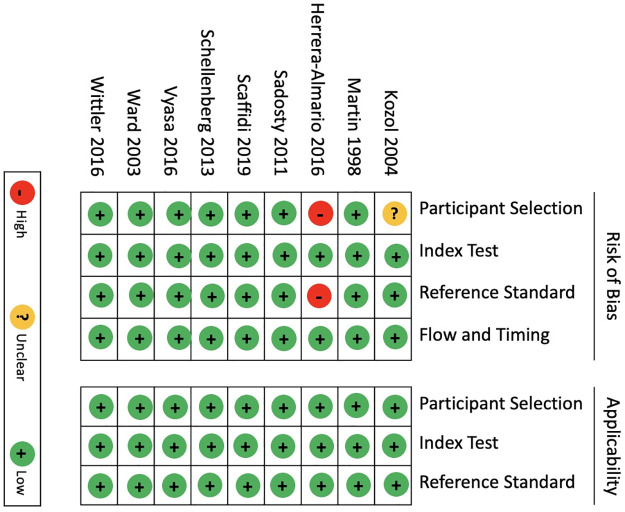
The authors performed a systematic search of MEDLINE, Embase, EBM reviews, and Scopus databases from inception to August 23, 2022, using combinations of terms for "self-assessment", "video-recording", and "physician". Eligible studies were empirical investigations assessing the effect of video-based interventions on physicians' self-assessment accuracy with a comparison of self-assessment accuracy pre- and post- video intervention. We defined self-assessment accuracy as a "direct comparison between an external evaluator and self-assessment that was quantified using formal statistical analysis". Two reviewers independently screened records, extracted data, assessed risk of bias, and evaluated quality of evidence. A narrative synthesis was conducted, as variable outcomes precluded a meta-analysis.
A total of 2,376 papers were initially retrieved. Of these, 22 papers were selected for full-text review; a final 9 studies met inclusion criteria for data extraction. Across studies, 240 participants from 5 specialties were represented. Video-based interventions included self-video review (8/9), benchmark video review (3/9), and/or a combination of both types (1/9). Five out of nine studies reported that participants had inaccurate self-assessment at baseline. After the intervention, 5 of 9 studies found a statistically significant improvement in self-assessment accuracy.
Overall, current data suggests video-based interventions can improve self-assessment accuracy. Benchmark video review may enable physicians to improve self-assessment accuracy, especially for those with limited experience performing a particular clinical skill. In contrast, self-video review may be able to provide improvement in self-assessment accuracy for more experience physicians. Future research should use standardized methods of comparison for self-assessment accuracy, such as the Bland-Altman analysis, to facilitate meta-analytic summation.
医生对其程序和非程序活动表现的自我评估可用于发现其不足之处,以便采取适当的纠正措施。医生对自己的评估不准确,这可能会影响自我发展的机会。为了提高这种准确性,已经提出了基于视频的干预措施,让医生观看自己的表现、专家的表现或两者的表现,以告知他们的自我评估。我们对针对提高医生自我评估准确性的基于视频的干预措施的有效性进行了系统评价。
作者对 MEDLINE、Embase、EBM 综述和 Scopus 数据库进行了系统搜索,检索时间从建库到 2022 年 8 月 23 日,使用了“自我评估”、“视频记录”和“医生”的术语组合。符合条件的研究是评估基于视频的干预措施对医生自我评估准确性影响的实证研究,通过比较视频干预前后的自我评估准确性来进行评估。我们将自我评估准确性定义为“外部评估者与自我评估之间的直接比较,使用正式的统计分析进行量化”。两名评审员独立筛选记录、提取数据、评估偏倚风险和评估证据质量。由于存在可变的结果,因此进行了叙述性综合。
最初检索到 2376 篇论文。其中,22 篇论文进行了全文审查;最终有 9 项研究符合数据提取标准。在所有研究中,来自 5 个专业的 240 名参与者被纳入研究。基于视频的干预措施包括自我视频审查(9 项研究中的 8 项)、基准视频审查(9 项研究中的 3 项)和/或这两种类型的组合(9 项研究中的 1 项)。9 项研究中有 5 项报告参与者在基线时自我评估不准确。干预后,9 项研究中有 5 项发现自我评估准确性有统计学意义的提高。
总体而言,目前的数据表明,基于视频的干预措施可以提高自我评估的准确性。基准视频审查可能使医生能够提高自我评估的准确性,特别是对于那些在执行特定临床技能方面经验有限的医生。相比之下,自我视频审查可能能够为经验更丰富的医生提供自我评估准确性的提高。未来的研究应该使用自我评估准确性的标准化比较方法,如 Bland-Altman 分析,以促进荟萃分析的总结。