Department of Psychological Sciences, Kent State University, Kent, Ohio, United States of America.
Brain Health Research Institute, Kent State University, Kent, Ohio, United States of America.
PLoS One. 2023 Jul 13;18(7):e0286221. doi: 10.1371/journal.pone.0286221. eCollection 2023.
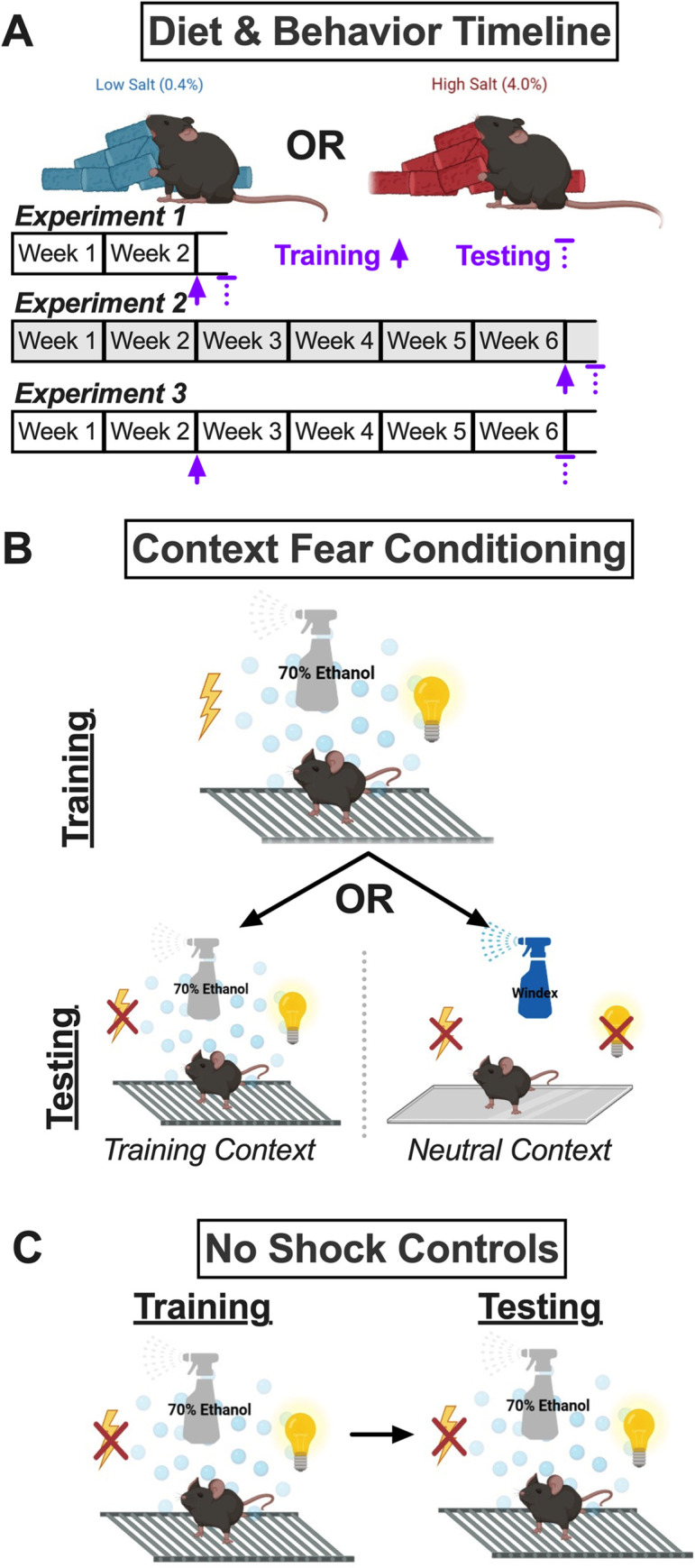
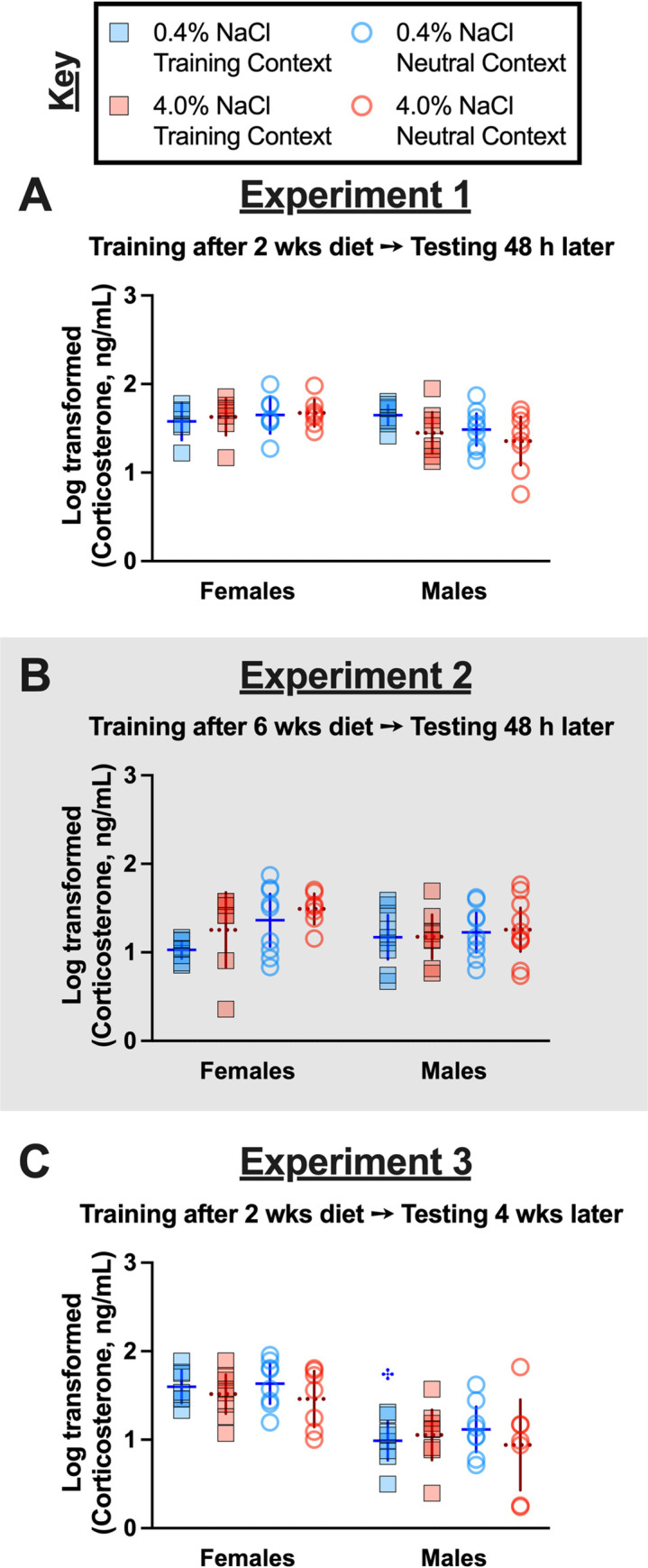
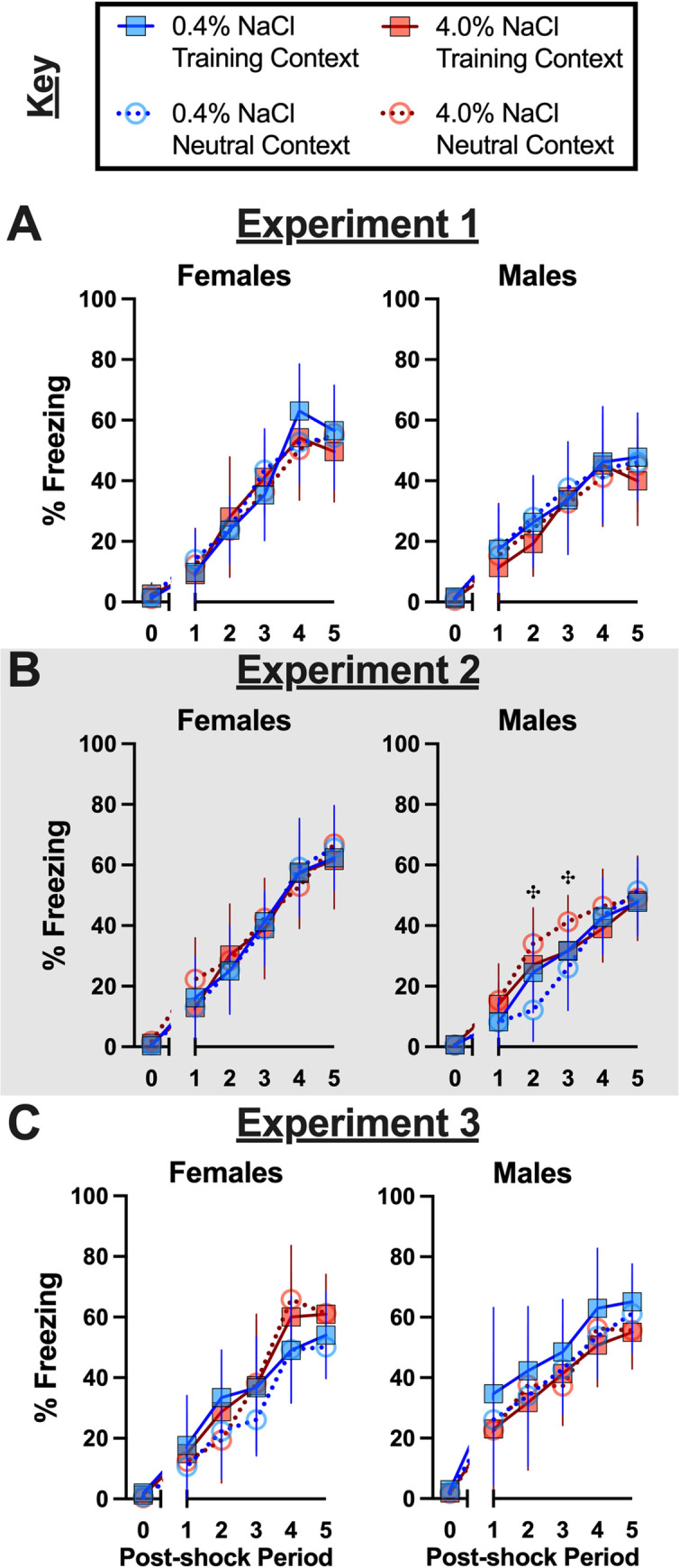
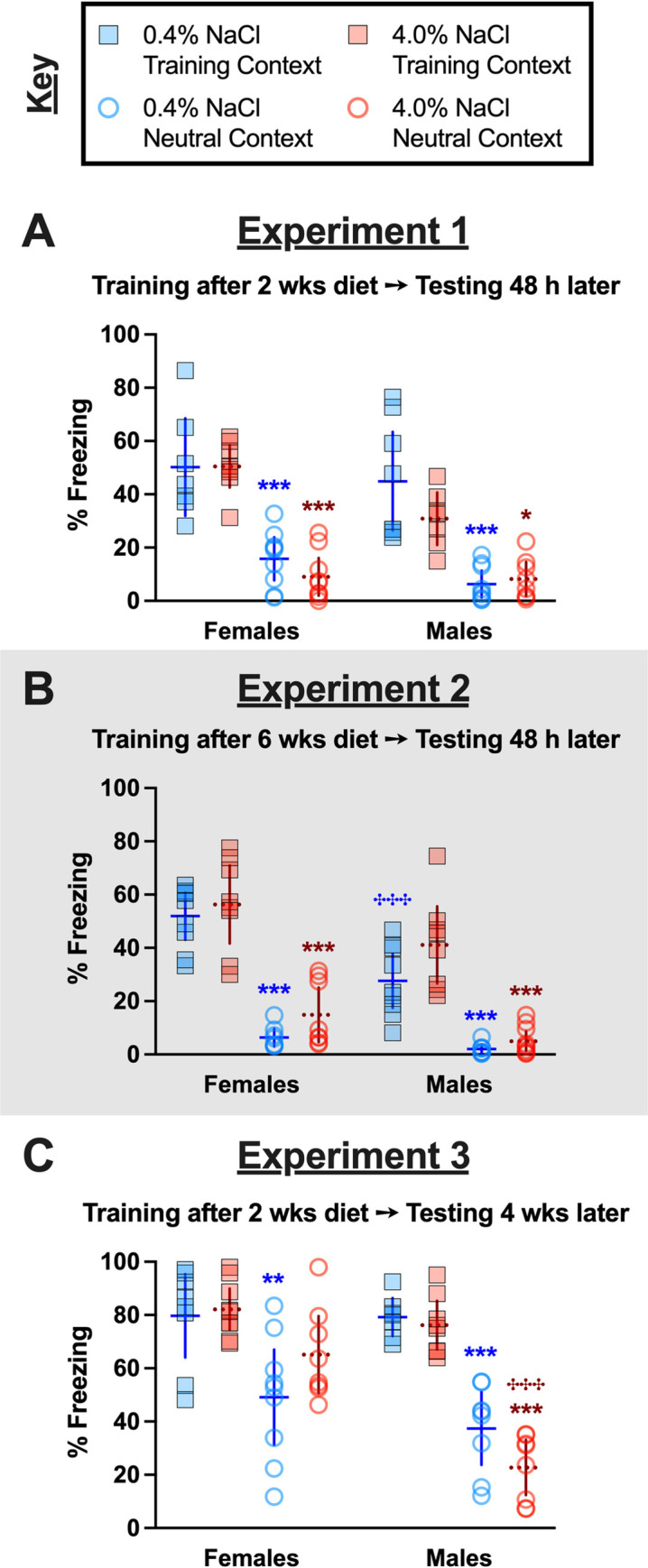
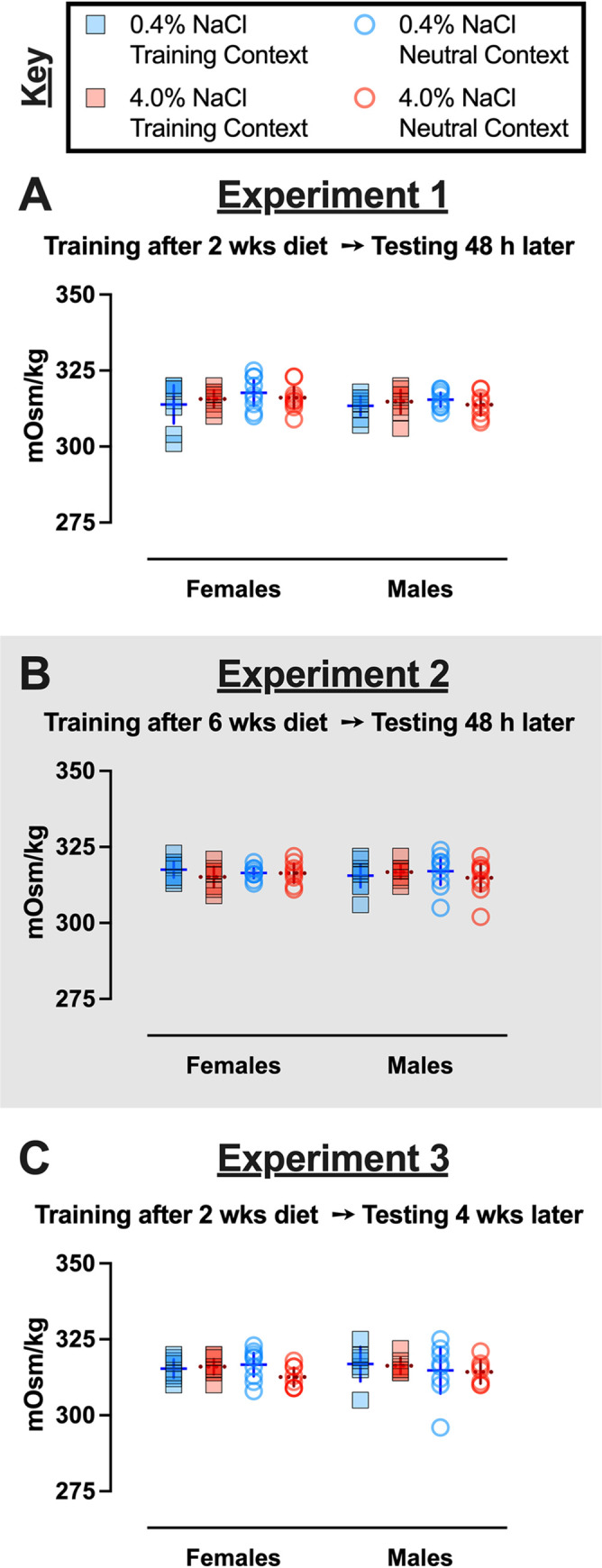
A hallmark symptom of many anxiety disorders, and multiple neuropsychiatric disorders more broadly, is generalization of fearful responses to non-fearful stimuli. Anxiety disorders are often comorbid with cardiovascular diseases. One established, and modifiable, risk factor for cardiovascular diseases is salt intake. Yet, investigations into how excess salt consumption affects anxiety-relevant behaviors remains little explored. Moreover, no studies have yet assessed how high salt intake influences generalization of fear. Here, we used adult C57BL/6J mice of both sexes to evaluate the influence of two or six weeks of high salt consumption (4.0% NaCl), compared to controls (0.4% NaCl), on contextual fear acquisition, expression, and generalization. Further, we measured osmotic and physiological stress by quantifying serum osmolality and corticosterone levels, respectively. Consuming excess salt did not influence contextual fear acquisition nor discrimination between the context used for training and a novel, neutral context when training occurred 48 prior to testing. However, when a four week delay between training and testing was employed to induce natural fear generalization processes, we found that high salt intake selectively increases contextual fear generalization in females, but the same diet reduces contextual fear generalization in males. These sex-specific effects were independent of any changes in serum osmolality nor corticosterone levels, suggesting the behavioral shifts are a consequence of more subtle, neurophysiologic changes. This is the first evidence of salt consumption influencing contextual fear generalization, and adds information about sex-specific effects of salt that are largely missing from current literature.
许多焦虑症以及更广泛的多种神经精神疾病的一个显著症状是,将恐惧反应泛化到非恐惧刺激上。焦虑症通常与心血管疾病共病。心血管疾病的一个既定且可改变的风险因素是盐的摄入量。然而,关于过量盐摄入如何影响与焦虑相关的行为的研究仍鲜有探索。此外,尚无研究评估高盐摄入如何影响恐惧的泛化。在这里,我们使用成年 C57BL/6J 雌雄小鼠来评估 2 或 6 周高盐摄入(4.0%NaCl)与对照组(0.4%NaCl)相比,对情境恐惧获得、表达和泛化的影响。此外,我们通过分别定量血清渗透压和皮质酮水平来测量渗透和生理应激。摄入过量的盐不会影响情境恐惧的获得,也不会影响训练时使用的情境与训练前 48 小时进行测试时使用的新的、中性情境之间的区分。然而,当在训练和测试之间采用 4 周的延迟来诱导自然恐惧泛化过程时,我们发现高盐摄入选择性地增加了雌性的情境恐惧泛化,但相同的饮食减少了雄性的情境恐惧泛化。这些性别特异性效应独立于血清渗透压或皮质酮水平的任何变化,表明行为变化是更微妙的神经生理变化的结果。这是盐摄入影响情境恐惧泛化的第一个证据,并提供了关于盐的性别特异性影响的信息,这些信息在当前文献中大多缺失。