Clinical and Interventional Cardiology Unit, Cardio-Thoracic Center, IRCCS Ospedale Galeazzi-Sant'Ambrogio, Gruppo San Donato, Via Cristina Belgioioso, 173, Milan, Italy.
Istituto Clinico Sant'Ambrogio, Milan, Italy.
J Cardiothorac Surg. 2023 Jul 13;18(1):231. doi: 10.1186/s13019-023-02338-7.
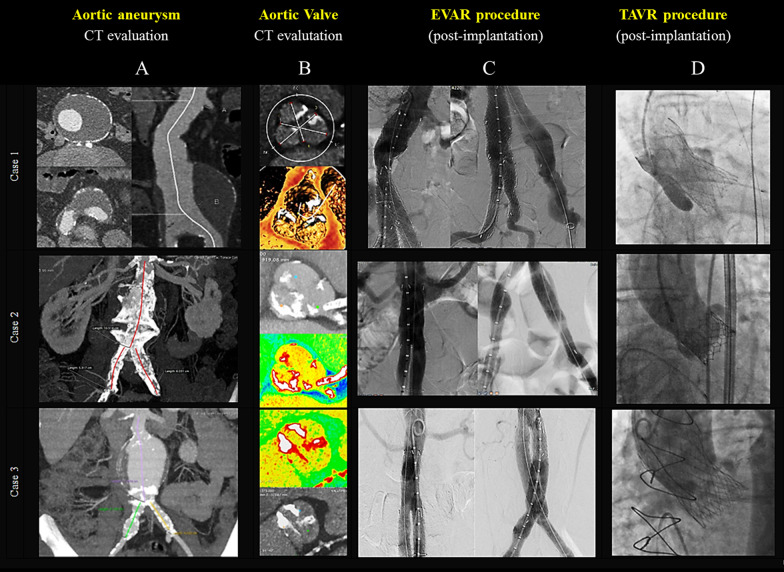
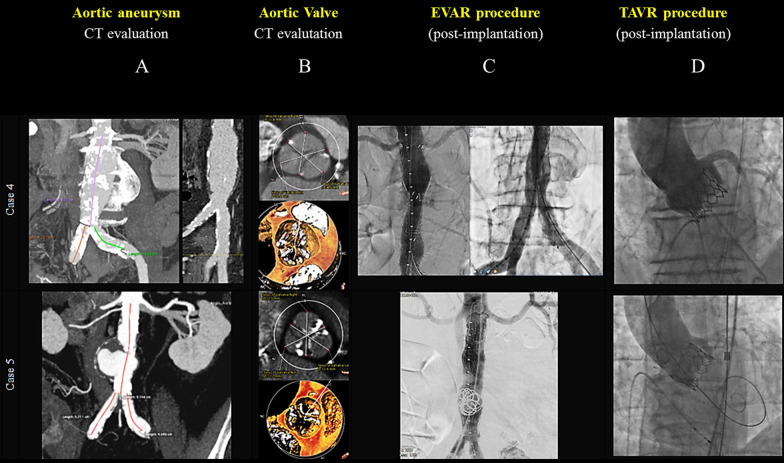
Symptomatic aortic valve stenosis (AS) and abdominal aortic aneurysm (AAA) are critical clinical conditions, increasingly more prevalent with aging of the population. Calcific aortic stenosis is the most common structural cardiac disease in the elderly population, and medical management of severe aortic stenosis of the elderly population is associated with poor outcomes as compared to surgical treatment. Transcatheter aortic valve replacement (TAVR) is a treatment of choice in inoperable, often elderly, patients with symptomatic severe AS and in intermediate-to-high surgical risk patients. It is not yet clarified the incidence of AAA and its impact on procedural and clinical outcomes among patients undergoing TAVR. It is known that after AS resolution with aortic valve replacement or TAVR there is an increase in blood pressure that increases the risk of dissection or abdominal aortic aneurysm rupture if AAA repair is delayed. The purpose of this report is to describe the anatomical details and technical and procedural considerations when proposing totally endovascular strategies dedicated to the treatment of patients with AS and AAA.
症状性主动脉瓣狭窄(AS)和腹主动脉瘤(AAA)是严重的临床病症,随着人口老龄化,其发病率日益增高。钙化性主动脉瓣狭窄是老年人群中最常见的结构性心脏病,与手术治疗相比,老年重度主动脉瓣狭窄患者的药物治疗效果较差。经导管主动脉瓣置换术(TAVR)是无法手术的、通常为老年患者、有症状的重度 AS 患者以及中高危手术风险患者的首选治疗方法。目前尚不清楚 TAVR 术后 AAA 的发生率及其对手术过程和临床结果的影响。众所周知,主动脉瓣置换术或 TAVR 后 AS 得到解决,血压升高,如果 AAA 修复延迟,会增加夹层或腹主动脉瘤破裂的风险。本报告的目的是描述在提出专门用于治疗 AS 和 AAA 患者的完全血管内策略时的解剖细节和技术及程序注意事项。