Faculty of Chemical and Environmental Technology, Hung Yen University of Technology and Education, Khoai Chau District, Hung Yen 17817, Vietnam.
Faculty of Chemistry, TNU-University of Sciences, Thai Nguyen City 25000, Vietnam.
Molecules. 2023 Jun 29;28(13):5119. doi: 10.3390/molecules28135119.
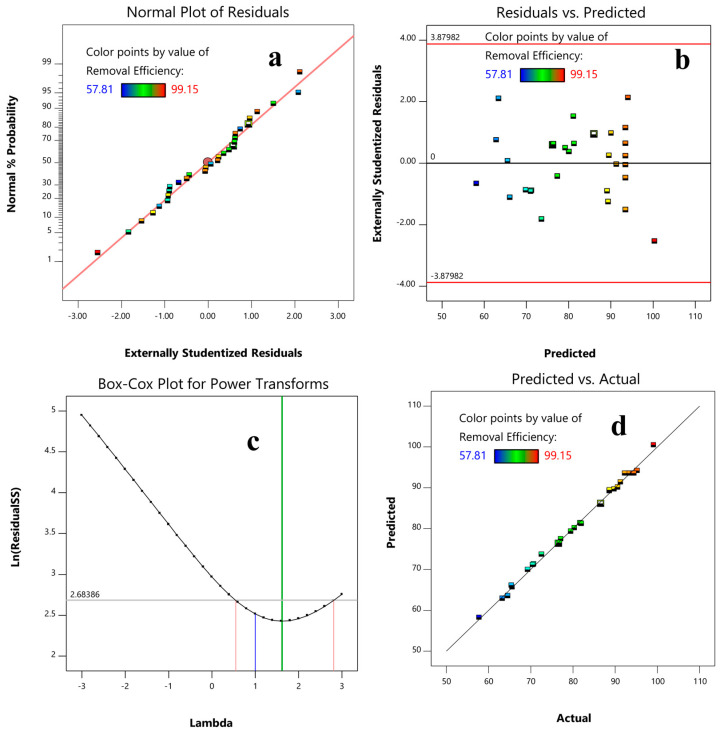
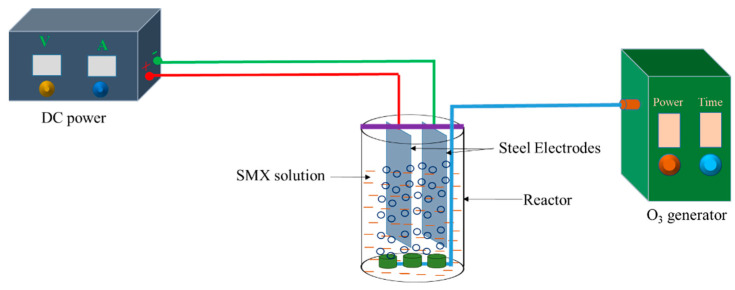
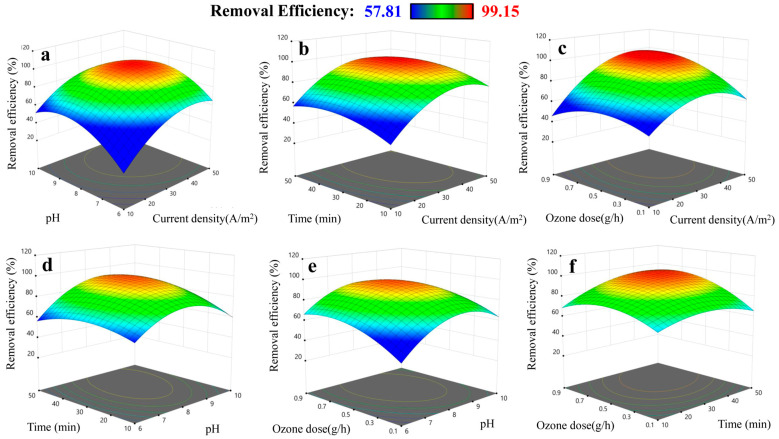
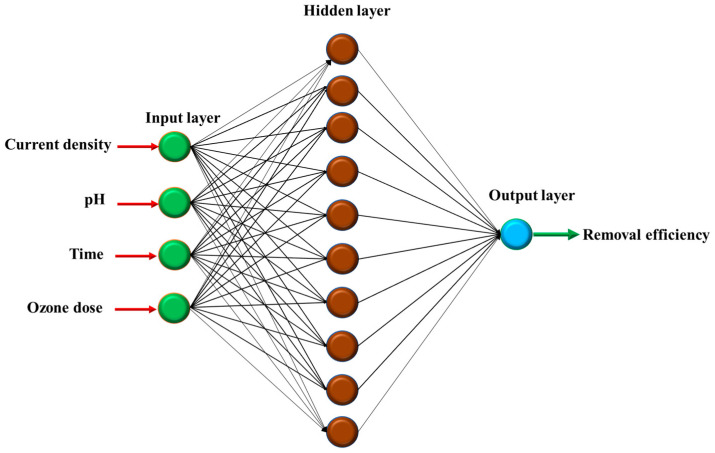
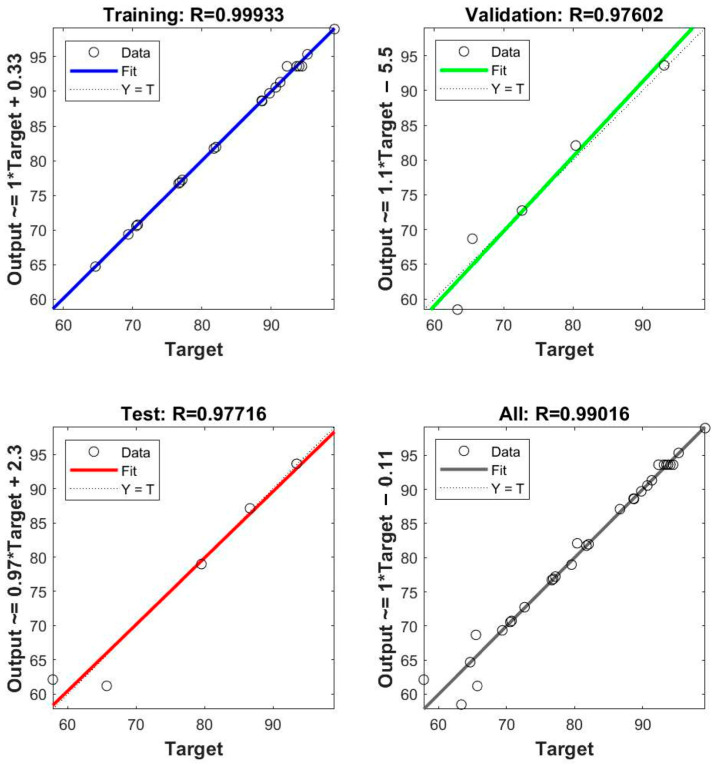
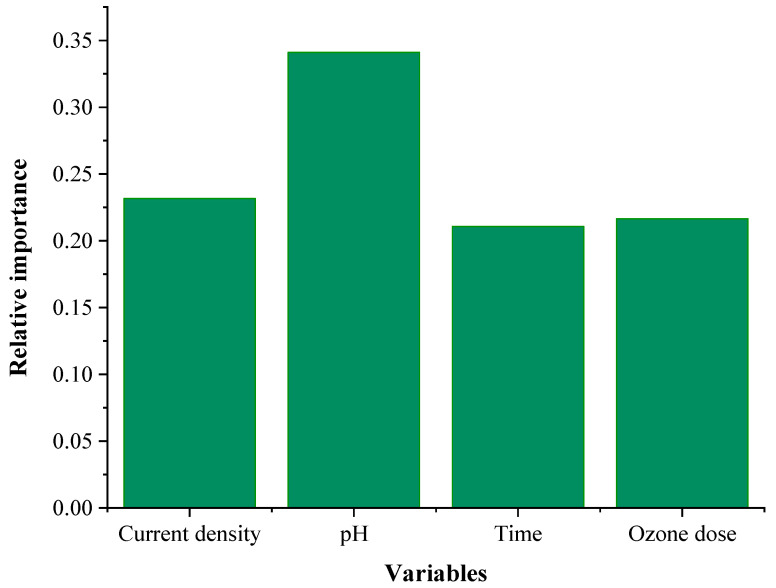
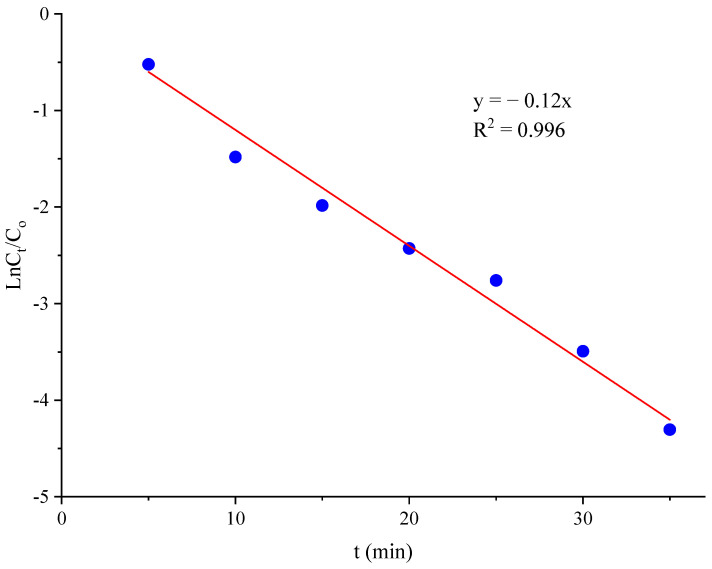
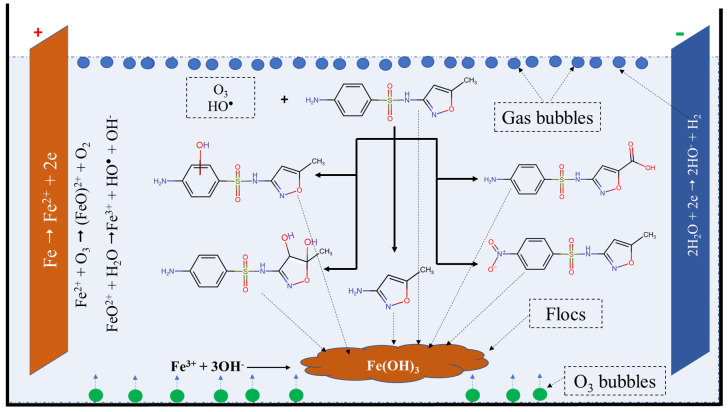
Removing antibiotics from water is critical to prevent the emergence and spread of antibiotic resistance, protect ecosystems, and maintain the effectiveness of these vital medications. The combination of ozone and electrocoagulation in wastewater treatment provides enhanced removal of contaminants, improved disinfection efficiency, and increased overall treatment effectiveness. In this work, the removal of sulfamethoxazole (SMX) from an aqueous solution using an ozone-electrocoagulation (O-EC) system was optimized and modeled. The experiments were designed according to the central composite design. The parameters, including current density, reaction time, pH, and ozone dose affecting the SMX removal efficiency of the OEC system, were optimized using a response surface methodology. The results show that the removal process was accurately predicted by the quadric model. The numerical optimization results show that the optimum conditions were a current density of 33.2 A/m, a time of 37.8 min, pH of 8.4, and an ozone dose of 0.7 g/h. Under these conditions, the removal efficiency reached 99.65%. A three-layer artificial neural network (ANN) with logsig-purelin transfer functions was used to model the removal process. The data predicted by the ANN model matched well to the experimental data. The calculation of the relative importance showed that pH was the most influential factor, followed by current density, ozone dose, and time. The kinetics of the SMX removal process followed the first-order kinetic model with a rate constant of 0.12 (min). The removal mechanism involves various processes such as oxidation and reduction on the surface of electrodes, the reaction between ozone and ferrous ions, degradation of SMX molecules, formation of flocs, and adsorption of species on the flocs. The results obtained in this work indicate that the O-EC system is a potential approach for the removal of antibiotics from water.
从水中去除抗生素对于防止抗生素耐药性的出现和传播、保护生态系统以及维持这些重要药物的有效性至关重要。在废水处理中,臭氧和电凝聚的结合提供了增强的污染物去除、提高的消毒效率和整体处理效果。在这项工作中,使用臭氧-电凝聚(O-EC)系统优化并模拟了从水溶液中去除磺胺甲恶唑(SMX)的过程。实验根据中心复合设计进行设计。通过响应面法优化了电流密度、反应时间、pH 值和臭氧剂量等参数,这些参数会影响 OEC 系统对 SMX 去除效率的影响。结果表明,该去除过程可由二次模型准确预测。数值优化结果表明,最佳条件为电流密度为 33.2 A/m、时间为 37.8 min、pH 值为 8.4 和臭氧剂量为 0.7 g/h。在此条件下,去除效率达到 99.65%。采用具有 logsig-purelin 传递函数的三层人工神经网络(ANN)来模拟去除过程。ANN 模型预测的数据与实验数据吻合良好。相对重要性的计算表明,pH 值是最具影响力的因素,其次是电流密度、臭氧剂量和时间。SMX 去除过程的动力学遵循一级动力学模型,速率常数为 0.12(min)。去除机制涉及电极表面的氧化还原等各种过程、臭氧与亚铁离子之间的反应、SMX 分子的降解、絮体的形成以及物种在絮体上的吸附。这项工作的结果表明,O-EC 系统是从水中去除抗生素的一种有前途的方法。