Lima Jucelino de Sousa, Andrade Otávio Vitor Souza, Santos Leônidas Canuto Dos, Morais Everton Geraldo de, Martins Gabryel Silva, Mutz Yhan S, Nascimento Vitor L, Marchiori Paulo Eduardo Ribeiro, Lopes Guilherme, Guilherme Luiz Roberto Guimarães
Department of Biology, Institute of Natural Sciences, Federal University of Lavras (UFLA), Lavras 37200-900, MG, Brazil.
Department of Soil Science, School of Agricultural Sciences, Federal University of Lavras (UFLA), Lavras 37200-900, MG, Brazil.
Plants (Basel). 2023 Jul 5;12(13):2555. doi: 10.3390/plants12132555.
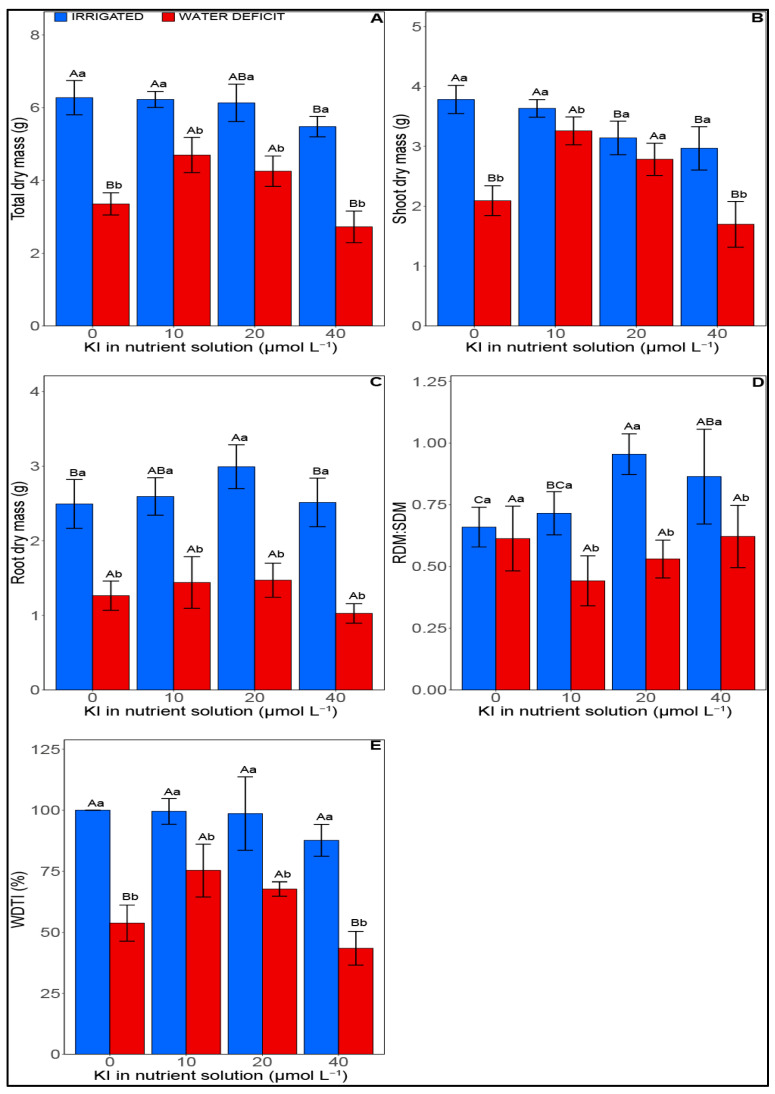
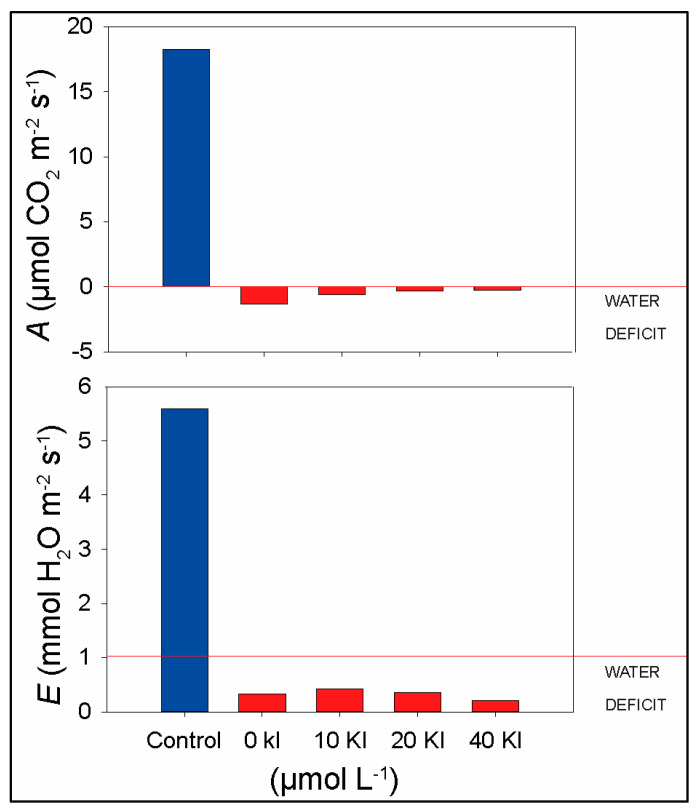
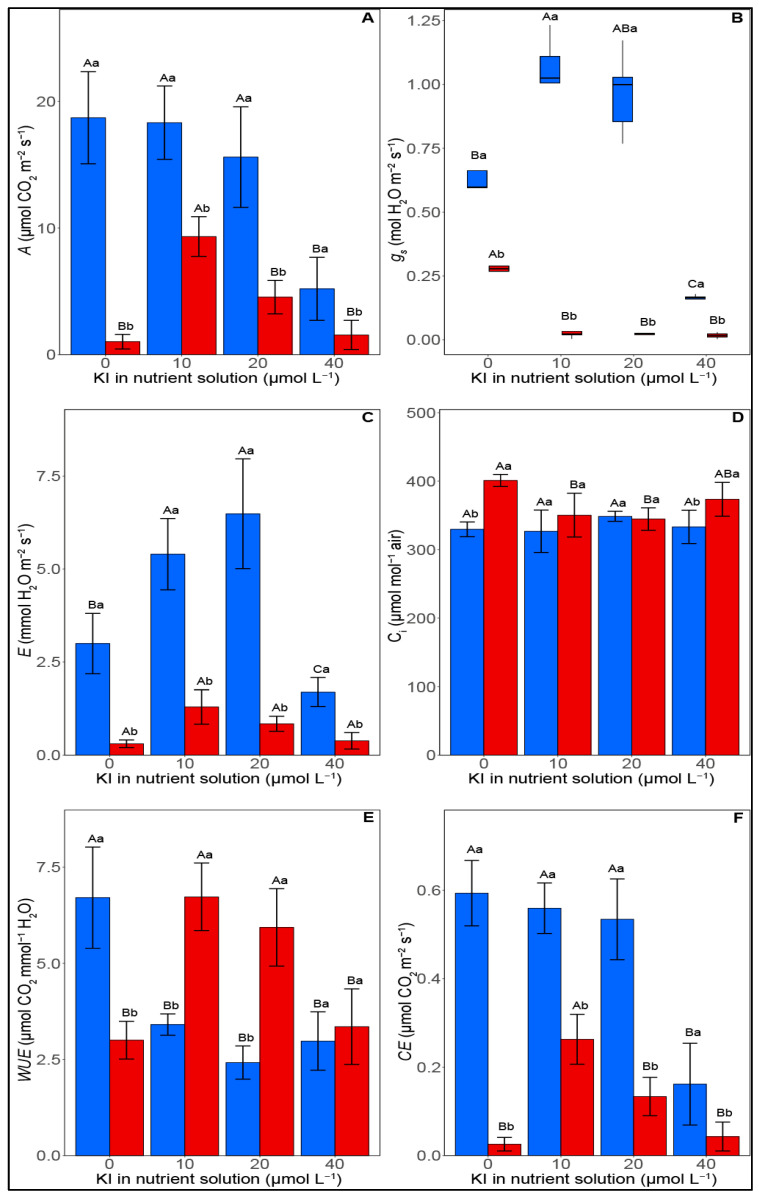
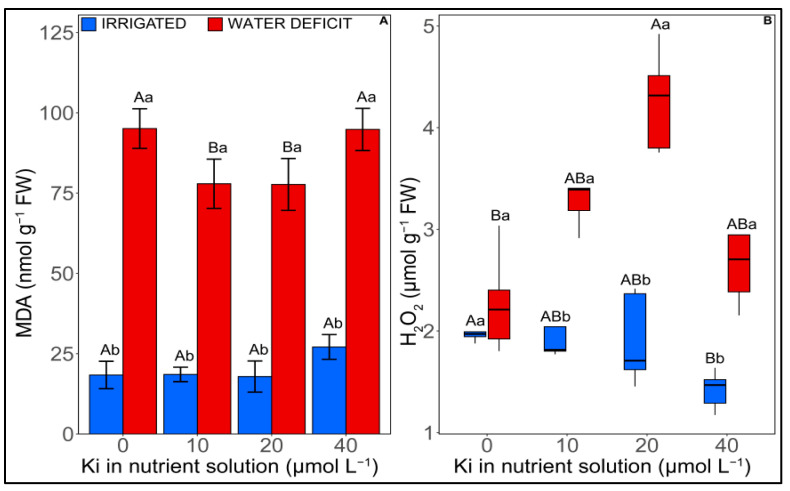
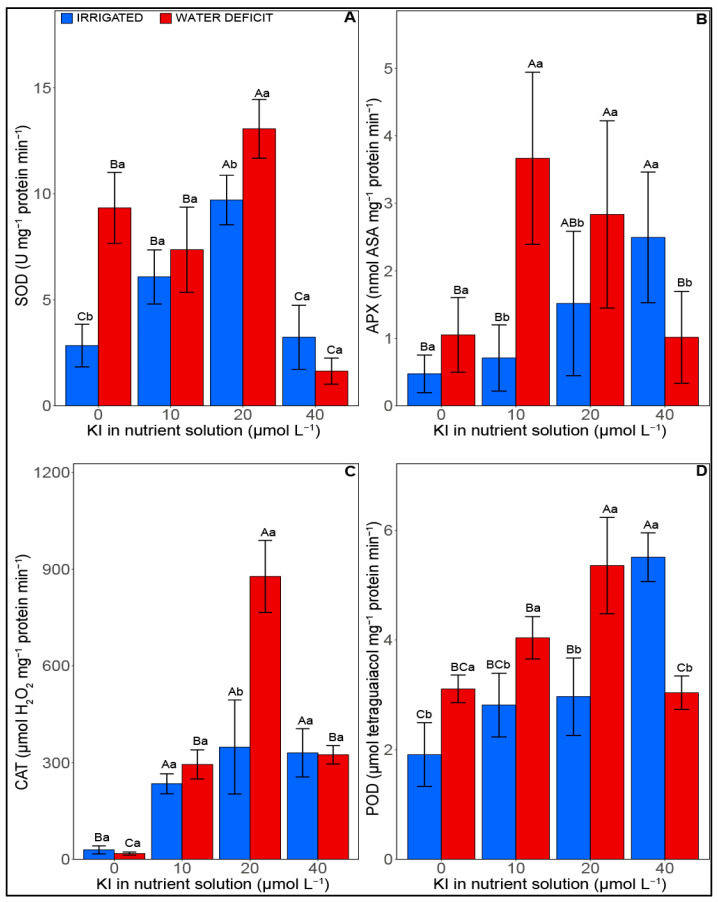
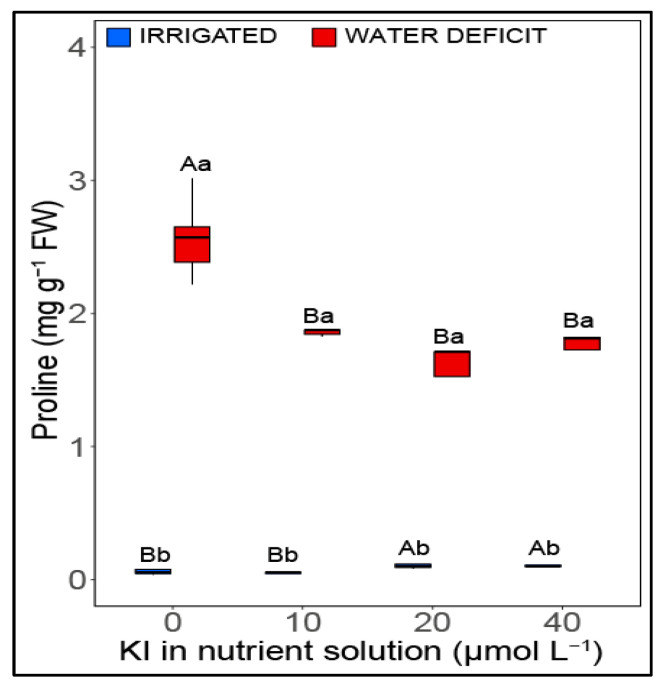
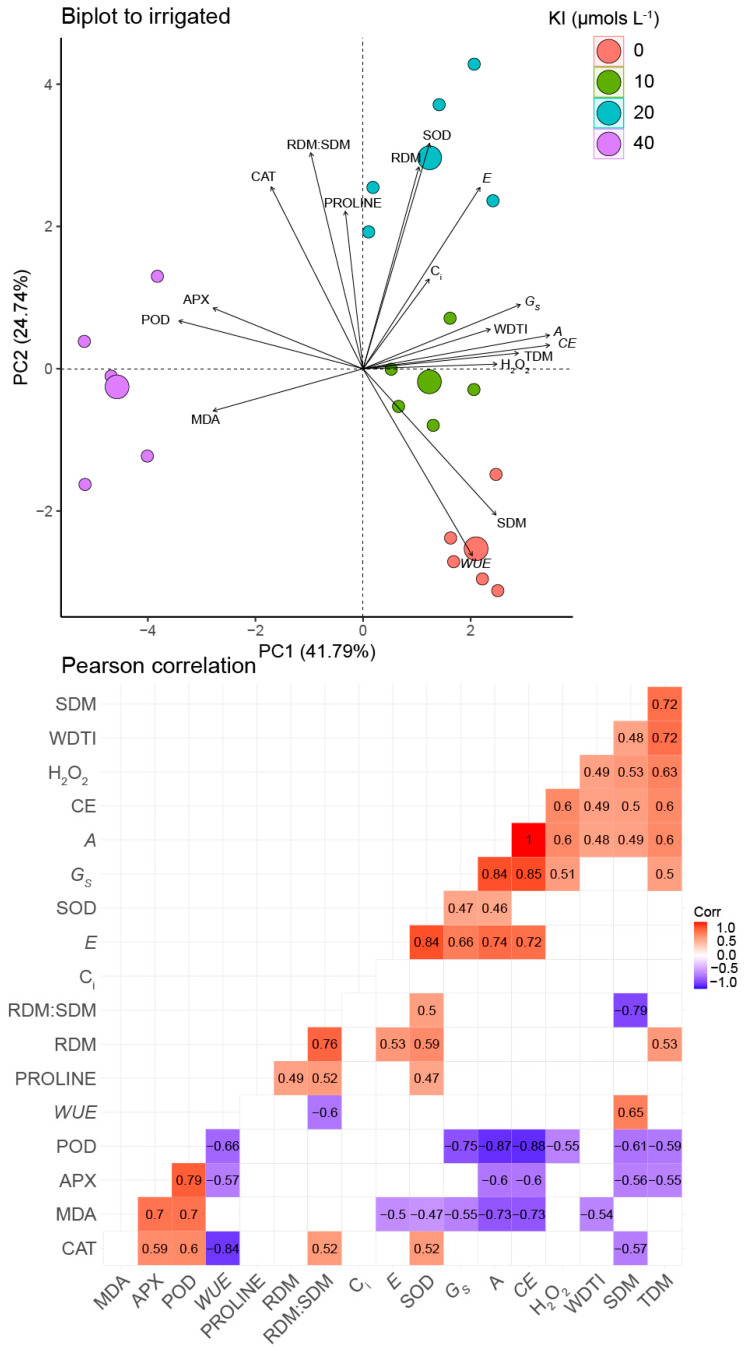
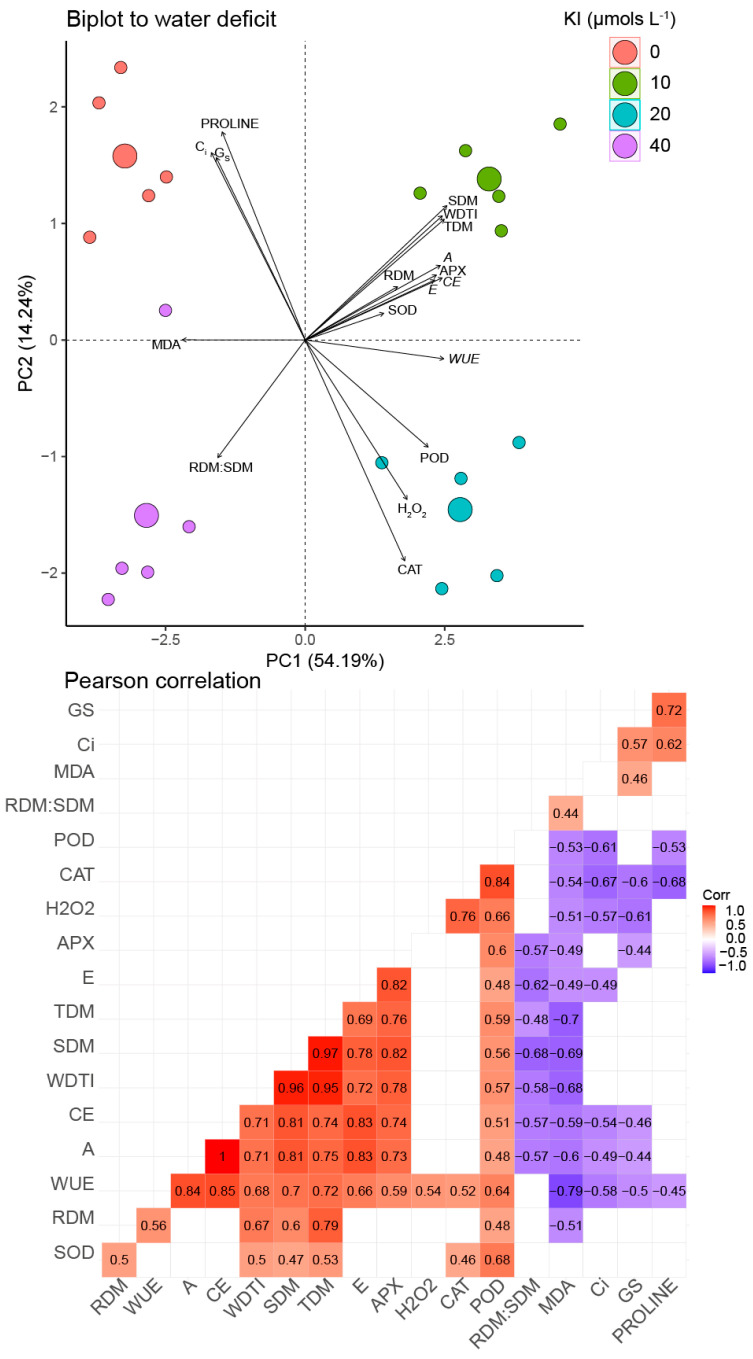
Water deficit inhibits plant growth by affecting several physiological processes, which leads to the overproduction of reactive oxygen species (ROS) that may cause oxidative stress. In this regard, iodine (I) is already known to possibly enhance the antioxidant defense system of plants and promote photosynthetic improvements under adverse conditions. However, its direct effect on water deficit responses has not yet been demonstrated. To verify the efficiency of I concerning plant tolerance to water deficit, we exposed soybean plants to different concentrations of potassium iodide (KI) fed to pots with a nutrient solution and subsequently submitted them to water deficit. A decline in biomass accumulation was observed in plants under water deficit, while exposure to KI (10 and 20 μmol L) increased plant biomass by an average of 40%. Furthermore, exposure to KI concentrations of up to 20 μM improved gas exchange (~71%) and reduced lipid peroxidation. This is related to the higher enzymatic antioxidant activities found at 10 and 20 μM KI concentrations. However, when soybean plants were properly irrigated, KI concentrations greater than 10 μM promoted negative changes in photosynthetic efficiency, as well as in biomass accumulation and partition. In sum, exposure of soybean plants to 10 μM KI improved tolerance to water deficit, and up to this concentration, there is no evidence of phytotoxicity in plants grown under adequate irrigation.
水分亏缺通过影响多个生理过程来抑制植物生长,这会导致活性氧(ROS)过量产生,进而可能引发氧化应激。在这方面,已知碘(I)可能增强植物的抗氧化防御系统,并在不利条件下促进光合作用的改善。然而,其对水分亏缺响应的直接影响尚未得到证实。为了验证碘对植物耐水分亏缺能力的有效性,我们将大豆植株暴露于不同浓度的碘化钾(KI)中,通过营养液浇灌花盆,并随后使其遭受水分亏缺。水分亏缺条件下的植株出现生物量积累下降,而暴露于KI(10和20 μmol/L)的植株生物量平均增加了40%。此外,暴露于高达20 μM的KI浓度可改善气体交换(约71%)并减少脂质过氧化。这与在10和20 μM KI浓度下发现的较高酶促抗氧化活性有关。然而,当大豆植株得到适当灌溉时,大于10 μM的KI浓度会导致光合效率、生物量积累和分配出现负面变化。总之,大豆植株暴露于10 μM KI可提高对水分亏缺的耐受性,在此浓度以下,没有证据表明在充分灌溉条件下生长的植物存在植物毒性。