State Key Laboratory of Natural Medicines, Jiangsu Key Laboratory of TCM Evaluation and Translational Research, School of Traditional Chinese Pharmacy, China Pharmaceutical University, Nanjing 211198, China.
NMPA Key Laboratory for Bioequivalence Research of Generic Drug Evaluation, Shenzhen Institute for Drug Control, Shenzhen 518057, China.
Sensors (Basel). 2023 Jul 3;23(13):6114. doi: 10.3390/s23136114.
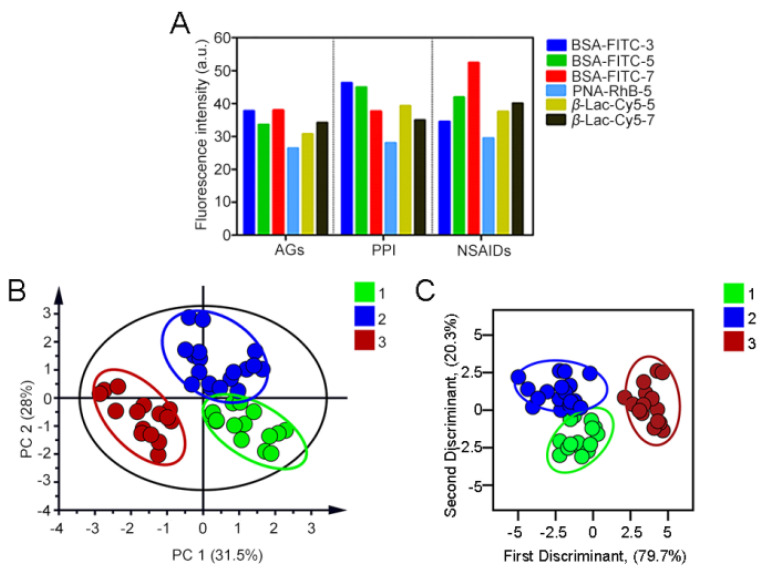
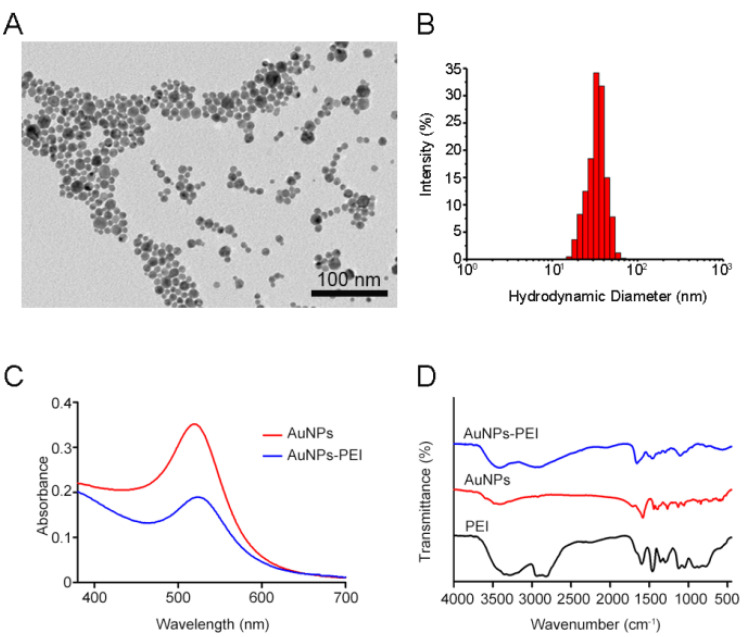
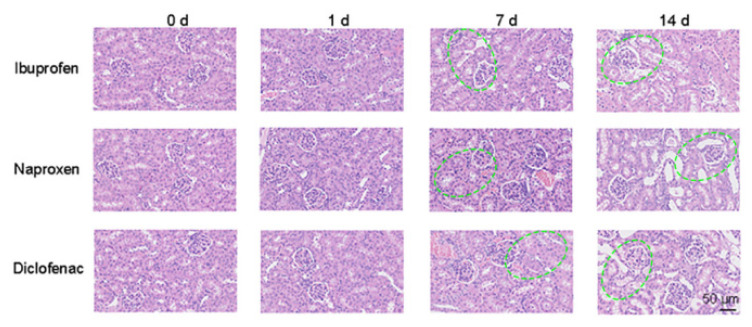
The differences in urinary proteins could provide a novel opportunity to distinguish the different types of drug-induced kidney injury (DIKI). In this research, Au nanoparticles-polyethyleneimine (AuNPs-PEI) and the three fluorophore-labeled proteins (FLPs) have been constructed as a multichannel fluorescent array sensor via electrostatic interaction, which was used to detect the subtle changes in urine collected from the pathological state of DIKI. Once the urine from different types of DIKI was introduced, the binding equilibrium between AuNPs-PEI and FLPs would be broken due to the competitive binding of urinary protein, and the corresponding fluorescence response pattern would be generated. Depending on the different fluorescence response patterns, the different types of DIKI were successfully identified by principal component analysis (PCA) and linear discriminant analysis (LDA). Accordingly, the strategy was expected to be a powerful technique for evaluating the potential unclear mechanisms of nephrotoxic drugs, which would provide a promising method for screening potential renal-protective drugs.
尿液蛋白的差异为区分不同类型的药物诱导性肾损伤(DIKI)提供了新的机会。在这项研究中,通过静电相互作用构建了金纳米粒子-聚乙烯亚胺(AuNPs-PEI)和三种荧光标记蛋白(FLPs)作为多通道荧光阵列传感器,用于检测 DIKI 病理状态下收集的尿液中的细微变化。一旦引入来自不同类型 DIKI 的尿液,由于尿液蛋白的竞争结合,AuNPs-PEI 和 FLPs 之间的结合平衡将被打破,并且会产生相应的荧光响应模式。根据不同的荧光响应模式,通过主成分分析(PCA)和线性判别分析(LDA)成功识别出不同类型的 DIKI。因此,该策略有望成为评估肾毒性药物潜在不明确机制的有力技术,为筛选潜在的肾保护药物提供了有前景的方法。