Wang Tongxing, Chen Meng, Li Huixin, Ding Guoyuan, Song Yanfei, Hou Bin, Yao Bing, Wang Zhixin, Hou Yunlong, Liang Junqing, Wei Cong, Jia Zhenhua
National Key Laboratory of Collateral Disease Research and Innovative Chinese Medicine, Shijiazhuang, 050035, PR China.
Hebei Yiling Pharmaceutical Research Institute, Key Laboratory of State Administration of TCM (Cardio-Cerebral Vessel Collateral Diseases), Shijiazhuang, 050035, PR China.
Heliyon. 2023 Jun 27;9(7):e17603. doi: 10.1016/j.heliyon.2023.e17603. eCollection 2023 Jul.
To explore the new indications and key mechanism of Bazi Bushen capsule (BZBS) by network pharmacology and experiment.
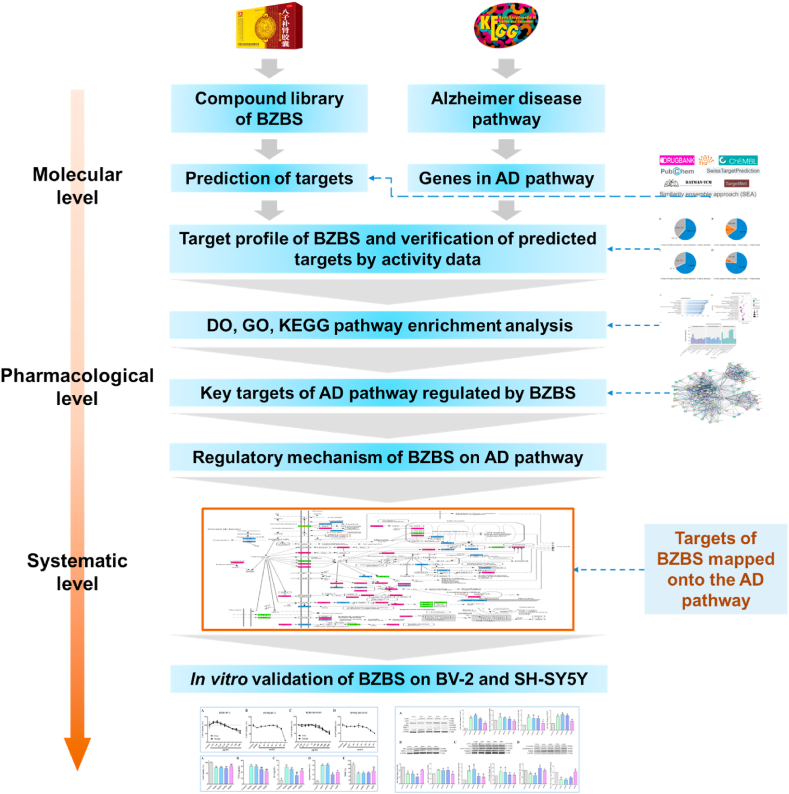
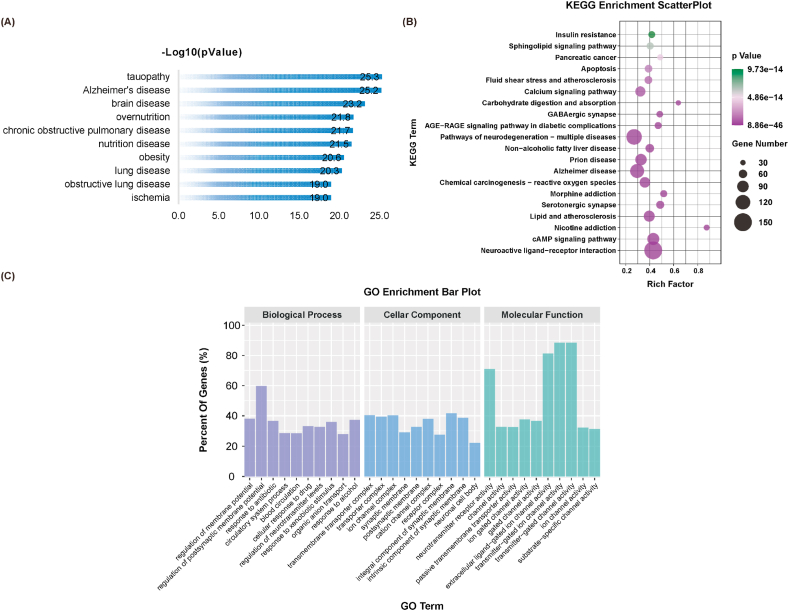
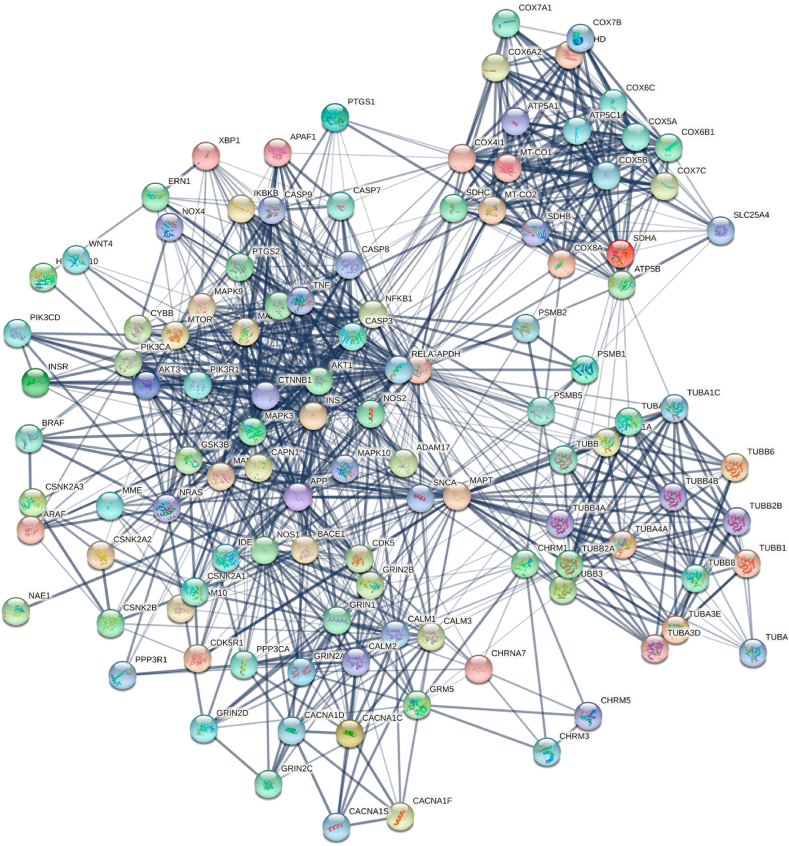
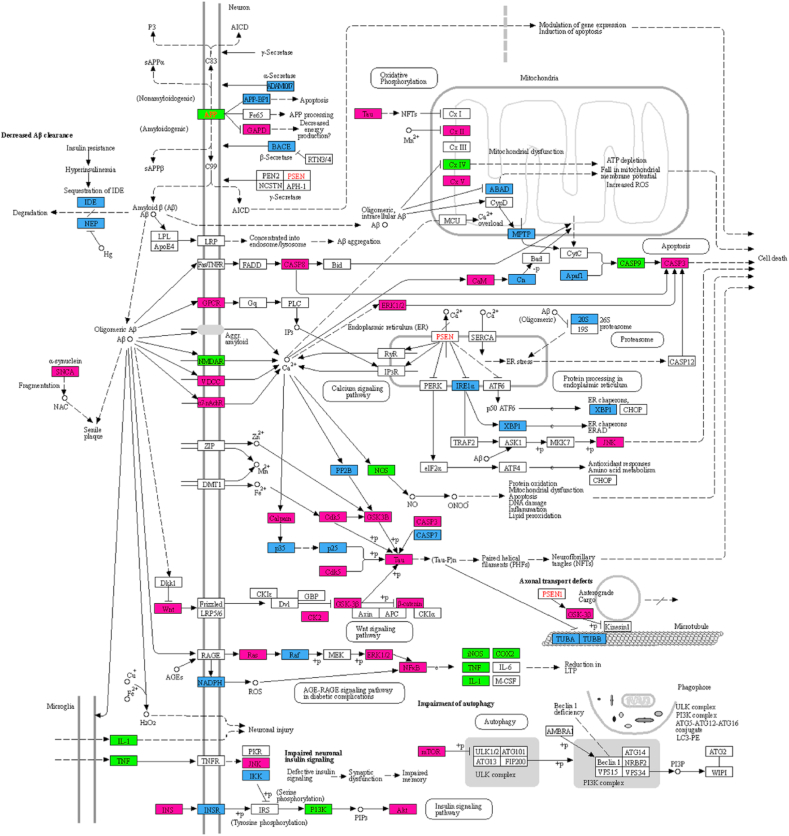
The ingredients library of BZBS was constructed by retrieving multiple TCM databases. The potential target profiles of the components were predicted by target prediction algorithms based on different principles, and validated by using known activity data. The target spectrum of BZBS with high reliability was screened by considering the source of the targets and the node degree in compound-target (-T) network. Subsequently, new indications for BZBS were predicted by disease ontology (DO) enrichment analysis and initially validated by GO and KEGG pathway enrichment analysis. Furthermore, the target sets of BZBS acting on AD signaling pathway were identified by intersection analysis. Based on STRING database, the PPI network of target was constructed and their node degree was calculated. Two Alzheimer's disease (AD) cell models, BV-2 and SH-SY5Y, were used to preliminarily verify the anti-AD efficacy and mechanism of BZBS .
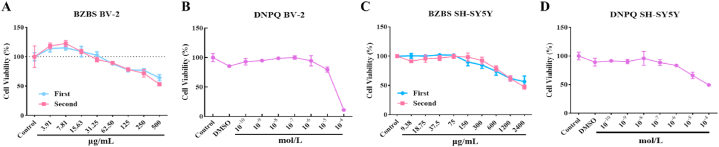
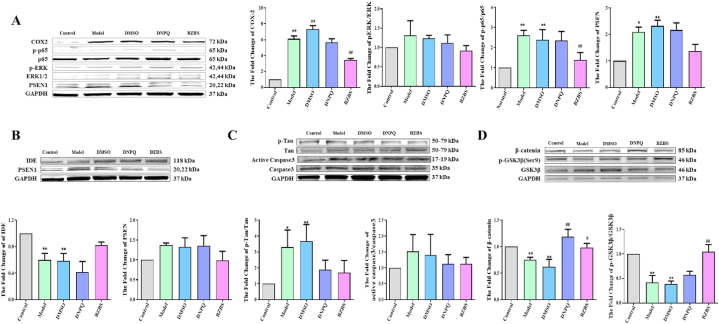
In total, 1499 non-repeated ingredients were obtained from 16 herbs in BZBS formula, and 1320 BZBS targets with high confidence were predicted. Disease enrichment results strongly suggested that BZBS formula has the potential to be used in the treatment of AD. GO and KEGG enrichment results provide a preliminary verification of this point. Among them, 113 functional targets of BZBS belong to AD pathway. A PPI network containing 113 functional targets and 1051 edges for the treatment of AD was constructed. experiments showed that BZBS could significantly reduce the release of TNF-α and IL-6 and the expression of COX-2 and PSEN1 in Aβ-induced BV-2 cells, which may be related to the regulation of ERK/NF-κB signaling pathway. BZBS reduced the apoptosis rate of Aβ induced SH-SY5Y cells, significantly increased mitochondrial membrane potential, reduced the expression of Caspase3 active fragment and PSEN1, and increased the expression of IDE. This may be related to the regulation of GSK-3β/β-catenin signaling pathway.
BZBS formula has a potential use in the treatment of AD, which is achieved through regulation of ERK, NF-κB signaling pathways, and GSK-3β/β-catenin signaling pathway. Furthermore, the network pharmacology technology is a feasible drug repurposing strategy to reposition new clinical use of approved TCM and explore the mechanism of action. The study lays a foundation for the subsequent in-depth study of BZBS in the treatment of AD and provides a basis for its application in the clinical treatment of AD.
通过网络药理学和实验探索八子补肾胶囊(BZBS)的新适应症及关键作用机制。
通过检索多个中药数据库构建BZBS成分库。基于不同原理的靶点预测算法预测成分的潜在靶点谱,并利用已知活性数据进行验证。综合考虑靶点来源及化合物 - 靶点(-T)网络中的节点度,筛选出可靠性高的BZBS靶点谱。随后,通过疾病本体(DO)富集分析预测BZBS的新适应症,并通过基因本体(GO)和京都基因与基因组百科全书(KEGG)通路富集分析进行初步验证。此外,通过交集分析确定BZBS作用于阿尔茨海默病(AD)信号通路的靶点集。基于STRING数据库构建靶点的蛋白质 - 蛋白质相互作用(PPI)网络并计算其节点度。采用两种AD细胞模型BV - 2和SH - SY5Y初步验证BZBS的抗AD疗效及作用机制。
从BZBS配方中的16味药材中共获得1499种非重复成分,预测得到1320个高置信度的BZBS靶点。疾病富集结果强烈提示BZBS配方具有治疗AD的潜力。GO和KEGG富集结果为此提供了初步验证。其中,BZBS的113个功能靶点属于AD通路。构建了一个包含113个功能靶点和1051条边的用于治疗AD的PPI网络。实验表明,BZBS可显著降低Aβ诱导的BV - 2细胞中肿瘤坏死因子 - α(TNF - α)和白细胞介素 - 6(IL - 6)的释放以及环氧化酶 - 2(COX - 2)和早老素1(PSEN1)的表达,这可能与细胞外信号调节激酶(ERK)/核因子κB(NF - κB)信号通路的调控有关。BZBS降低了Aβ诱导的SH - SY5Y细胞的凋亡率,显著提高线粒体膜电位,降低半胱天冬酶3(Caspase3)活性片段和PSEN1的表达,并增加胰岛素降解酶(IDE)的表达。这可能与糖原合成酶激酶 - 3β(GSK - 3β)/β - 连环蛋白信号通路的调控有关。
BZBS配方具有治疗AD的潜在用途,其通过调控ERK、NF - κB信号通路以及GSK - 3β/β - 连环蛋白信号通路实现。此外,网络药理学技术是一种可行的药物重定位策略,可重新定位已批准中药的新临床用途并探索其作用机制。该研究为后续深入研究BZBS治疗AD奠定了基础,并为其在AD临床治疗中的应用提供了依据。