Yenilmez Batuhan, Harney Shauna, DiMarzio Chloe, Kelly Mark, Min Kyounghee, Echeverria Dimas, Bramato Brianna M, Jackson Samuel O, Reddig Keith, Kim Jason K, Khvorova Anastasia, Czech Michael P
Program in Molecular Medicine, University of Massachusetts Chan Medical School, Worcester, MA, USA.
RNA Therapeutics Institute, University of Massachusetts Chan Medical School, Worcester, MA, USA.
bioRxiv. 2023 Jul 5:2023.07.05.547848. doi: 10.1101/2023.07.05.547848.
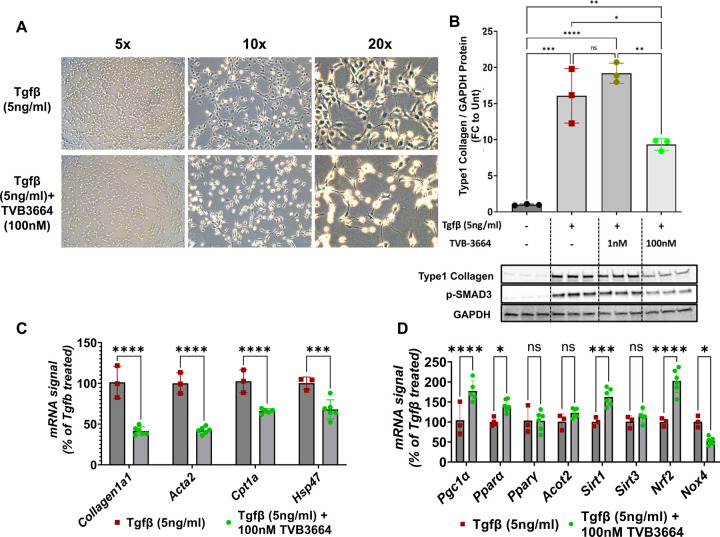
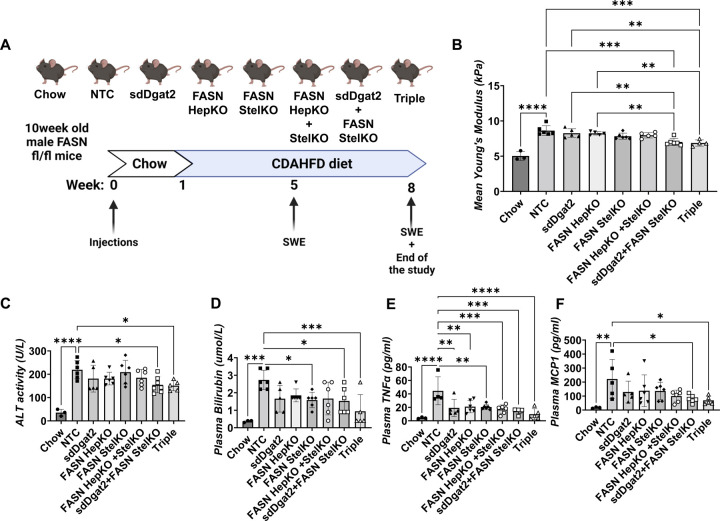
Nonalcoholic steatohepatitis (NASH) is a malady of multiple cell types associated with hepatocyte triglyceride (TG) accumulation, macrophage inflammation, and stellate cell-induced fibrosis, with no approved therapeutics yet available. Here, we report that stellate cell fatty acid synthase (FASN) in de novo lipogenesis drives the autophagic flux that is required for stellate cell activation and fibrotic collagen production. Further, we employ a dual targeting approach to NASH that selectively depletes collagen through selective stellate cell knockout of FASN (using AAV9-LRAT Cre in FASN mice), while lowering hepatocyte triglyceride by depleting DGAT2 with a GalNac-conjugated, fully chemically modified siRNA. DGAT2 silencing in hepatocytes alone or in combination with stellate cell FASNKO reduced liver TG accumulation in a choline-deficient NASH mouse model, while FASNKO in hepatocytes alone (using AAV8-TBG Cre in FASN mice) did not. Neither hepatocyte DGAT2 silencing alone nor FASNKO in stellate cells alone decreased fibrosis (total collagen), while loss of both DGAT2 plus FASN caused a highly significant attenuation of NASH. These data establish proof of concept that dual targeting of DGAT2 plus FASN alleviates NASH progression in mice far greater than targeting either gene product alone.
非酒精性脂肪性肝炎(NASH)是一种涉及多种细胞类型的疾病,与肝细胞甘油三酯(TG)积累、巨噬细胞炎症和星状细胞诱导的纤维化相关,目前尚无获批的治疗方法。在此,我们报告,从头脂肪生成中的星状细胞脂肪酸合酶(FASN)驱动星状细胞激活和纤维化胶原蛋白产生所需的自噬通量。此外,我们采用一种针对NASH的双重靶向方法,通过对FASN进行选择性星状细胞敲除(在FASN小鼠中使用AAV9-LRAT Cre)来选择性消耗胶原蛋白,同时用GalNac缀合的、完全化学修饰的小干扰RNA(siRNA)消耗二酰甘油酰基转移酶2(DGAT2)来降低肝细胞甘油三酯。单独在肝细胞中沉默DGAT2或与星状细胞FASN敲除联合使用,可降低胆碱缺乏的NASH小鼠模型中的肝脏TG积累,而单独在肝细胞中敲除FASN(在FASN小鼠中使用AAV8-TBG Cre)则不能。单独的肝细胞DGAT2沉默或单独的星状细胞FASN敲除均未降低纤维化(总胶原蛋白),而同时缺失DGAT2和FASN则导致NASH显著减轻。这些数据证明了一个概念验证,即双重靶向DGAT2和FASN比单独靶向任何一种基因产物能更大程度地减轻小鼠NASH的进展。