TGF-β and Cancer Group, Oncobell Program, Bellvitge Biomedical Research Institute (IDIBELL), L'Hospitalet de Llobregat, Barcelona, Spain; CIBEREHD, ISCIII, Spain.
TGF-β and Cancer Group, Oncobell Program, Bellvitge Biomedical Research Institute (IDIBELL), L'Hospitalet de Llobregat, Barcelona, Spain.
Redox Biol. 2023 Sep;65:102818. doi: 10.1016/j.redox.2023.102818. Epub 2023 Jul 13.
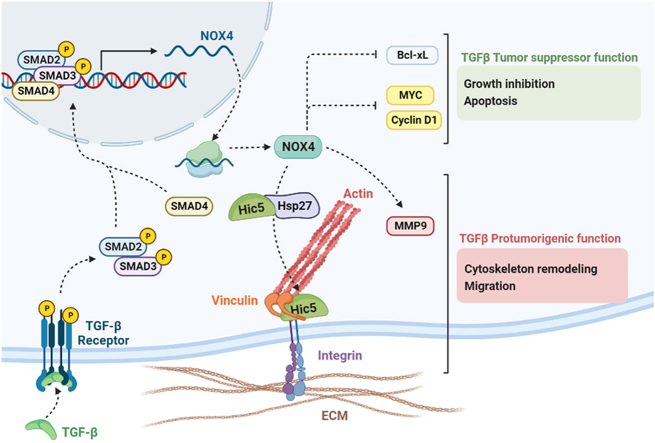
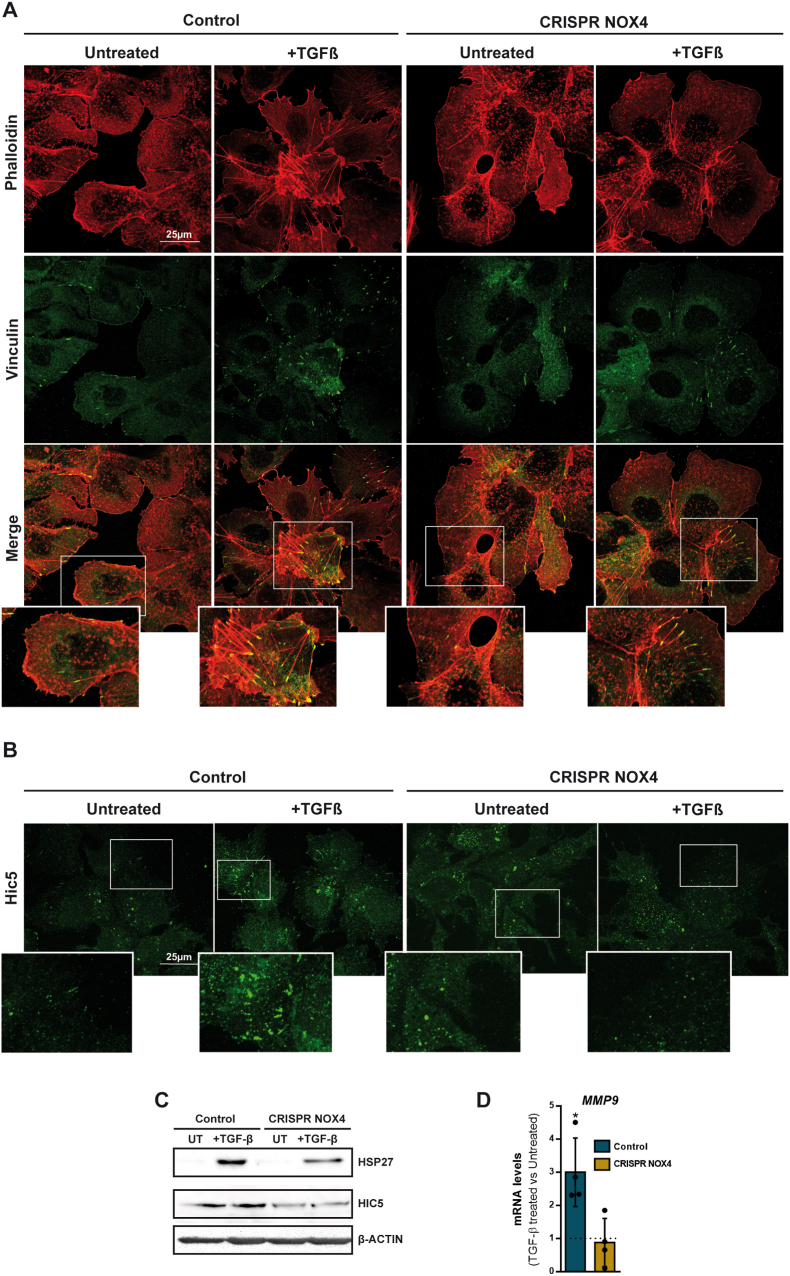
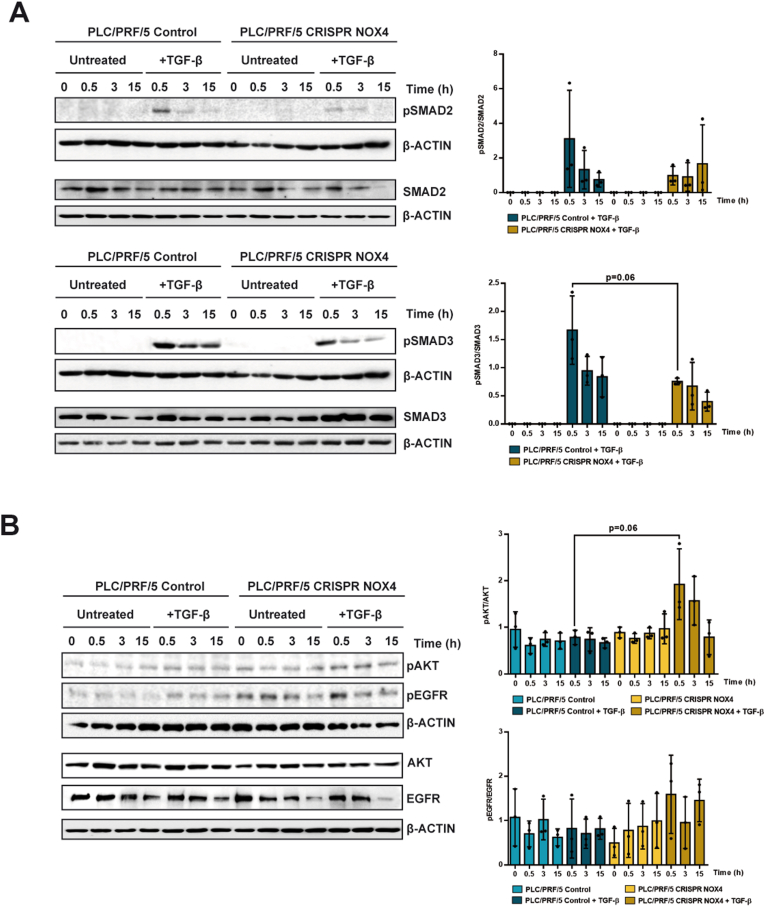
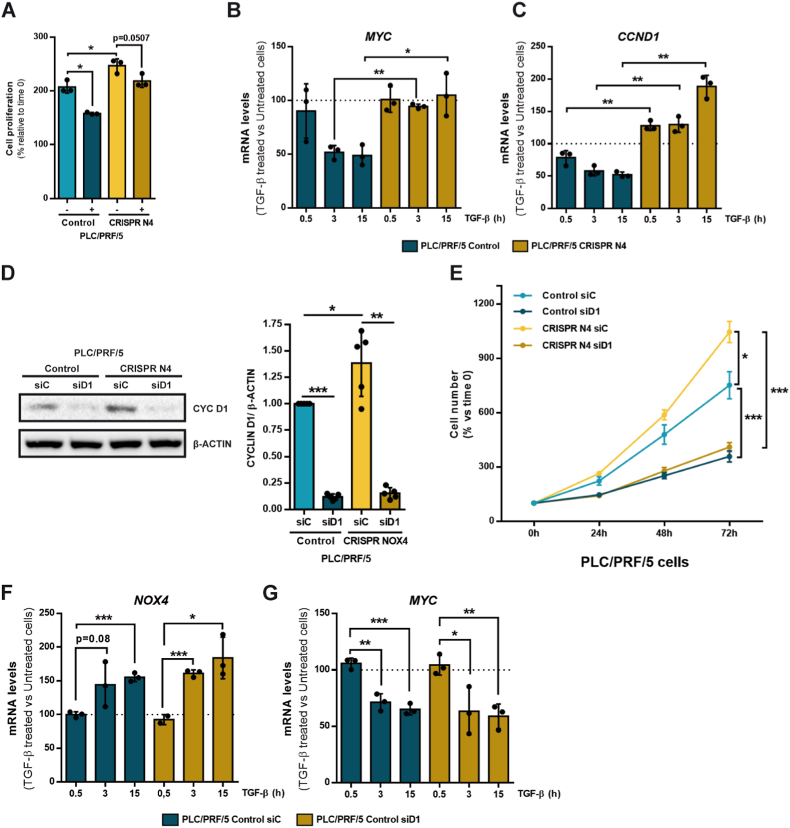
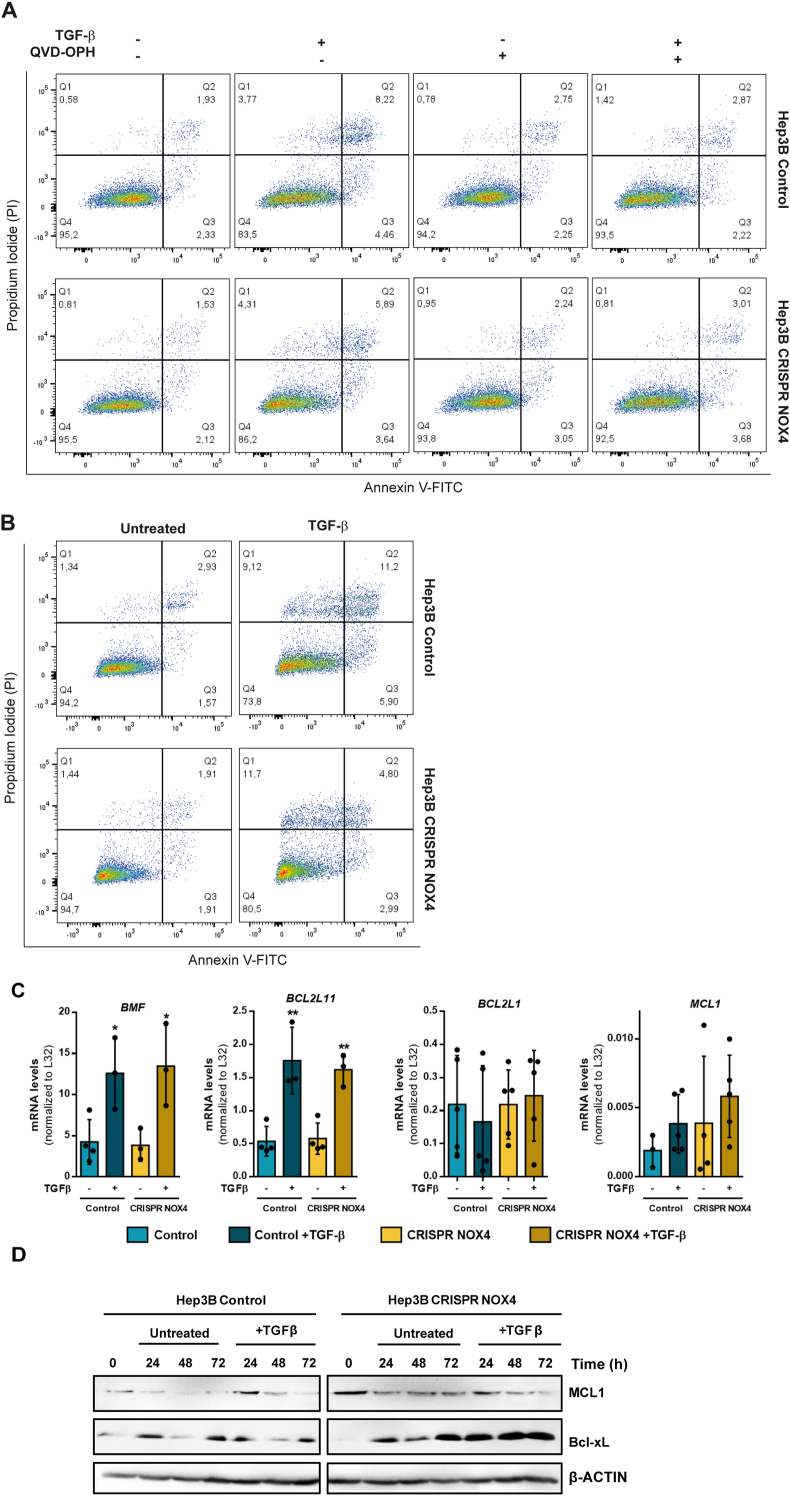
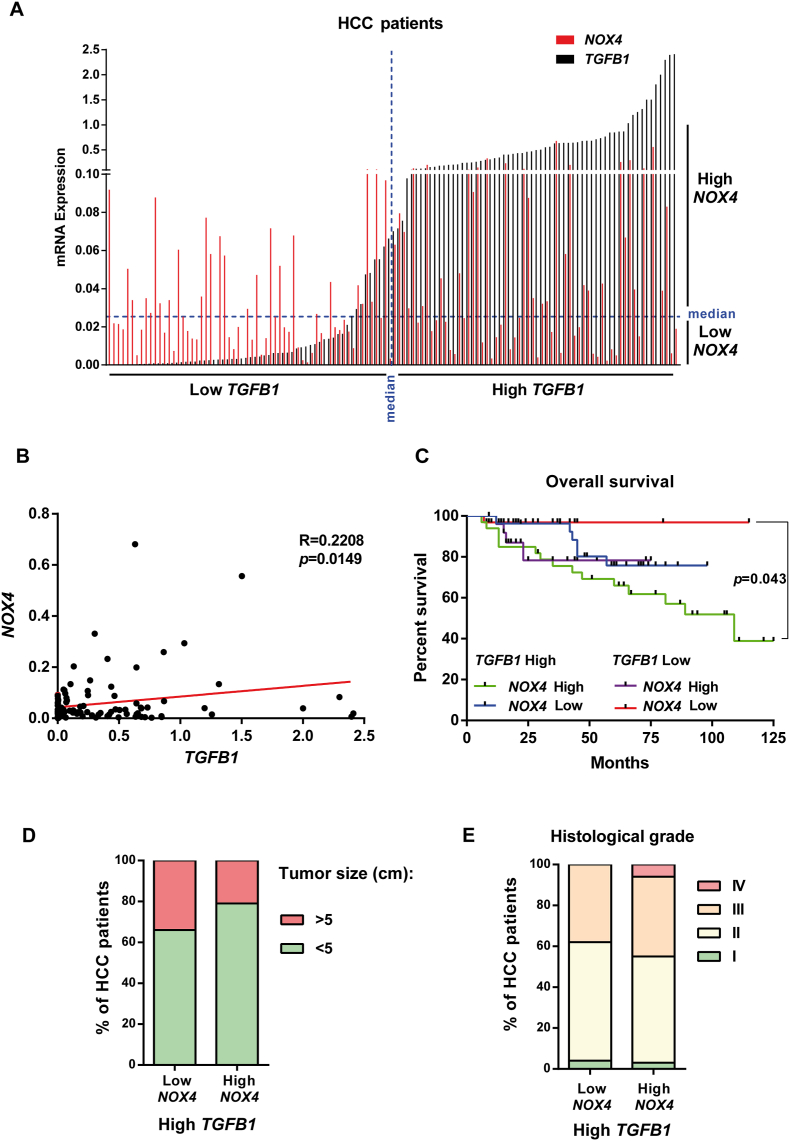
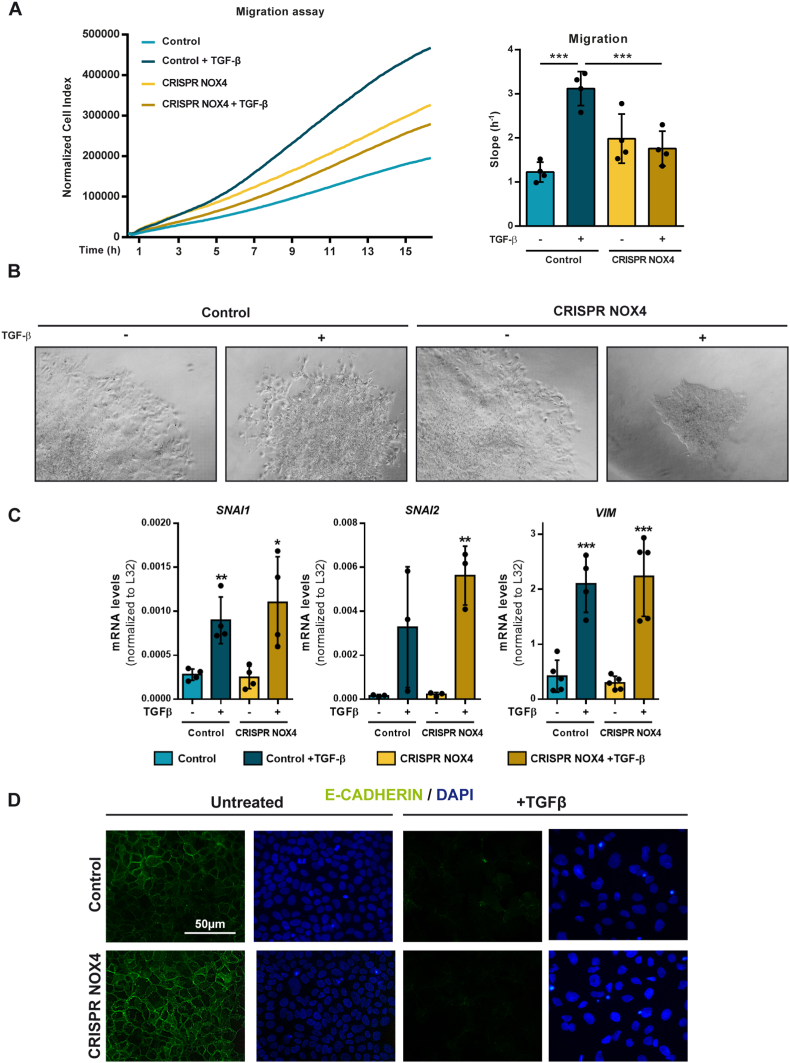
The NADPH oxidase NOX4 has been proposed as necessary for the apoptosis induced by the Transforming Growth Factor-beta (TGF-β) in hepatocytes and hepatocellular carcinoma (HCC) cells. However, whether NOX4 is required for TGF-β-induced canonical (SMADs) or non-canonical signals is not fully understood yet, neither its potential involvement in other parallel actions induced by TGF-β. In this work we have used CRISPR Cas9 technology to stable attenuate NOX4 expression in HCC cells. Results have indicated that NOX4 is required for an efficient SMAD2/3 phosphorylation in response to TGF-β, whereas non-canonical signals, such as the phosphorylation of the Epidermal Growth Receptor or AKT, are higher in NOX4 silenced cells. TGF-β-mediated inhibition of cell proliferation and viability is attenuated in NOX4 silenced cells, correlating with decreased response in terms of apoptosis, and maintenance of high expression of MYC and CYCLIN D1. These results would indicate that NOX4 is required for all the tumor suppressor actions of TGF-β in HCC. However, analysis in human HCC tumors has revealed a worse prognosis for patients showing high expression of TGF-β1-related genes concomitant with high expression of NOX4. Deepening into other tumorigenic actions of TGF-β that may contribute to tumor progression, we found that NOX4 is also required for TGF-β-induced migratory effects. The Epithelial-Mesenchymal transition (EMT) program does not appear to be affected by attenuation of NOX4 levels. However, TGF-β-mediated regulation of cytoskeleton dynamics and focal adhesions require NOX4, which is necessary for TGF-β-induced increase in the chaperone Hsp27 and correct subcellular localization of Hic-5 within focal adhesions, as well for upregulation of the metalloprotease MMP9. All these results together point to NOX4 as a key element in the whole TGF-β signaling in HCC cells, revealing an unknown role for NOX4 as tumor promoter in HCC patients presenting activation of the TGF-β pathway.
NADPH 氧化酶 NOX4 被认为是转化生长因子-β(TGF-β)诱导肝细胞和肝癌(HCC)细胞凋亡所必需的。然而,NOX4 是否需要 TGF-β 诱导的经典(SMADs)或非经典信号尚不完全清楚,也不清楚其在 TGF-β 诱导的其他平行作用中的潜在参与。在这项工作中,我们使用 CRISPR Cas9 技术稳定地减弱 HCC 细胞中 NOX4 的表达。结果表明,NOX4 是 TGF-β 诱导 SMAD2/3 磷酸化所必需的,而非经典信号,如表皮生长因子受体或 AKT 的磷酸化,在 NOX4 沉默的细胞中更高。NOX4 沉默的细胞中 TGF-β 介导的细胞增殖和活力抑制减弱,与凋亡反应降低相关,并维持 MYC 和 CYCLIN D1 的高表达。这些结果表明,NOX4 是 TGF-β 在 HCC 中所有肿瘤抑制作用所必需的。然而,对人类 HCC 肿瘤的分析表明,同时表达 TGF-β1 相关基因和高表达 NOX4 的患者预后更差。深入研究 TGF-β 的其他致癌作用可能有助于肿瘤进展,我们发现 NOX4 也是 TGF-β 诱导的迁移作用所必需的。上皮-间充质转化(EMT)程序似乎不受 NOX4 水平降低的影响。然而,TGF-β 介导的细胞骨架动力学和焦点粘附的调节需要 NOX4,这对于 TGF-β 诱导的热休克蛋白 27(Hsp27)增加和 Hic-5 在焦点粘附内的正确亚细胞定位以及金属蛋白酶 MMP9 的上调是必需的。所有这些结果都表明,NOX4 是 HCC 细胞中 TGF-β 信号的关键因素,揭示了在 TGF-β 途径激活的 HCC 患者中,NOX4 作为肿瘤促进因子的未知作用。