Sri Lanka Institute of Information Technology, SLIIT Business School, Malabe, Sri Lanka.
Department of Information Management, Sri Lanka Institute of Information Technology, SLIIT Business School, Malabe, Sri Lanka.
PLoS One. 2023 Jul 21;18(7):e0289128. doi: 10.1371/journal.pone.0289128. eCollection 2023.
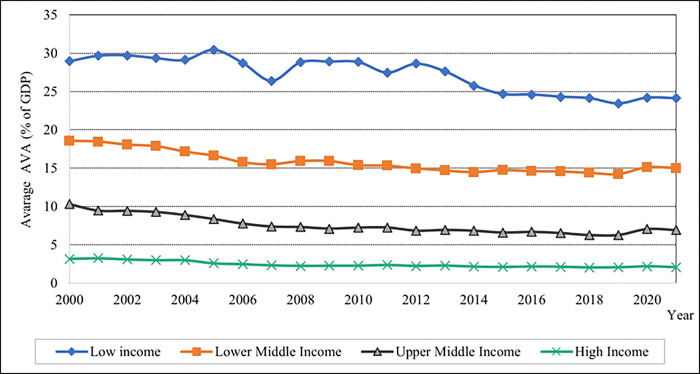
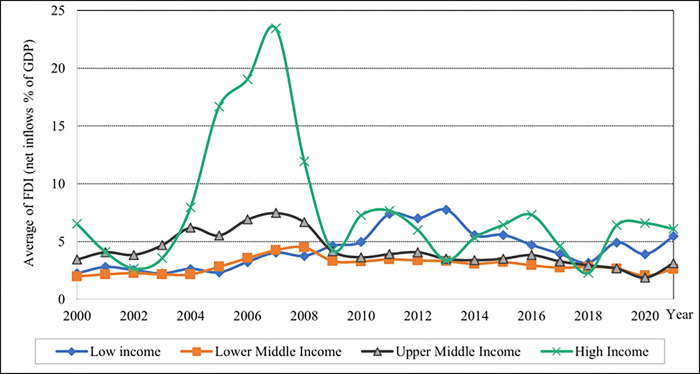
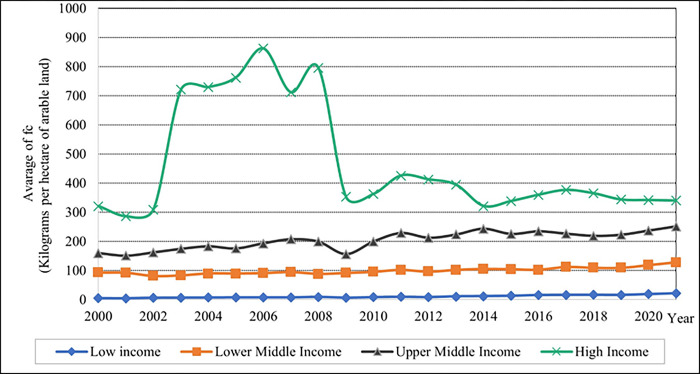
Economic globalisation is the integration of national economies into the global economy through the increasing flow of goods, services, capital, and technology across borders and it has contributed to garnering a significant portion of most nations' national income, although its agricultural value-added aspect has yet to be maximised. This pioneering study explores the impact of economic globalisation on value-added agriculture in a global context based on countries' income levels. Panel data regression with the stepwise method was employed to quantify the impact of economic globalization on agriculture value added in 101 countries between 2000 and 2021. The findings of our study reveal that economic globalisation, through various channels such as fertilizer consumption, employment in agriculture, agriculture raw materials export and import, exchange rate, and foreign direct investment, significantly influences the agricultural value-added factor globally and across different income levels. Furthermore, the results show that agricultural employment significantly impacts the agricultural value-added factor globally and across all income levels. Also, countries with low and lower-middle-income levels significantly affect agricultural value-added due to exchange rates. In comparison, high-income and lower-middle-income levels have an impact due to foreign direct investment. Finally, the upper-middle-income countries have significantly affected agricultural value-added due to agricultural raw materials imports. This study confirms that employment in agriculture, exchange rate and foreign direct investments positively impact agriculture value-added on the global level and based on the income level of countries.
经济全球化是指各国经济通过商品、服务、资本和技术跨越国界的流动而融入全球经济的过程,它为大多数国家的国民收入贡献了相当大的一部分,尽管其农业附加值方面尚未得到最大化。本研究基于各国收入水平,从全球角度探讨了经济全球化对农业附加值的影响。本研究采用逐步面板数据回归方法,量化了 2000 年至 2021 年间 101 个国家经济全球化对农业附加值的影响。研究结果表明,经济全球化通过化肥消费、农业就业、农业原材料进出口、汇率和外国直接投资等多种渠道,对全球和不同收入水平的农业附加值产生了显著影响。此外,研究结果还表明,农业就业对全球和所有收入水平的农业附加值都有显著影响。同时,低收入和中低收入国家由于汇率显著影响农业附加值。相比之下,高收入和中低收入国家由于外国直接投资而产生影响。最后,上中等收入国家由于农业原材料进口而对农业附加值产生了显著影响。本研究证实,农业就业、汇率和外国直接投资在全球层面以及基于各国收入水平上对农业附加值产生了积极影响。