Ren Dongyan, Luo Bin, Chen Peng, Yu Lulu, Xiong Mingtao, Fu Zhiqiang, Zhou Tian, Chen Wen-Bing, Fei Erkang
School of Life Sciences, Nanchang University, Nanchang, 330031, China.
Institute of Life Science, Nanchang University, Nanchang, 330031, China.
Cell Biosci. 2023 Jul 21;13(1):134. doi: 10.1186/s13578-023-01081-9.
Dendritic spines are the sites of excitatory synapses on pyramidal neurons, and their development is crucial for neural circuits and brain functions. The spine shape, size, or number alterations are associated with neurological disorders, including schizophrenia. DiGeorge syndrome critical region gene 2 (DGCR2) is one of the deleted genes within the 22q11.2 deletion syndrome (22q11DS), which is a high risk for developing schizophrenia. DGCR2 expression was reduced in schizophrenics. However, the pathophysiological mechanism of DGCR2 in schizophrenia or 22q11DS is still unclear.
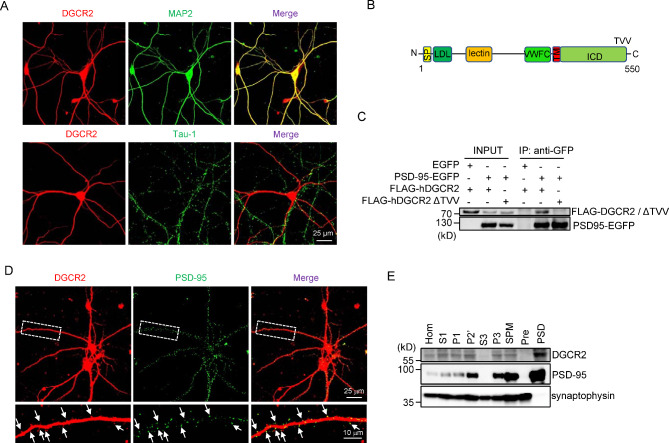
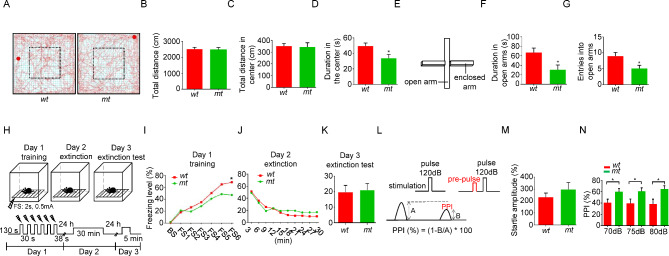
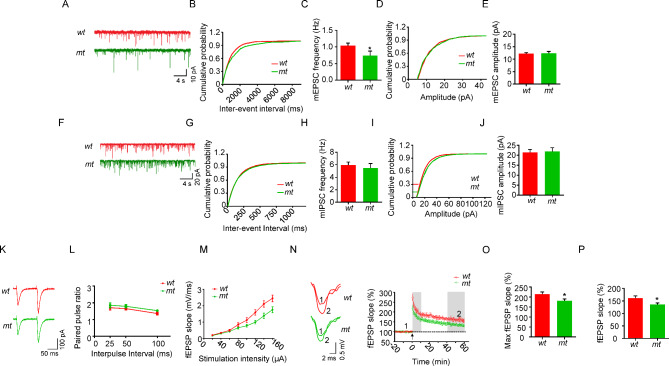
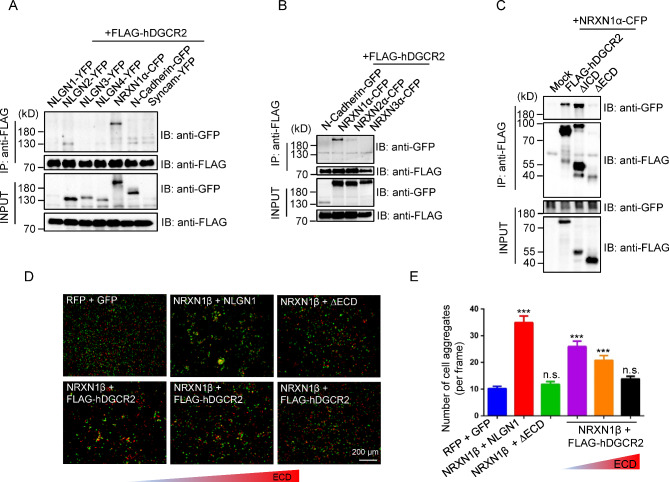
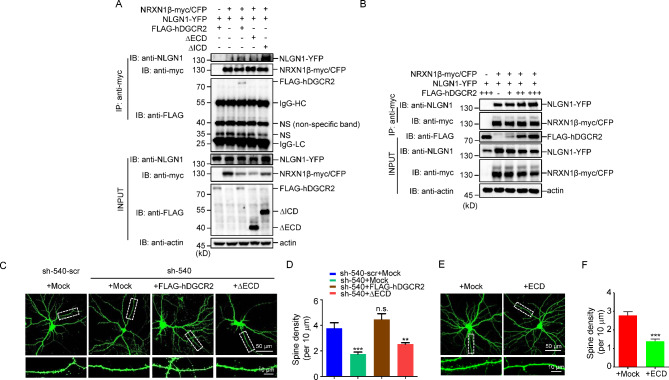
Here, we report that DGCR2 expression was increased during the neurodevelopmental period and enriched in the postsynaptic densities (PSDs). DGCR2-deficient hippocampal neurons formed fewer spines. In agreement, glutamatergic transmission and synaptic plasticity were decreased in the hippocampus of DGCR2-deficient mice. Further molecular studies showed that the extracellular domain (ECD) of DGCR2 is responsible for its transcellular interaction with cell adhesion molecule Neurexin1 (NRXN1) and spine development. Consequently, abnormal behaviors, like anxiety, were observed in DGCR2-deficient mice.
These observations indicate that DGCR2 is a novel cell adhesion molecule required for spine development and synaptic plasticity, and its deficiency induces abnormal behaviors in mice. This study provides a potential pathophysiological mechanism of DGCR2 in 22q11DS and related mental disorders.
树突棘是锥体细胞上兴奋性突触的位点,其发育对神经回路和脑功能至关重要。树突棘的形状、大小或数量改变与包括精神分裂症在内的神经疾病相关。狄乔治综合征关键区域基因2(DGCR2)是22q11.2缺失综合征(22q11DS)中被删除的基因之一,22q11DS患者患精神分裂症的风险很高。精神分裂症患者中DGCR2的表达降低。然而,DGCR2在精神分裂症或22q11DS中的病理生理机制仍不清楚。
在此,我们报告DGCR2在神经发育期间表达增加,并富集于突触后致密物(PSD)中。DGCR2缺陷的海马神经元形成的树突棘较少。同样,DGCR2缺陷小鼠海马中的谷氨酸能传递和突触可塑性降低。进一步的分子研究表明,DGCR2的细胞外结构域(ECD)负责其与细胞粘附分子Neurexin1(NRXN1)的跨细胞相互作用以及树突棘发育。因此,在DGCR2缺陷小鼠中观察到了焦虑等异常行为。
这些观察结果表明,DGCR2是树突棘发育和突触可塑性所需的一种新型细胞粘附分子,其缺陷会诱导小鼠出现异常行为。本研究为DGCR2在22q11DS及相关精神障碍中的潜在病理生理机制提供了依据。