Carl Hayden Bee Research Center, USDA-ARS, Tucson, AZ, 85719, USA.
Honey Bee Breeding, Genetics, and Physiology Research, USDA-ARS, Baton Rouge, LA, 70820, USA.
Sci Rep. 2023 Jul 22;13(1):11842. doi: 10.1038/s41598-023-39095-5.
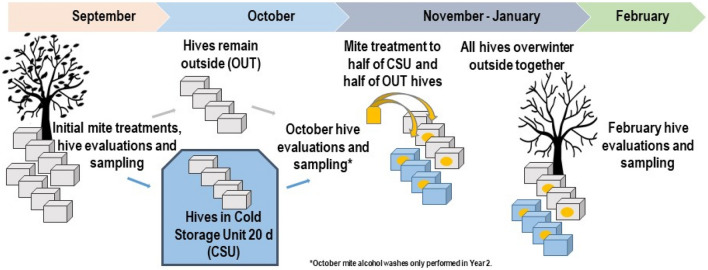
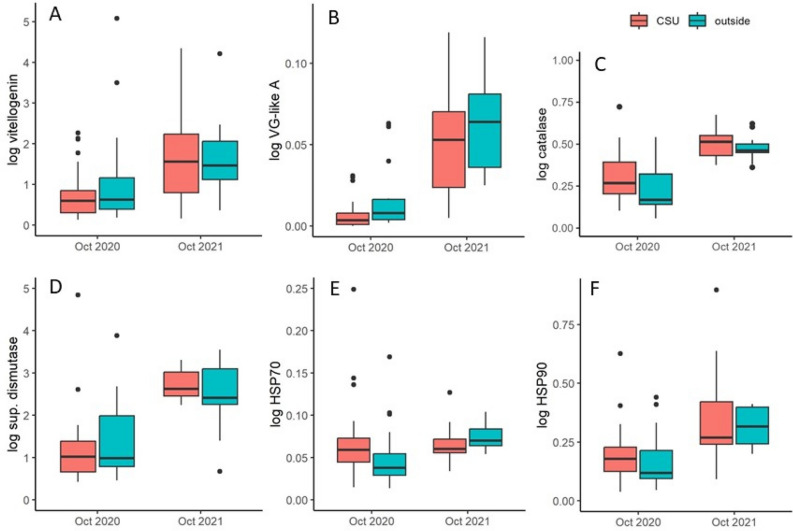
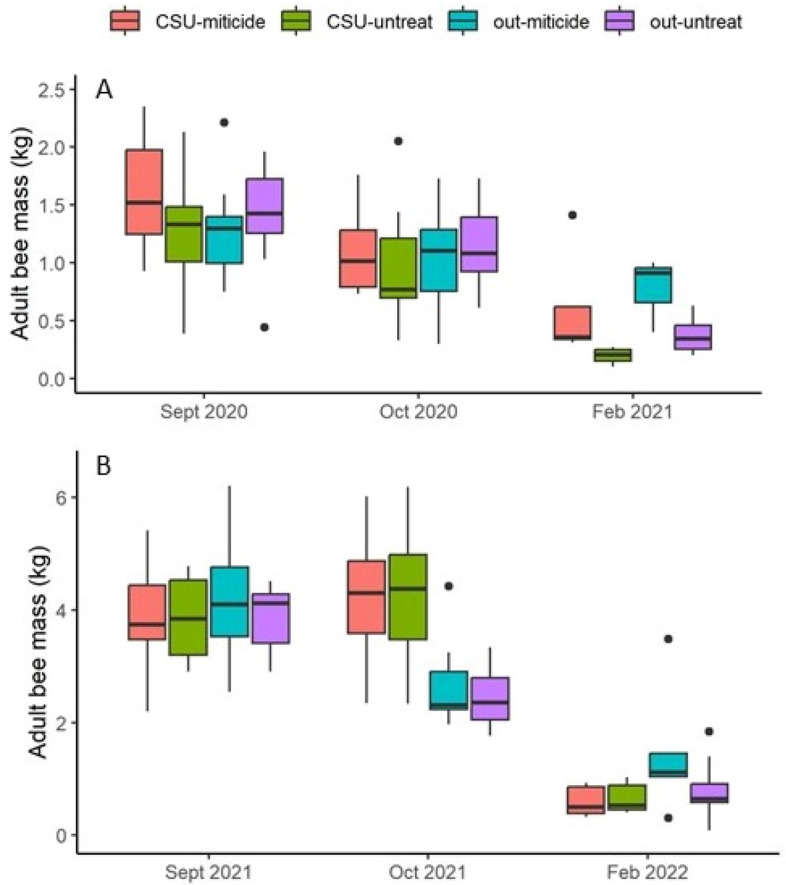
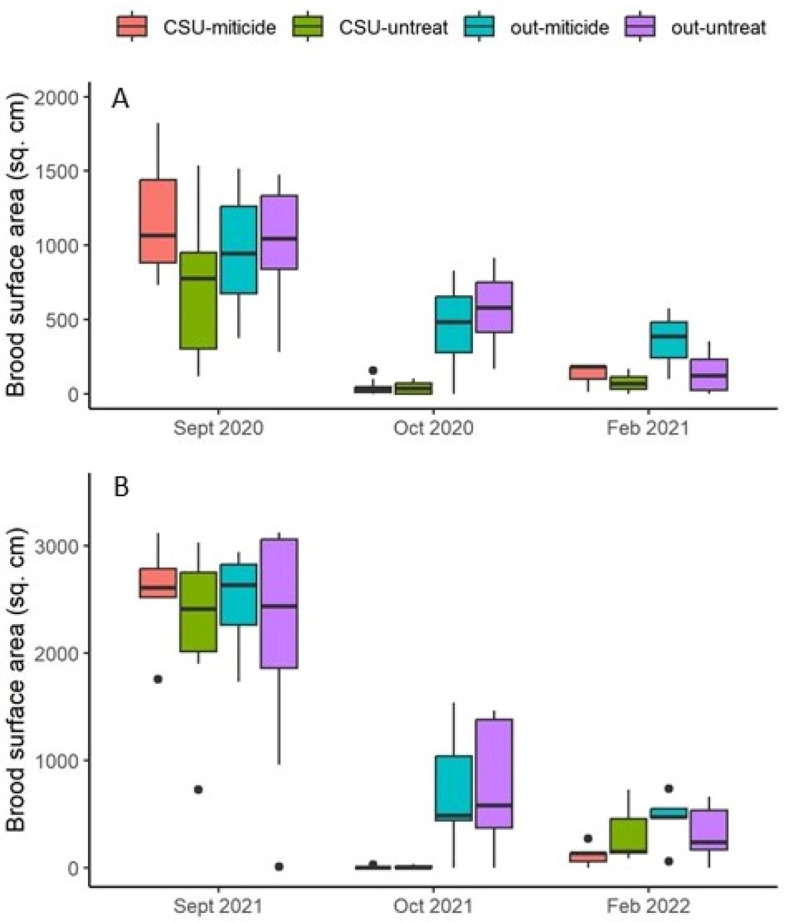
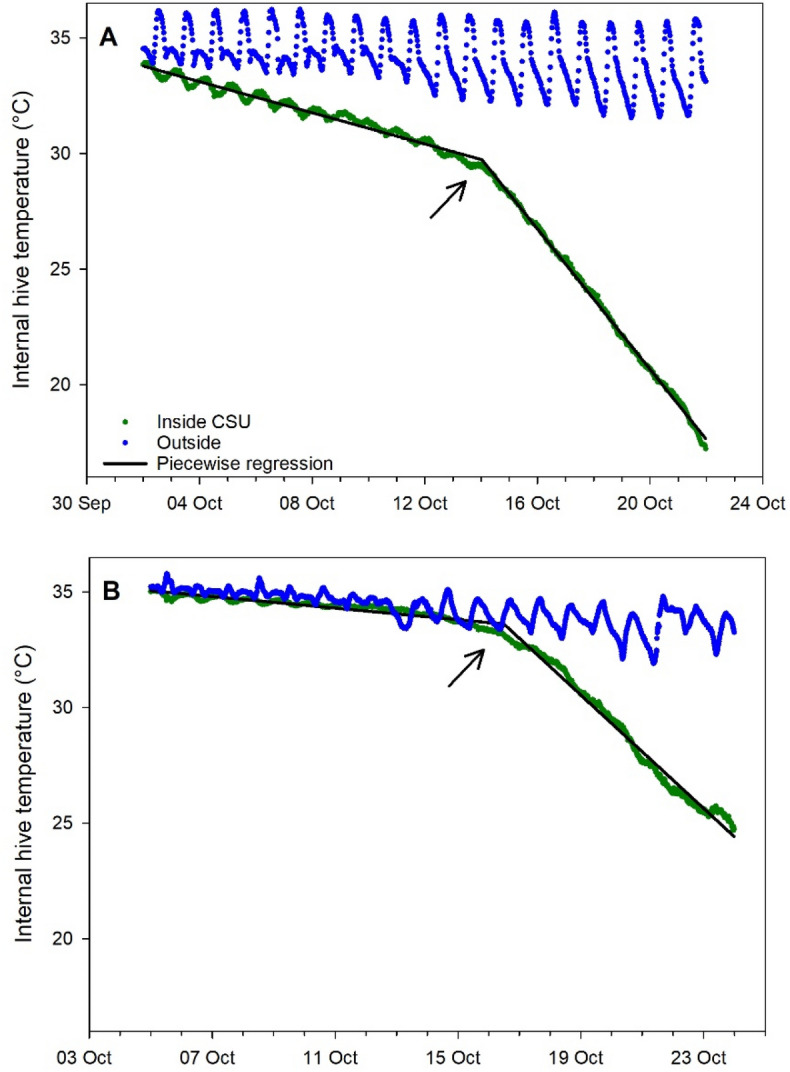
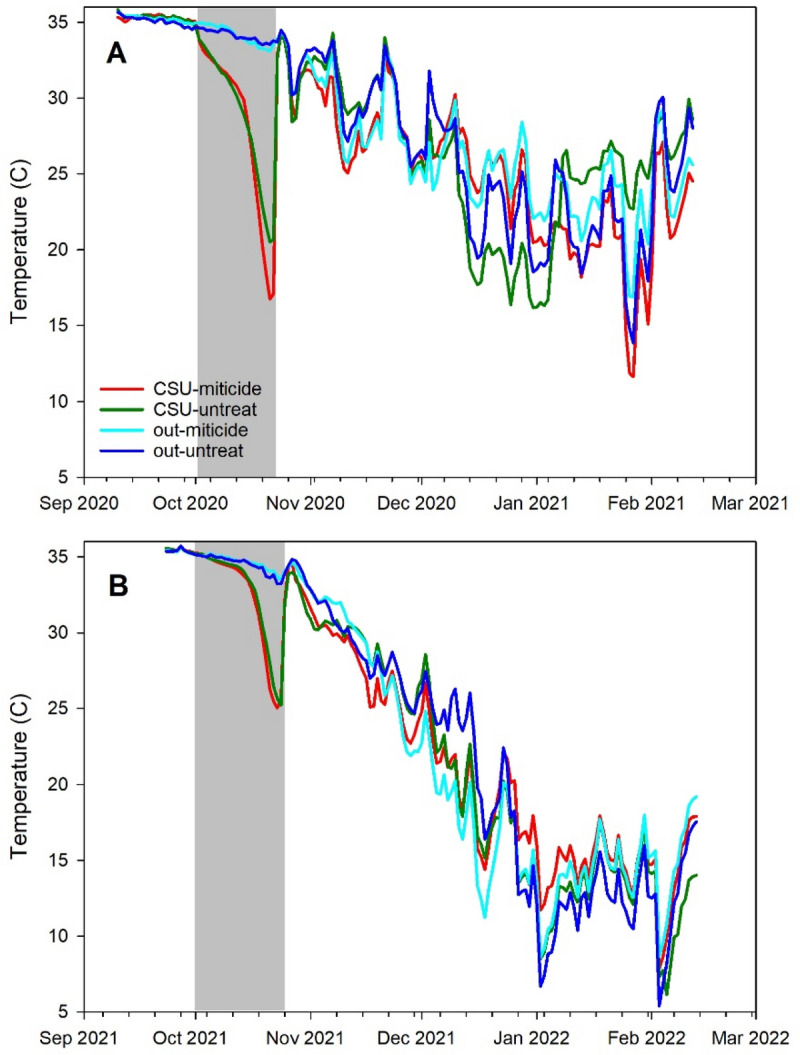
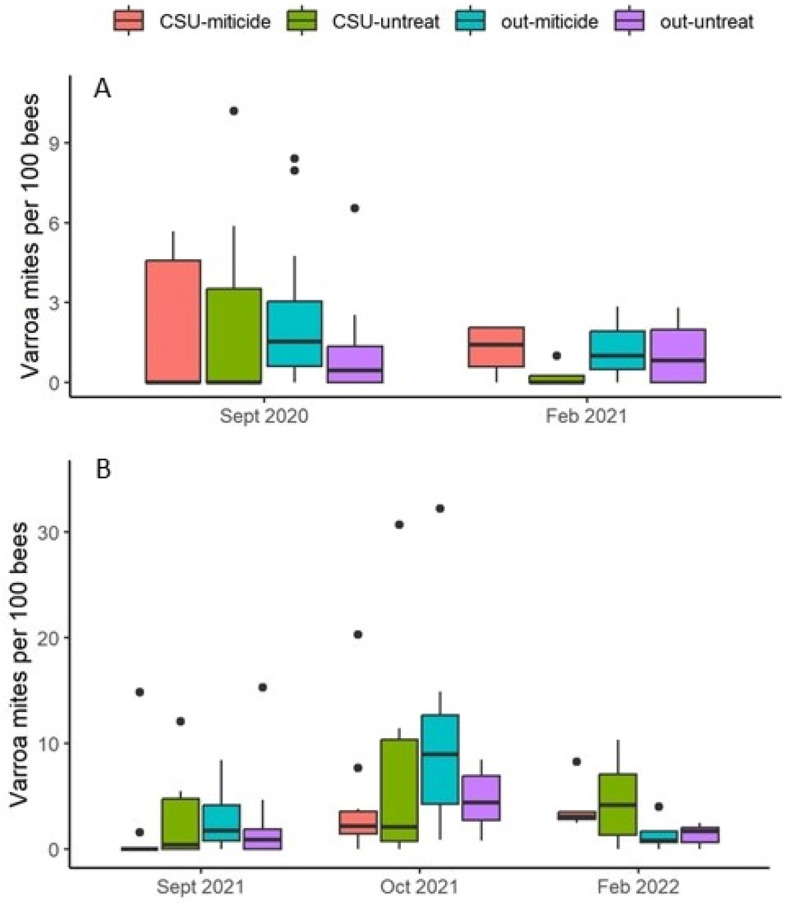
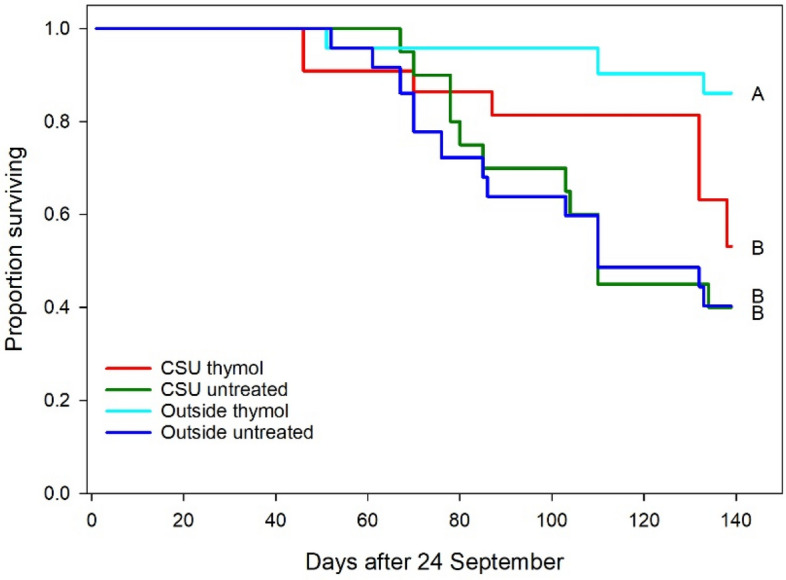
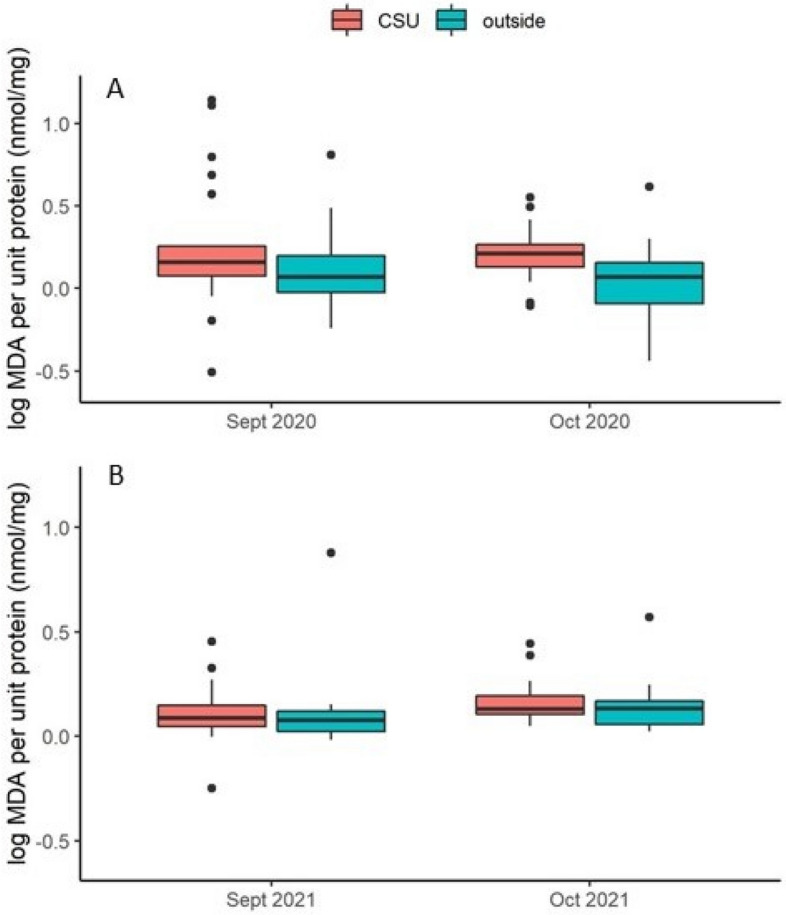
Placing honey bee colonies in cold storage has been proposed as a way to induce a pause in brood production as part of a Varroa mite treatment plan. Here, we exposed colonies to combinations of with or without an October cold storage period and with or without a subsequent miticide application. We then measured the effects of those treatments on colony-level variables (i.e. colony size, Varroa infestation level, survivorship and hive weight and temperature) and pooled individual-level variables that are associated with nutritional and stress responses. Colonies were assessed before and after cold storage, and again post winter, for a total duration of about 5 months, and the experiment was repeated. Brood levels were significantly lower after cold storage, and hive temperatures indicated that most or all brood had emerged after about two weeks in cold storage. However, Varroa levels at the end of the experiments in February were not significantly different among treatment groups. Colonies kept outside (not subjected to cold storage) and treated with a miticide had higher survivorship on average than any other treatment group, but no other group comparisons were significant, and long-term impact of cold storage on adult bee populations and on colony thermoregulation was low. The bee forage environment was also very different between the 2 years of the study, as rainfall and bee forage availability were much higher the second year. Colonies were over 2.5 times larger on average the second year compared to the first, both in terms of adult bee mass and brood area, and expression levels of nutrition and stress response genes were also significantly higher the second year. The results indicate that limited cold storage would likely have little long-term impact on most colony and individual measures of health, but for such a strategy to succeed levels of stressors, such as Varroa, may also need to be low.
将蜜蜂蜂群放入冷藏库中已被提议作为一种方法,以诱导暂停幼虫生产,作为瓦螨治疗计划的一部分。在这里,我们将蜂群暴露于有或没有 10 月冷藏期以及有或没有随后使用杀螨剂的组合中。然后,我们测量了这些处理对群体水平变量(即蜂群大小、瓦螨侵染水平、存活率以及蜂箱重量和温度)的影响,并汇总了与营养和应激反应相关的个体水平变量。在冷藏前、冷藏后和冬季后评估了蜂群,总共持续了大约 5 个月,并且重复了实验。冷藏后幼虫水平显著降低,蜂箱温度表明,在冷藏约两周后,大多数或所有幼虫都已出现。然而,2 月实验结束时,各组的瓦螨水平没有显著差异。平均而言,在室外(未冷藏)饲养并用杀螨剂处理的蜂群存活率较高,而其他任何处理组都没有显著差异,并且冷藏对成年蜜蜂种群和蜂群体温调节的长期影响较低。在研究的 2 年中,蜜蜂的觅食环境也有很大不同,因为第二年的降雨量和蜜蜂觅食量要高得多。与第一年相比,第二年的蜂群平均要大 2.5 倍以上,无论是在成年蜜蜂数量还是在幼虫面积方面,营养和应激反应基因的表达水平也在第二年显著提高。结果表明,有限的冷藏可能对大多数蜂群和个体健康指标的长期影响很小,但为了使这种策略成功,压力源(如瓦螨)的水平也可能需要降低。