Vishwakarma Dinesh Kumar, Kumar Rohitashw, Tomar Arvind Singh, Kuriqi Alban
Department of Irrigation and Drainage Engineering, Govind Ballabh Pant University of Agriculture & Technology, Pantnagar, Udham Singh Nagar 263145, India.
Department of Irrigation and Drainage Engineering, College of Agricultural Engineering and Technology, Sher-e-Kashmir University of Agricultural Sciences & Technology of Kashmir 190025 Jammu and Kashmir, India.
Heliyon. 2023 Jul 9;9(7):e18078. doi: 10.1016/j.heliyon.2023.e18078. eCollection 2023 Jul.
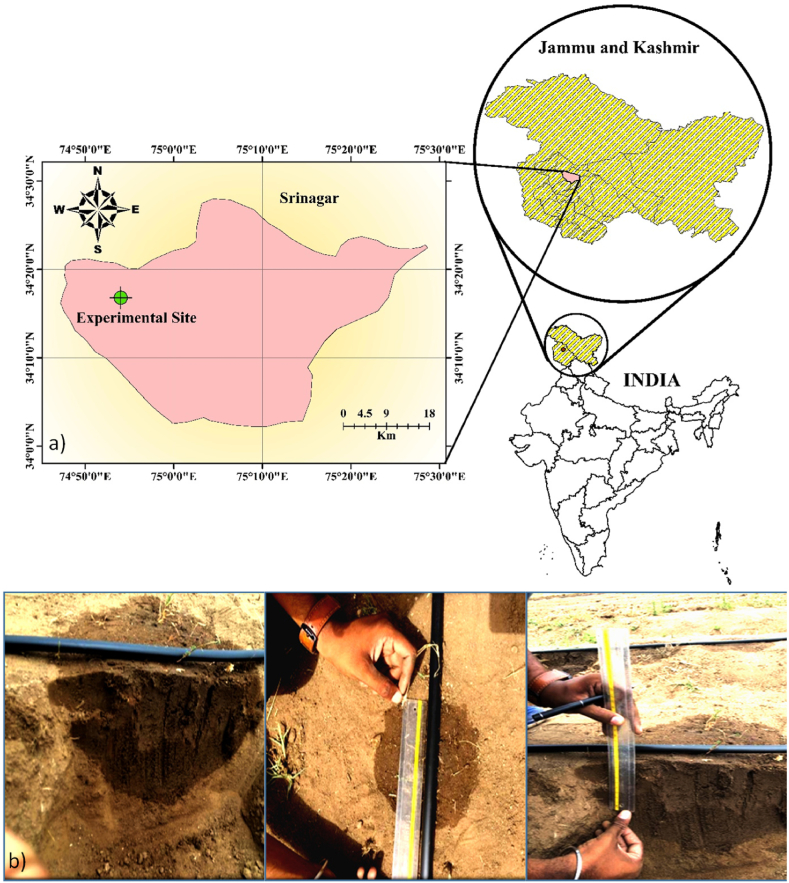
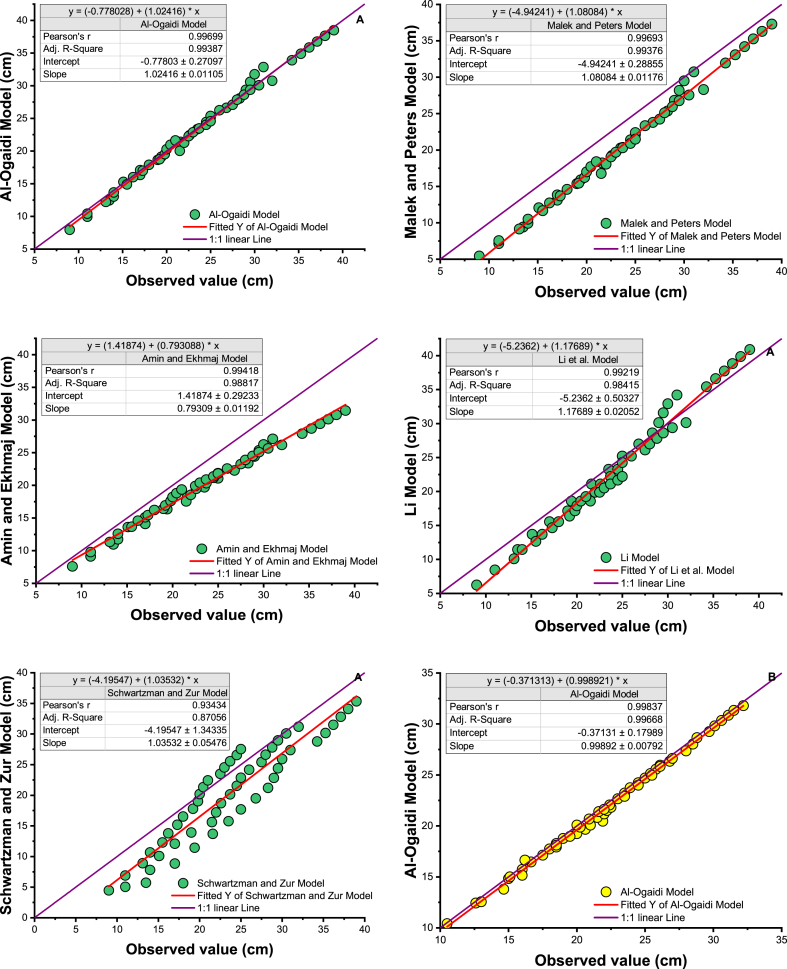
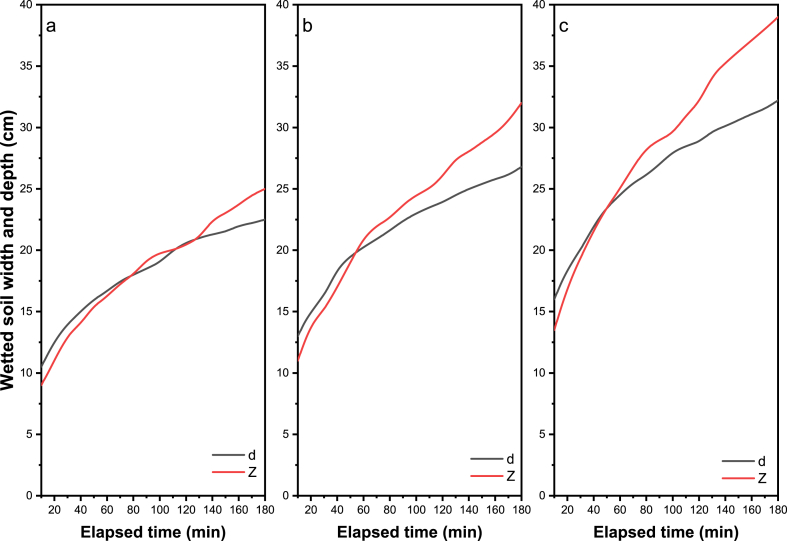
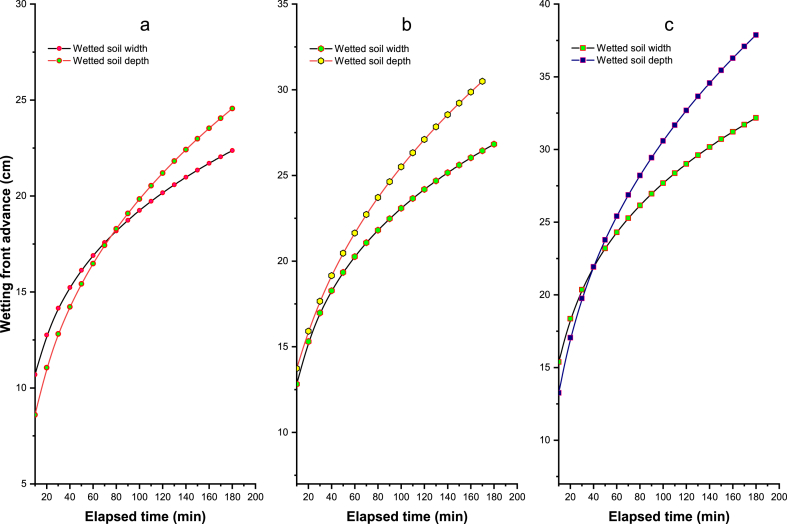
Reliable information on the horizontal and vertical dimensions of the wetted soil beneath a point source is critical for designing accurate, cost-effective, and efficient surface and subsurface drip irrigation systems. Several factors, including soil properties, initial soil conditions, dripper flow rate, number of drippers, spacing between drippers, irrigation management, plant root characteristics, and evapotranspiration, influence the dimensions and shape of wetting patterns. The objective of this study was to briefly review previous studies, collect the analytical, numerical, and empirical models developed, and evaluate the effectiveness of the most common empirical method for predicting the dimensions of soil wetted around drippers using measured data from field surveys. With this review study, we aim to promote a better understanding of soil water dynamics under point-source drip irrigation systems, help improve soil water dynamics under point-source drip irrigation systems, and identify issues that should be better addressed in future modeling efforts. A drip irrigation system was configured with three different emitters with different capacities (2, 4, and 8 l h-1) in the point source to determine the soil wetting front under the point source. The five most selected empirical equations (Al-Ogaidi, Malek and Peters, Amin and Ekhmaj, Li and Schwartzman and Zur) were statistically analyzed to test the efficiency in sandy loam soil. According to the results of the field investigation, statistical comparisons of the empirical models with the field investigation data were performed using the mean absolute error (MAE), root mean square error (RMSE), Nash-Sutcliffe model efficiency (CE), and coefficients of determination (R2). The advanced simulation of the wetting front was used based on the best accuracy of the selected empirical model. In general, the Li model (MAE, RMSE, EF, and R2 were 0.698 cm, 0.894 cm, 0.970 cm cm-2, and 0.970, respectively, for the wetted soil width and 1.800 cm, 1.974 cm, 0.927 cm cm-2, and 0.986, for the vertical advance) proved to be the best after statistical analysis with field data.
对于设计精确、经济高效的地表和地下滴灌系统而言,获取点源下方湿润土壤水平和垂直维度的可靠信息至关重要。包括土壤性质、初始土壤条件、滴头流量、滴头数量、滴头间距、灌溉管理、植物根系特征以及蒸散量在内的多个因素,都会影响湿润模式的维度和形状。本研究的目的是简要回顾以往的研究,收集已开发的分析、数值和经验模型,并利用实地调查的测量数据评估预测滴头周围土壤湿润维度最常用经验方法的有效性。通过这项综述研究,我们旨在促进对点源滴灌系统下土壤水分动态的更好理解,帮助改善点源滴灌系统下的土壤水分动态,并确定未来建模工作中应更好解决的问题。在点源处配置了一个滴灌系统,该系统有三种不同流量(2、4和8升/小时)的不同滴头,以确定点源下方的土壤湿润前沿。对五个最常用的经验方程(Al-Ogaidi、Malek和Peters、Amin和Ekhmaj、Li和Schwartzman以及Zur)进行了统计分析,以测试其在砂壤土中的有效性。根据实地调查结果,使用平均绝对误差(MAE)、均方根误差(RMSE)、纳什-萨特克利夫模型效率(CE)和决定系数(R2),将经验模型与实地调查数据进行统计比较。基于所选经验模型的最佳精度,对湿润前沿进行了高级模拟。总体而言,经与实地数据进行统计分析后,Li模型(湿润土壤宽度的MAE、RMSE、EF和R2分别为0.698厘米、0.894厘米、0.970平方厘米和0.970,垂直推进的分别为1.800厘米、1.974厘米、0.927平方厘米和0.986)被证明是最佳模型。