Lim Chaemin, Hwang Duhyeong, Yazdimamaghani Mostafa, Atkins Hannah Marie, Hyun Hyesun, Shin Yuseon, Ramsey Jacob D, Rädler Patrick D, Mott Kevin R, Perou Charles M, Sokolsky-Papkov Marina, Kabanov Alexander V
Center for Nanotechnology in Drug Delivery and Division of Pharmacoengineering and Molecular Pharmaceutics, Eshelman School of Pharmacy, University of North Carolina at Chapel Hill, Chapel Hill, NC 27599, USA.
Lineberger Comprehensive Cancer Center, University of North Carolina at Chapel Hill, Chapel Hill, NC 27599, USA.
Nano Today. 2023 Aug;51. doi: 10.1016/j.nantod.2023.101884. Epub 2023 Jun 1.
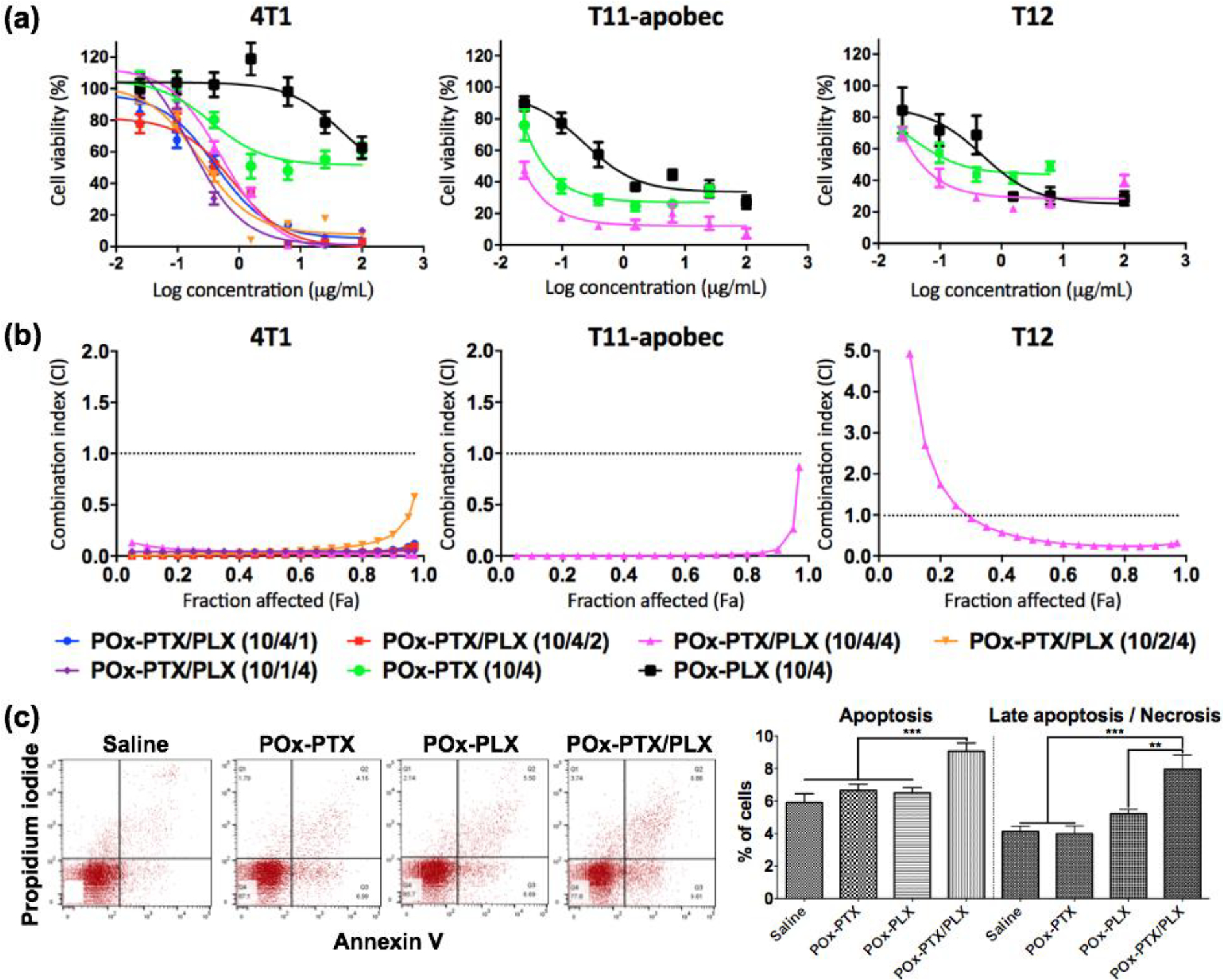
The presence of immunosuppressive immune cells in tumors is a significant barrier to the generation of therapeutic immune responses. Similarly, in vivo triple-negative breast cancer (TNBC) models often contain prevalent, immunosuppressive tumor-associated macrophages in the tumor microenvironment (TME), resulting in breast cancer initiation, invasion, and metastasis. Here, we test systemic chemoimmunotherapy using small-molecule agents, paclitaxel (PTX), and colony-stimulating factor 1 receptor (CSF1R) inhibitor, PLX3397, to enhance the adaptive T cell immunity against TNBCs in immunocompetent mouse TNBC models. We use high-capacity poly(2-oxazoline) (POx)-based polymeric micelles to greatly improve the solubility of insoluble PTX and PLX3397 and widen the therapeutic index of such drugs. The results demonstrate that high-dose PTX in POx, even as a single agent, exerts strong effects on TME and induces long-term immune memory. In addition, we demonstrate that the PTX and PLX3397 combination provides consistent therapeutic improvement across several TNBC models, resulting from the repolarization of the immunosuppressive TME and enhanced T cell immune response that suppress both the primary tumor growth and metastasis. Overall, the work emphasizes the benefit of drug reformulation and outlines potential translational path for both PTX and PTX with PLX3397 combination therapy using POx polymeric micelles for the treatment of TNBC.
肿瘤中免疫抑制性免疫细胞的存在是产生治疗性免疫反应的重大障碍。同样,体内三阴性乳腺癌(TNBC)模型在肿瘤微环境(TME)中通常含有普遍存在的免疫抑制性肿瘤相关巨噬细胞,导致乳腺癌的发生、侵袭和转移。在此,我们在具有免疫活性的小鼠TNBC模型中测试使用小分子药物紫杉醇(PTX)和集落刺激因子1受体(CSF1R)抑制剂PLX3397的全身化学免疫疗法,以增强针对TNBC的适应性T细胞免疫。我们使用基于高容量聚(2-恶唑啉)(POx)的聚合物胶束来极大地提高难溶性PTX和PLX3397的溶解度,并拓宽此类药物的治疗指数。结果表明,POx中的高剂量PTX即使作为单一药物,也对TME有强大作用并诱导长期免疫记忆。此外,我们证明PTX与PLX3397联合使用在多个TNBC模型中均能持续改善治疗效果,这是由于免疫抑制性TME的重新极化以及增强的T细胞免疫反应,从而抑制原发性肿瘤生长和转移。总体而言,这项工作强调了药物重新配方的益处,并概述了使用POx聚合物胶束进行PTX以及PTX与PLX3397联合治疗TNBC的潜在转化途径。