Sakai Ryuichi, Goto-Inoue Naoko, Yamashita Hiroshi, Aimoto Naoya, Kitai Yuto, Maruyama Tadashi
Faculty and Graduate School of Fisheries Sciences, Hokkaido University, 3-1-1 Minato-cho, Hakodate 041-8611, Japan.
Department of Marine Science and Resources, College of Bioresource Sciences, Nihon University, 1866 Kameino, Fujisawa, Kanagawa 252-0880, Japan.
iScience. 2023 Jun 28;26(7):107250. doi: 10.1016/j.isci.2023.107250. eCollection 2023 Jul 21.
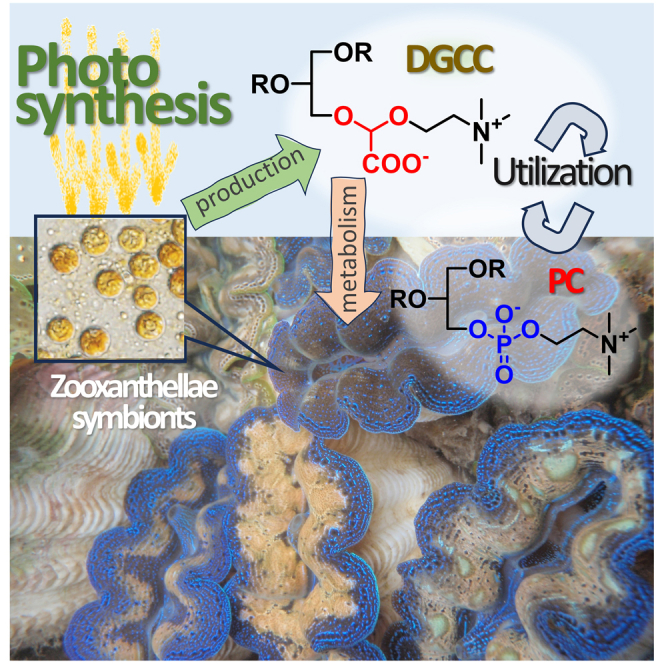
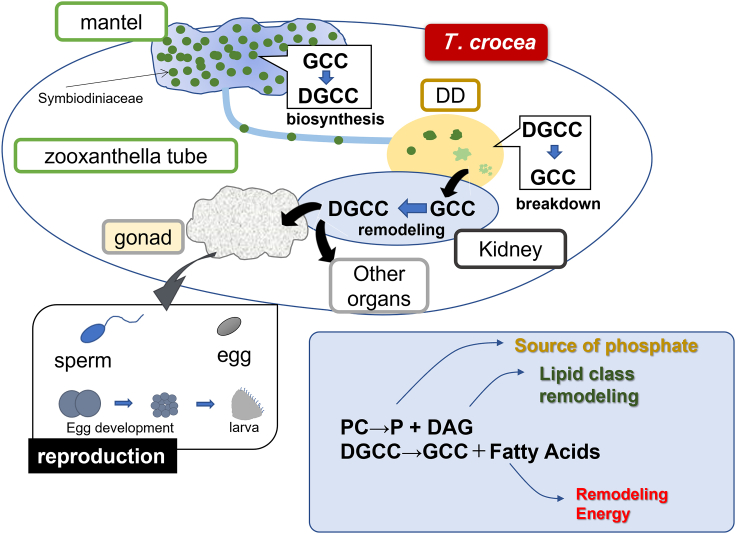
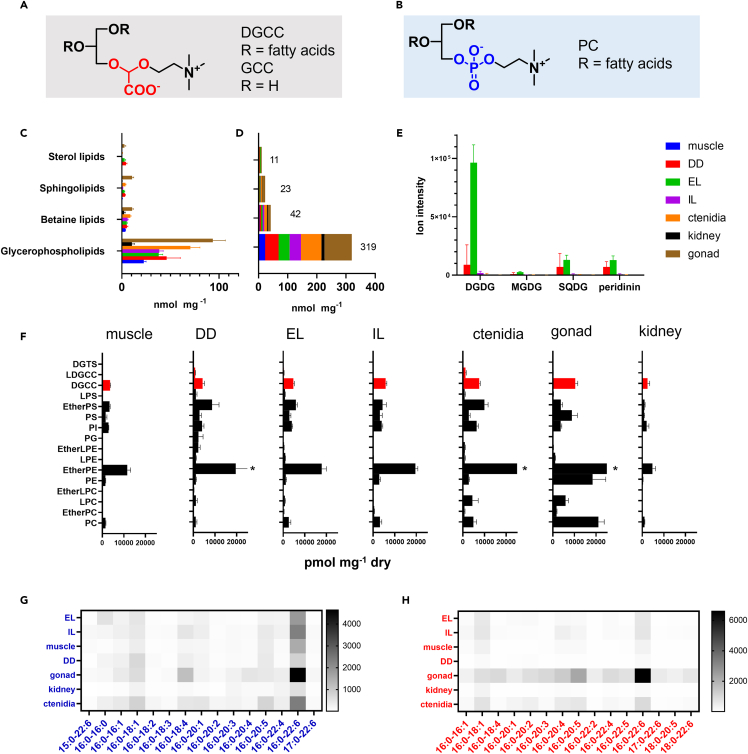
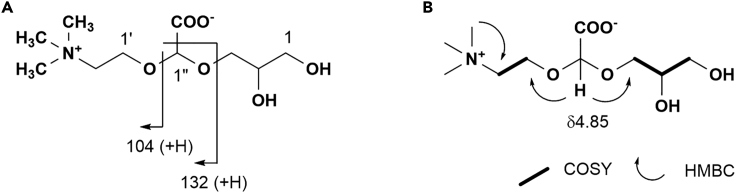
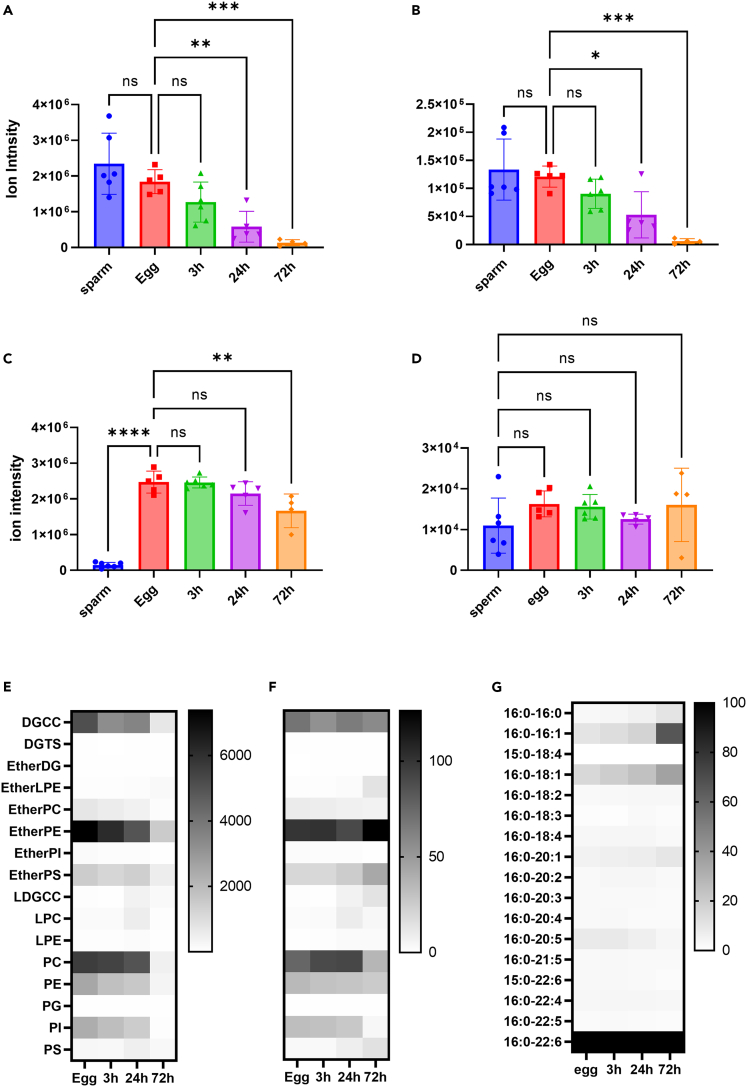
The giant clam thrives in poorly nourished coral reef water by forming a holobiont with zooxanthellae and utilizing photosynthetic products of the symbiont. However, detailed metabolic crosstalk between clams and symbionts is elusive. Here, we discovered that the nonphosphorous microalgal betaine lipid DGCC (diacylglycerylcarboxy-hydroxymethylcholine) and its deacylated derivative GCC are present in all tissues and organs, including algae-free sperm and eggs, and are metabolized. Colocalization of DGCC and PC (phosphatidylcholine) evidenced by MS imaging suggested that DGCC functions as a PC substitute. The high content of GCC in digestive diverticula (DD) suggests that the algal DGCC was digested in DD for further utilization. Lipidomics analysis showing the organ-specific distribution pattern of DGCC species suggests active utilization of DGCC as membrane lipids in the clam. Thus, the utilization of zooxanthellal DGCC in animal cells is a unique evolutionary outcome in phosphorous-deficient coral reef waters.
巨型蛤蜊通过与虫黄藻形成共生体并利用共生体的光合产物,在营养匮乏的珊瑚礁水域中茁壮成长。然而,蛤蜊与共生体之间详细的代谢相互作用尚不清楚。在这里,我们发现非磷微藻甜菜碱脂质DGCC(二酰甘油羧基羟甲基胆碱)及其脱酰基衍生物GCC存在于所有组织和器官中,包括不含藻类的精子和卵子,并且会被代谢。质谱成像证明DGCC和PC(磷脂酰胆碱)的共定位表明DGCC起到PC替代物的作用。消化盲囊(DD)中GCC的高含量表明藻类DGCC在DD中被消化以进一步利用。脂质组学分析显示DGCC种类的器官特异性分布模式表明DGCC在蛤蜊中作为膜脂被积极利用。因此,在缺磷的珊瑚礁水域中,动物细胞利用虫黄藻的DGCC是一种独特的进化结果。