Cone Aaron L, Wu Kenny K, Kravitz Alexxai V, Norris Aaron J
Department of Anesthesiology, Washington University School of Medicine, St. Louis, MO, USA.
Department of Neuroscience, Washington University School of Medicine, St. Louis, MO, USA.
iScience. 2023 Jun 28;26(7):107241. doi: 10.1016/j.isci.2023.107241. eCollection 2023 Jul 21.
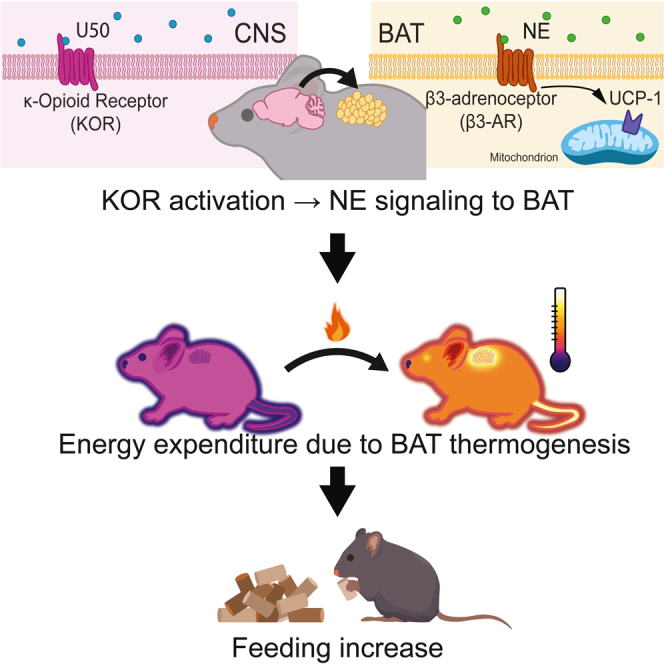
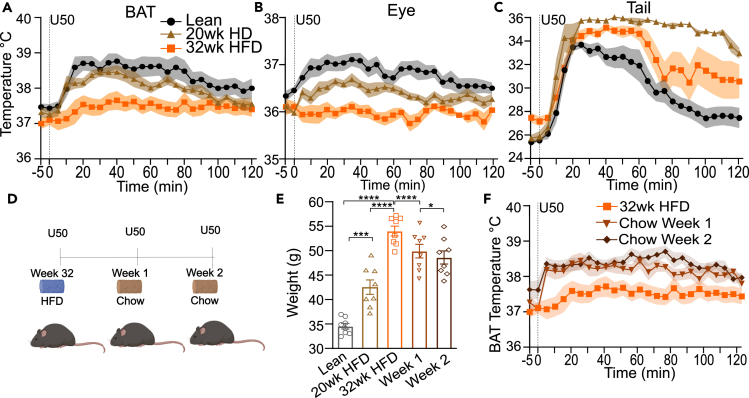
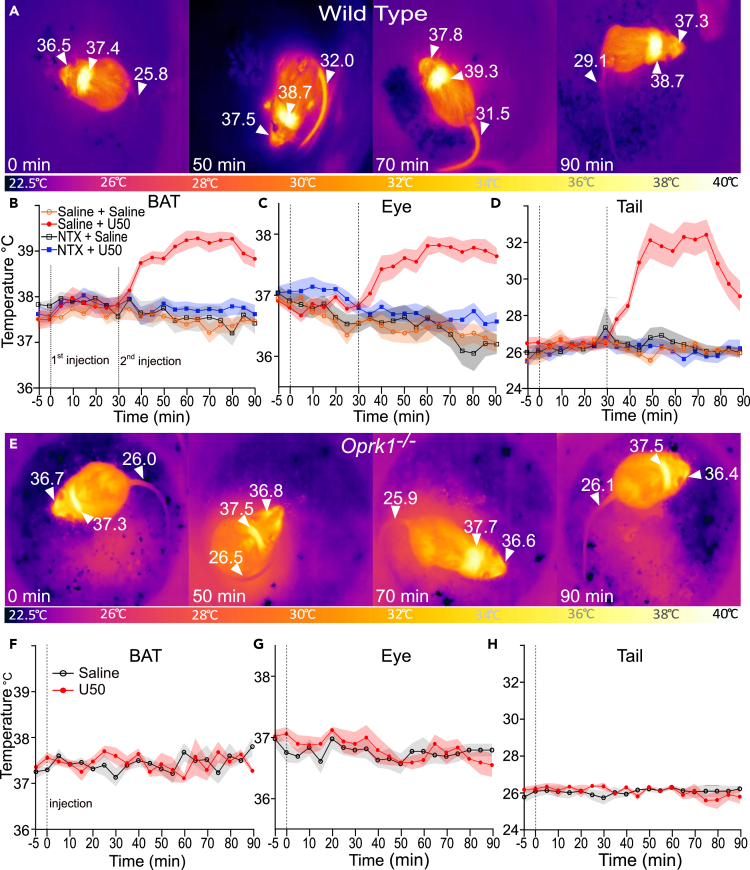
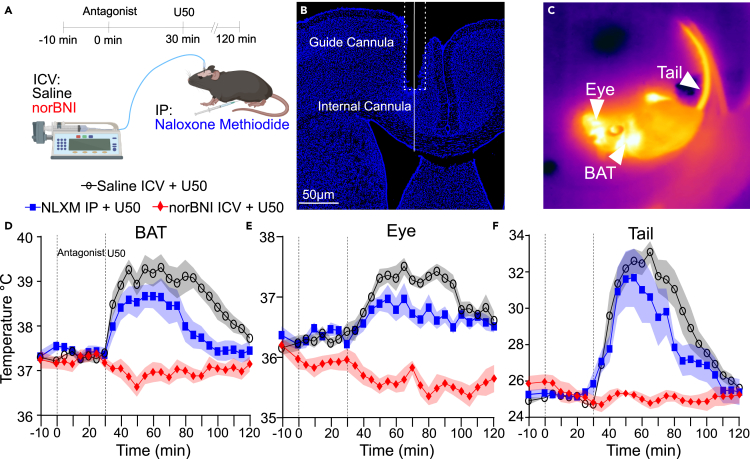
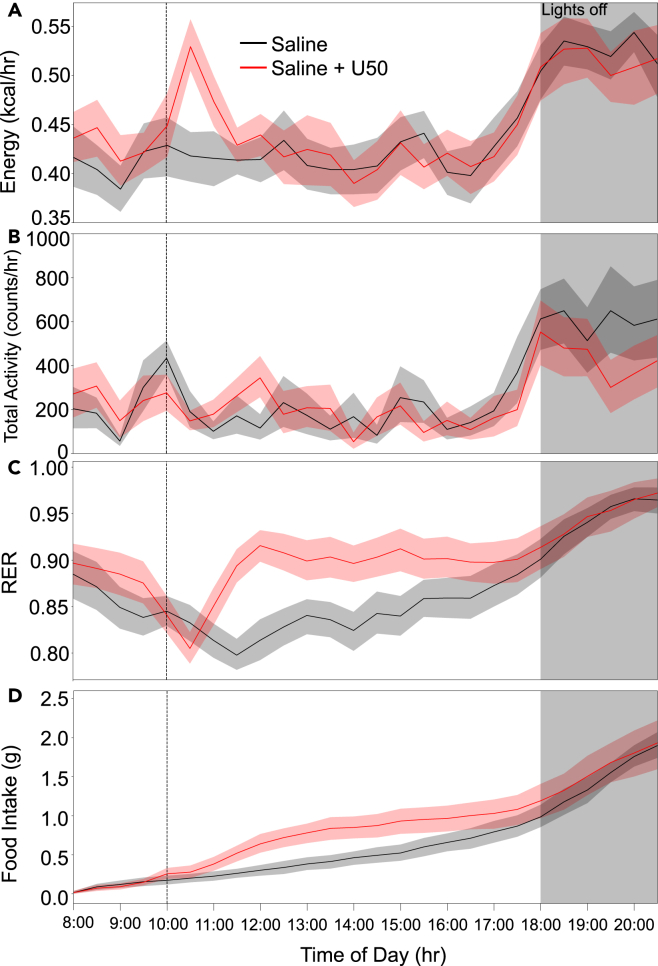
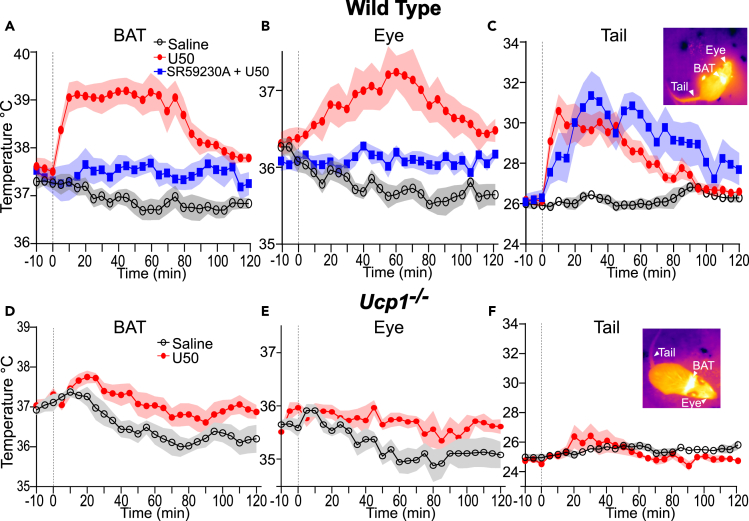
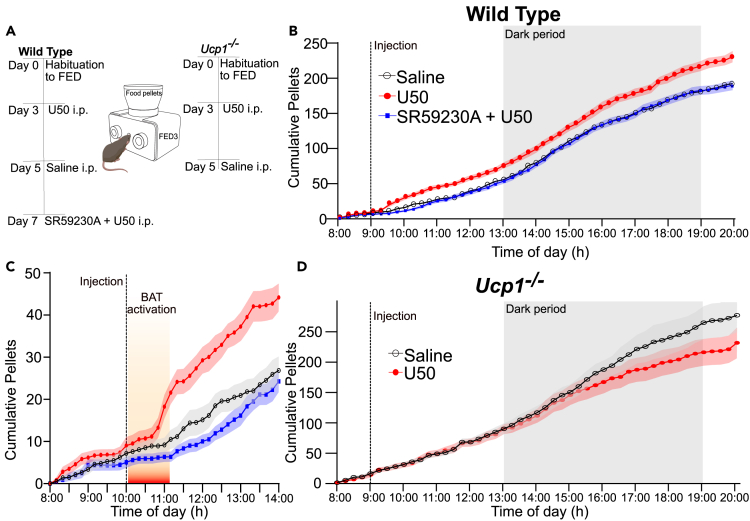
Opioid receptors, including the kappa opioid receptor (KOR), exert control over thermoregulation and feeding behavior. Notably, activation of KOR stimulates food intake, leading to postulation that KOR signaling plays a central role in managing energy intake. KOR has also been proposed as a target for treating obesity. Herein, we report studies examining how roles for KOR signaling in regulating thermogenesis, feeding, and energy balance may be interrelated using pharmacological interventions, genetic tools, quantitative thermal imaging, and metabolic profiling. Our findings demonstrate that activation of KOR in the central nervous system causes increased energy expenditure via brown adipose tissue activation. Importantly, pharmacologic, or genetic inhibition of brown adipose tissue thermogenesis prevented the elevated food intake triggered by KOR activation. Furthermore, our data reveal that KOR-mediated thermogenesis elevation is reversibly disrupted by chronic high-fat diet, implicating KOR signaling as a potential mediator in high-fat diet-induced weight gain.
阿片受体,包括κ阿片受体(KOR),对体温调节和进食行为发挥控制作用。值得注意的是,KOR的激活会刺激食物摄入,这导致人们推测KOR信号传导在管理能量摄入中起核心作用。KOR也被提议作为治疗肥胖症的靶点。在此,我们报告了一些研究,这些研究使用药理学干预、基因工具、定量热成像和代谢分析来研究KOR信号传导在调节产热、进食和能量平衡中的作用可能是如何相互关联的。我们的研究结果表明,中枢神经系统中KOR的激活通过棕色脂肪组织的激活导致能量消耗增加。重要的是,棕色脂肪组织产热的药理学或基因抑制可防止KOR激活引发的食物摄入量增加。此外,我们的数据表明,慢性高脂饮食会可逆地破坏KOR介导的产热升高,这表明KOR信号传导是高脂饮食诱导体重增加的潜在介质。