Liu Lu, Zhou Chenxia, Jiang Huimin, Wei Huimin, Zhou Yifan, Wu Yan, Zhang Kaiyuan, Li Chuanhui, Duan Jiangang, Meng Ran, Zhou Chen, Ji Xunming
Department of Neurology, Xuanwu Hospital, Capital Medical University, Beijing, China.
Beijing Institute of Brain Disorders, Capital Medical University, Beijing, 100069, China.
Thromb J. 2023 Jul 24;21(1):78. doi: 10.1186/s12959-023-00521-3.
Cortical vein thrombosis (CVT) is a rare form of cerebral venous sinus thrombosis (CVST) in adolescent patients that has received little attention. We aimed to analyze the clinical and radiological features of adolescents with CVST and investigate the effects of CVT involvement.
Patients aged ≥ 10 to ≤ 18 years and diagnosed with CVST were identified at Xuanwu Hospital, Capital Medical University between January 2015 and August 2022 and divided into two groups according to the presence or absence of cortical vein involvement. Additionally, the patients were also categorized based on their sex. Clinical features, radiological characteristics, and 12-month follow-up outcomes were compared between the two groups.
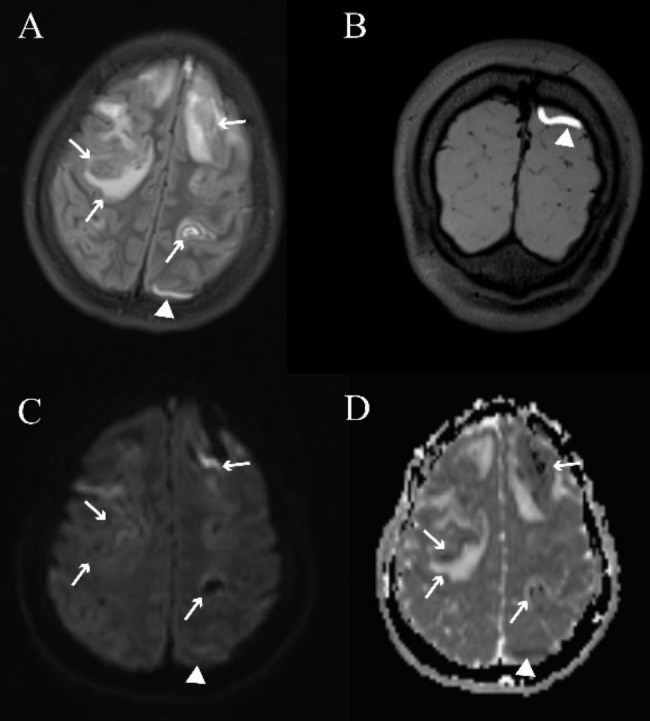
Fifty-three adolescents, including 21 with CVT, were included (mean age: 15.2 ± 1.8 years; females, 54.7%). The CVT group was more likely to experience seizures (P = 0.028) and deterioration (28.6% vs. 6.2%, P = 0.047) during hospitalization than the non-CVT group. Poor short-term outcomes, based on the modified Rankin Scale (mRS) score at discharge, were more common in adolescents with CVT (P = 0.007). The proportions of patients showing edema (42.9% vs. 6.2%, P = 0.004) and mass effect (P = 0.015) were significantly higher in the CVT group. Recanalization was observed in 61.9% and 82.1% of the patients in the CVT and non-CVT groups, respectively, during the first imaging review (median, 22 days). After a 12-month follow-up, female adolescents had more frequent resident secondary headaches than male adolescents (52.9% vs. 12.5%; P = 0.014).
Cortical vein involvement in adolescents with CVST was associated with a higher risk of epilepsy at presentation, deterioration during hospitalization, edema, and mass effect on acute imaging. Moreover, cortical vein involvement may lead to worse short-term outcomes. Sex differences require consideration in etiological analyses and prolonged follow-ups.
皮质静脉血栓形成(CVT)是青少年脑静脉窦血栓形成(CVST)的一种罕见形式,目前鲜受关注。我们旨在分析青少年CVST的临床和影像学特征,并研究CVT受累的影响。
2015年1月至2022年8月期间,在首都医科大学宣武医院确定年龄≥10至≤18岁且诊断为CVST的患者,并根据是否存在皮质静脉受累分为两组。此外,还根据患者性别进行分类。比较两组患者的临床特征、影像学特征和12个月的随访结果。
纳入53名青少年,其中21名患有CVT(平均年龄:15.2±1.8岁;女性占54.7%)。与非CVT组相比,CVT组在住院期间更易发生癫痫(P = 0.028)和病情恶化(28.6%对6.2%,P = 0.047)。根据出院时改良Rankin量表(mRS)评分,CVT青少年的短期预后较差更为常见(P = 0.007)。CVT组出现水肿(42.9%对6.2%,P = 0.004)和占位效应(P = 0.015)的患者比例显著更高。在首次影像学复查(中位数为22天)时,CVT组和非CVT组分别有61.9%和82.1%的患者出现再通。经过12个月的随访,女性青少年持续性继发性头痛比男性青少年更频繁(52.9%对12.5%;P = 0.014)。
青少年CVST中皮质静脉受累与发病时癫痫风险较高、住院期间病情恶化、水肿以及急性影像学上的占位效应相关。此外,皮质静脉受累可能导致更差的短期预后。在病因分析和长期随访中需要考虑性别差异。