Department of Neurobiology, School of Neurobiology, Biochemistry and Biophysics, The George S. Wise Faculty of Life Sciences, Tel Aviv University, 6997801, Tel Aviv, Israel.
Department of Human Molecular Genetics and Biochemistry, Sackler School of Medicine, George S. Wise Faculty of Life Sciences, Tel Aviv University, 69978, Tel Aviv, Israel.
J Neuroinflammation. 2023 Jul 26;20(1):174. doi: 10.1186/s12974-023-02823-9.
Alzheimer's disease (AD) is the leading cause of dementia in the world. The pathology of AD is affiliated with the elevation of both tau (τ) and β-amyloid (Aβ) pathologies. Yet, the direct link between natural τ expression on glia cell activity and Aβ remains unclear. While experiments in mouse models suggest that an increase in Aβ exacerbates τ pathology when expressed under a neuronal promoter, brain pathology from AD patients suggests an appearance of τ pathology in regions without Aβ.
Here, we aimed to assess the link between τ and Aβ using a new mouse model that was generated by crossing a mouse model that expresses two human mutations of the human MAPT under a mouse Tau natural promoter with 5xFAD mice that express human mutated APP and PS1 in neurons.
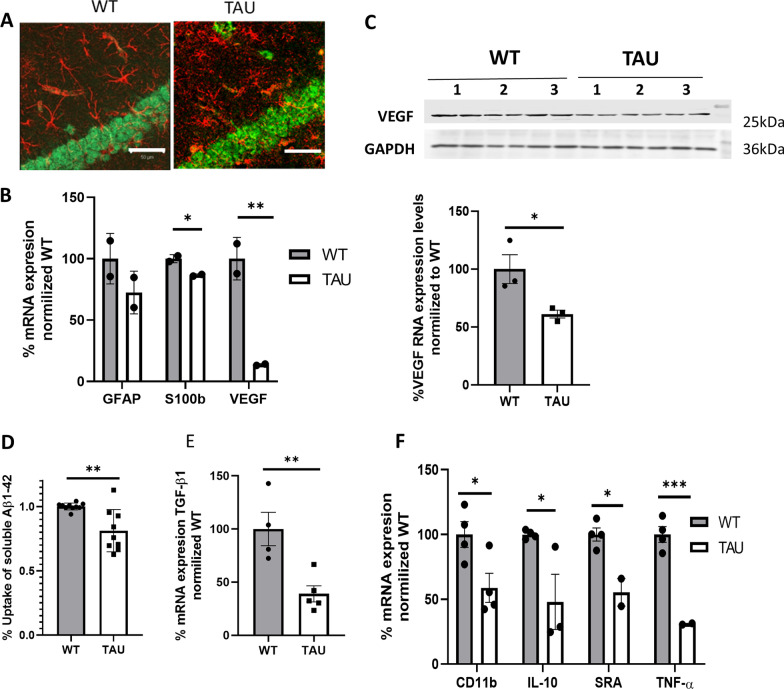
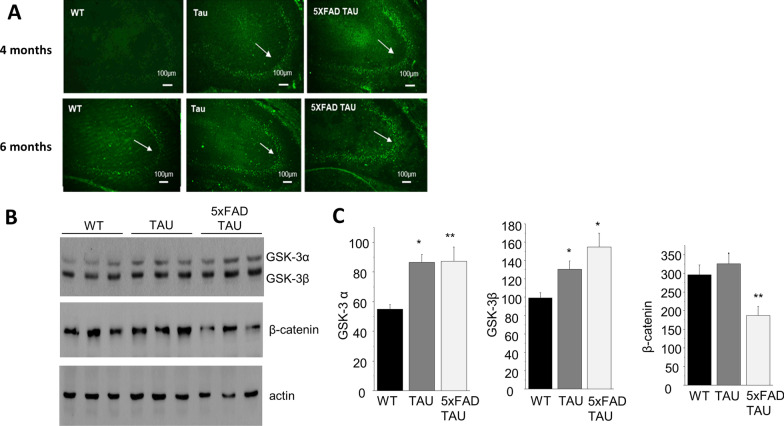
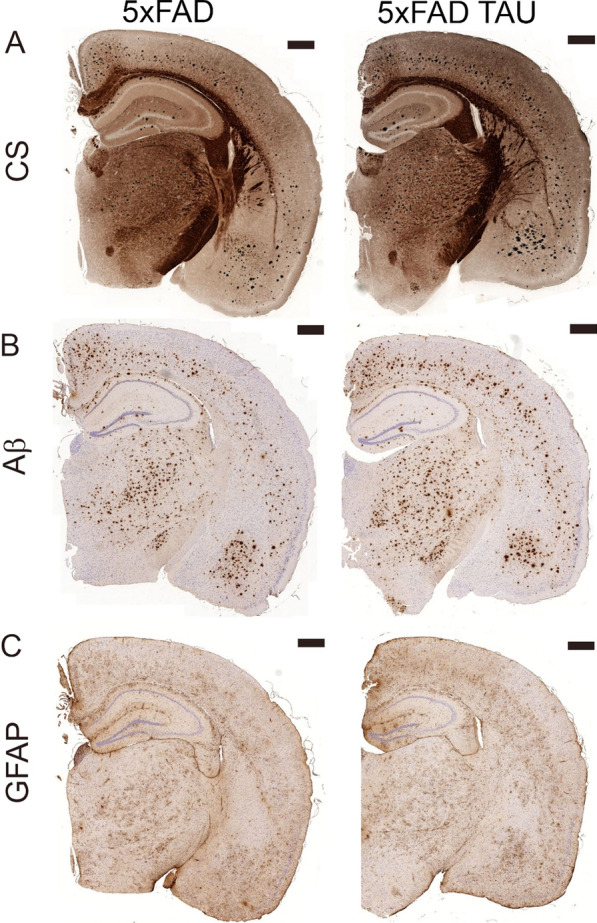
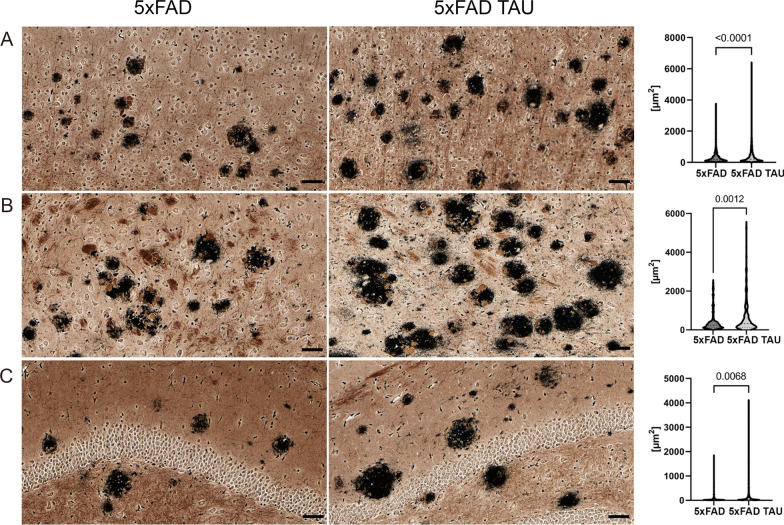
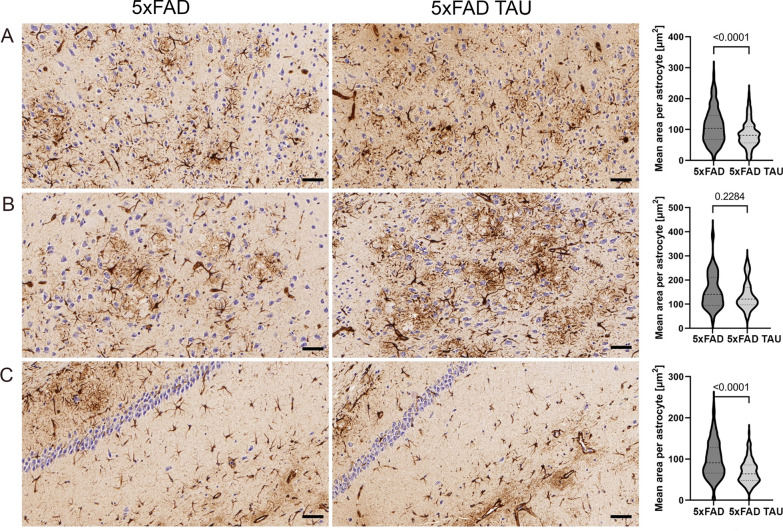
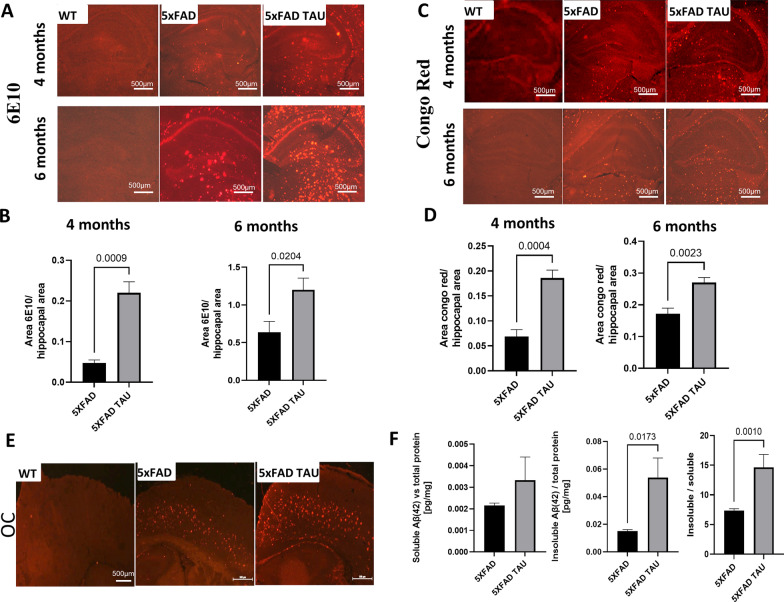
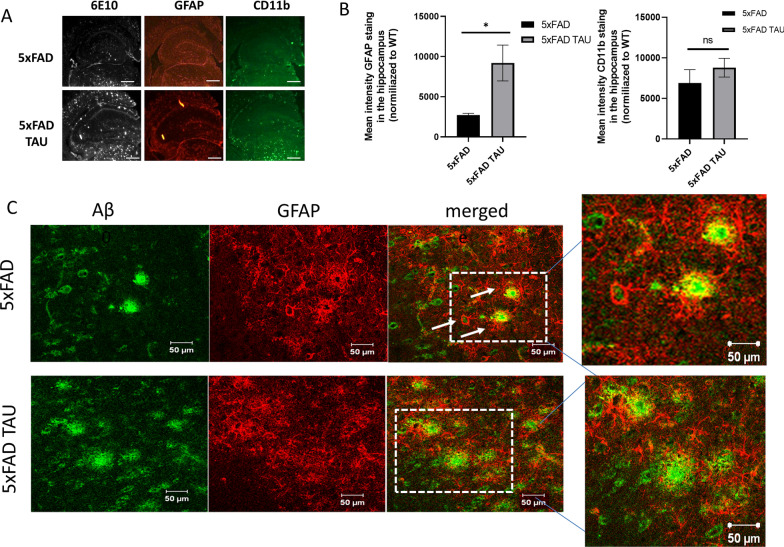
The new mouse model, called 5xFAD TAU, shows accelerated cognitive impairment at 2 months of age, increased number of Aβ depositions at 4 months and neuritic plaques at 6 months of age. An expression of human mutated TAU in astrocytes leads to a dystrophic appearance and reduces their ability to engulf Aβ, which leads to an increased brain Aβ load. Astrocytes expressing mutated human TAU showed an impairment in the expression of vascular endothelial growth factor (VEGF) that has previously been suggested to play an important role in supporting neurons.
Our results suggest the role of τ in exacerbating Aβ pathology in addition to pointing out the potential role of astrocytes in disease progression. Further research of the crosstalk between τ and Aβ in astrocytes may increase our understanding of the role glia cells have in the pathology of AD with the aim of identifying novel therapeutic interventions to an otherwise currently incurable disease.
阿尔茨海默病(AD)是世界上导致痴呆的主要原因。AD 的病理学与 tau(τ)和 β-淀粉样蛋白(Aβ)病理学的升高有关。然而,胶质细胞活性中天然 τ 表达与 Aβ之间的直接联系尚不清楚。虽然在小鼠模型中的实验表明,当在神经元启动子下表达时,Aβ 的增加会加剧 τ 病理学,但来自 AD 患者的大脑病理学表明,在没有 Aβ 的区域出现了 τ 病理学。
在这里,我们旨在通过交叉一种新的小鼠模型来评估 τ 和 Aβ 之间的联系,该模型是通过将表达人类 MAPT 两个突变的小鼠模型与在神经元中表达人类突变 APP 和 PS1 的 5xFAD 小鼠交叉而产生的。
这种新的小鼠模型,称为 5xFAD TAU,在 2 个月大时表现出加速的认知障碍,在 4 个月时增加了 Aβ 沉积,在 6 个月时增加了神经突斑块。在星形胶质细胞中表达人类突变 TAU 会导致其形态发生不良,并降低其吞噬 Aβ 的能力,从而导致大脑 Aβ 负荷增加。表达突变人类 TAU 的星形胶质细胞表现出血管内皮生长因子(VEGF)表达受损,此前已表明 VEGF 在支持神经元方面发挥重要作用。
我们的结果表明,τ 在加剧 Aβ 病理学中的作用,除了指出星形胶质细胞在疾病进展中的潜在作用。进一步研究 τ 和 Aβ 在星形胶质细胞中的相互作用可能会增加我们对胶质细胞在 AD 病理学中的作用的理解,以期确定针对这种目前尚无治愈方法的疾病的新的治疗干预措施。