Division of Basic Biomedical Sciences, Center for Brain and Behavioral Research (CBBRe), Sanford School of Medicine, University of South Dakota, Vermillion, SD 57069, USA.
J Exp Biol. 2023 Aug 15;226(16). doi: 10.1242/jeb.245895.
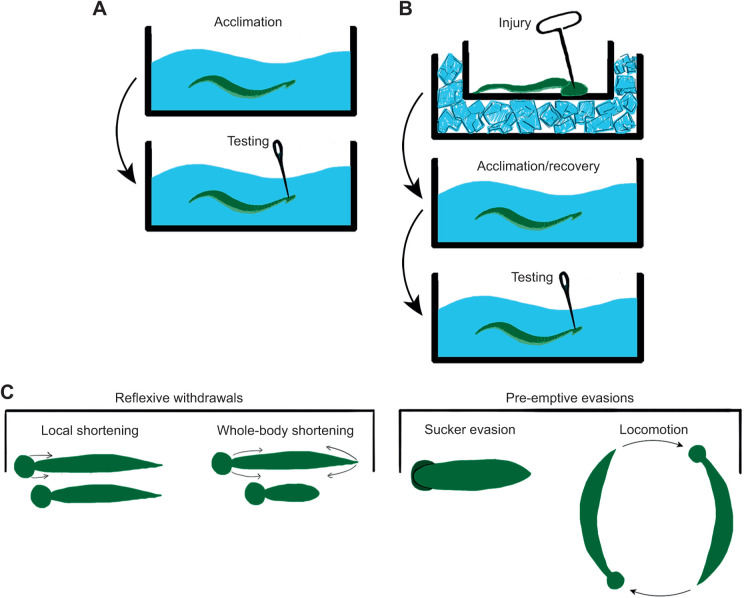
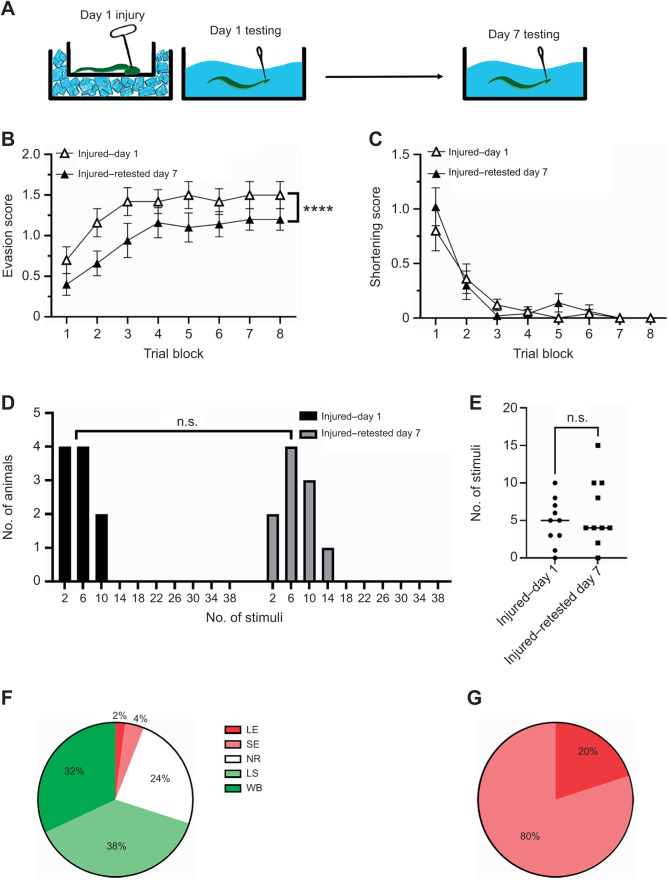
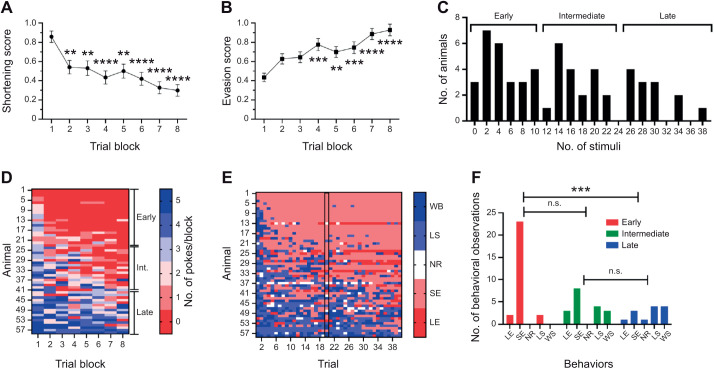
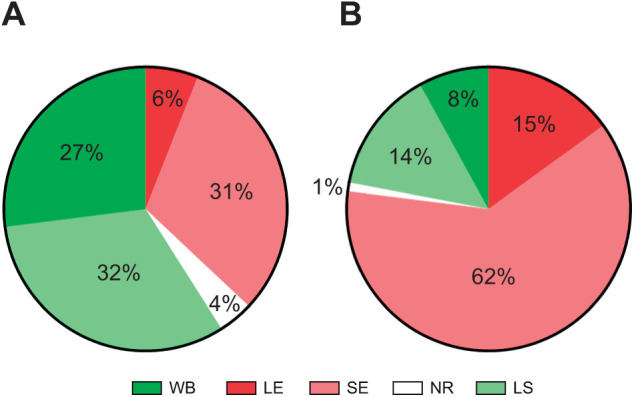
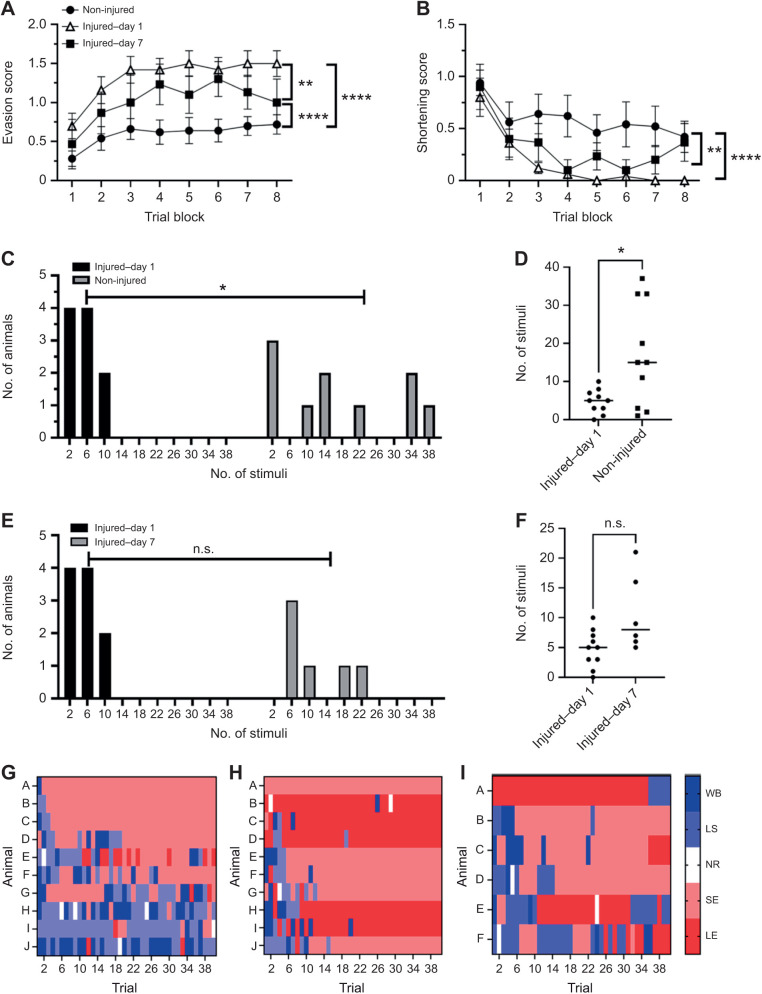
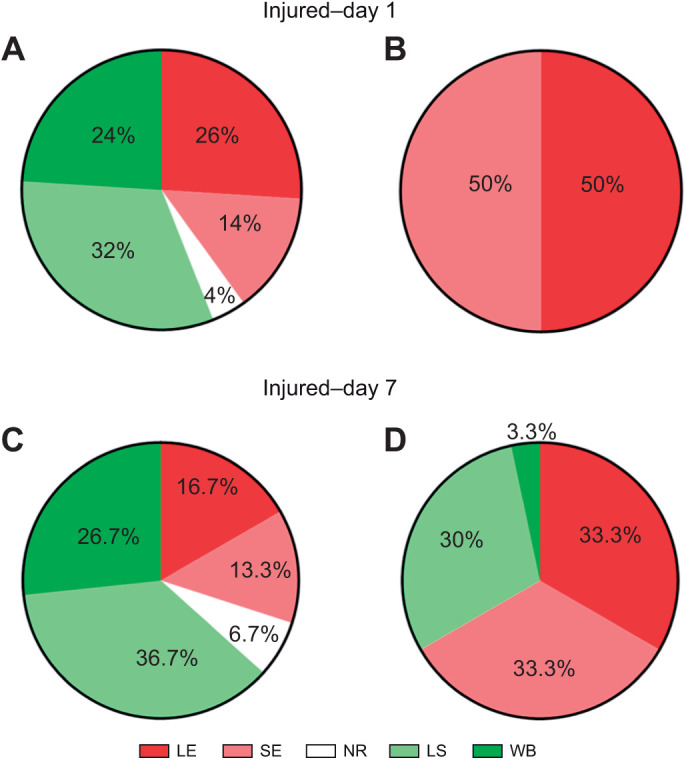
Appropriate responses to real or potential damaging stimuli to the body (nociception) are critical to an animal's short- and long-term survival. The initial goal of this study was to examine habituation of withdrawal reflexes (whole-body and local shortening) to repeated mechanical nociceptive stimuli (needle pokes) in the medicinal leech, Hirudo verbana, and assess whether injury altered habituation to these nociceptive stimuli. While repeated needle pokes did reduce shortening in H. verbana, a second set of behavior changes was observed. Specifically, animals began to evade subsequent stimuli by either hiding their posterior sucker underneath adjacent body segments or engaging in locomotion (crawling). Animals differed in terms of how quickly they adopted evasion behaviors during repeated stimulation, exhibiting a multi-modal distribution for early, intermediate and late evaders. Prior injury had a profound effect on this transition, decreasing the time frame in which animals began to carry out evasion and increasing the magnitude of these evasion behaviors (more locomotory evasion). The data indicate the presence in Hirudo of a complex and adaptive defensive arousal process to avoid noxious stimuli that is influenced by differences in internal states, prior experience with injury of the stimulated areas, and possibly learning-based processes.
对于动物的短期和长期生存而言,对身体受到的真实或潜在有害刺激(伤害感受)做出适当反应至关重要。本研究的最初目标是检验医用水蛭( Hirudo verbana )对重复机械性伤害感受刺激(针刺)的退缩反射(全身和局部缩短)的习惯化,并评估伤害是否改变了对这些伤害感受刺激的习惯化。虽然重复针刺确实减少了 H. verbana 的缩短,但观察到了第二组行为变化。具体来说,动物通过将后吸盘隐藏在相邻的身体段下或进行运动(爬行)来躲避随后的刺激。动物在重复刺激过程中采用逃避行为的速度存在差异,表现出早期、中期和晚期逃避者的多峰分布。先前的损伤对这种转变有深远的影响,减少了动物开始进行逃避的时间框架,并增加了这些逃避行为的幅度(更多的运动逃避)。数据表明,在 Hirudo 中存在一种复杂且适应性的防御唤醒过程,以避免有害刺激,这种过程受到内部状态差异、受刺激区域受伤的先前经验以及可能基于学习的过程的影响。