Li Xiaofeng, Chen Yiwen, Wang Ting, Liu Zifan, Yin Guotao, Wang Ziyang, Sui Chunxiao, Zhu Lei, Chen Wei
National Clinical Research Center for Cancer, Key Laboratory of Cancer Prevention and Therapy, Department of Molecular Imaging and Nuclear Medicine,Tianjin Medical University Cancer Institute and Hospital, Tianjin, China.
Department of Molecular Imaging and Nuclear Medicine, Tianjin Cancer Hospital Airport Hospital, Tianjin, China.
Discov Oncol. 2023 Jul 27;14(1):140. doi: 10.1007/s12672-023-00709-z.
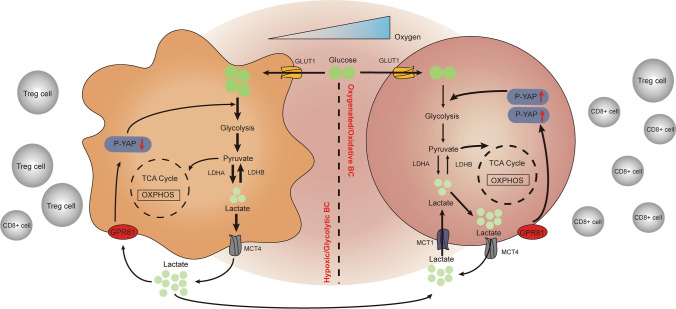
Local tumor microenvironment (TME) plays a crucial role in immunotherapy for breast cancer (BC). Whereas, the molecular mechanism responsible for the crosstalk between BC cells and surrounding immune cells remains unclear. The present study aimed to determine the interplay between GPR81-mediated glucometabolic reprogramming of BC and the immune landscape in TME.
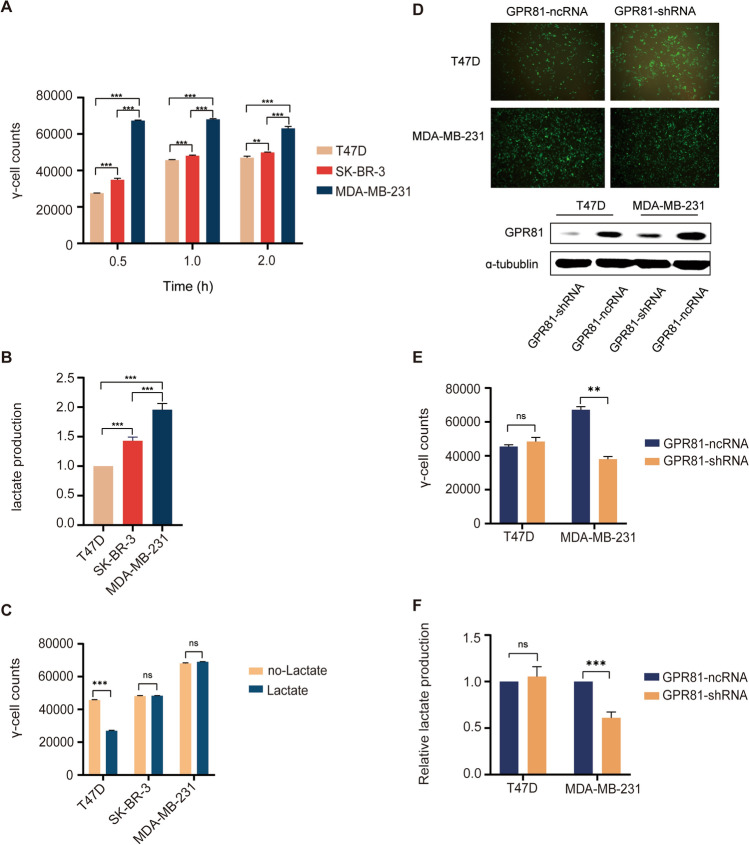
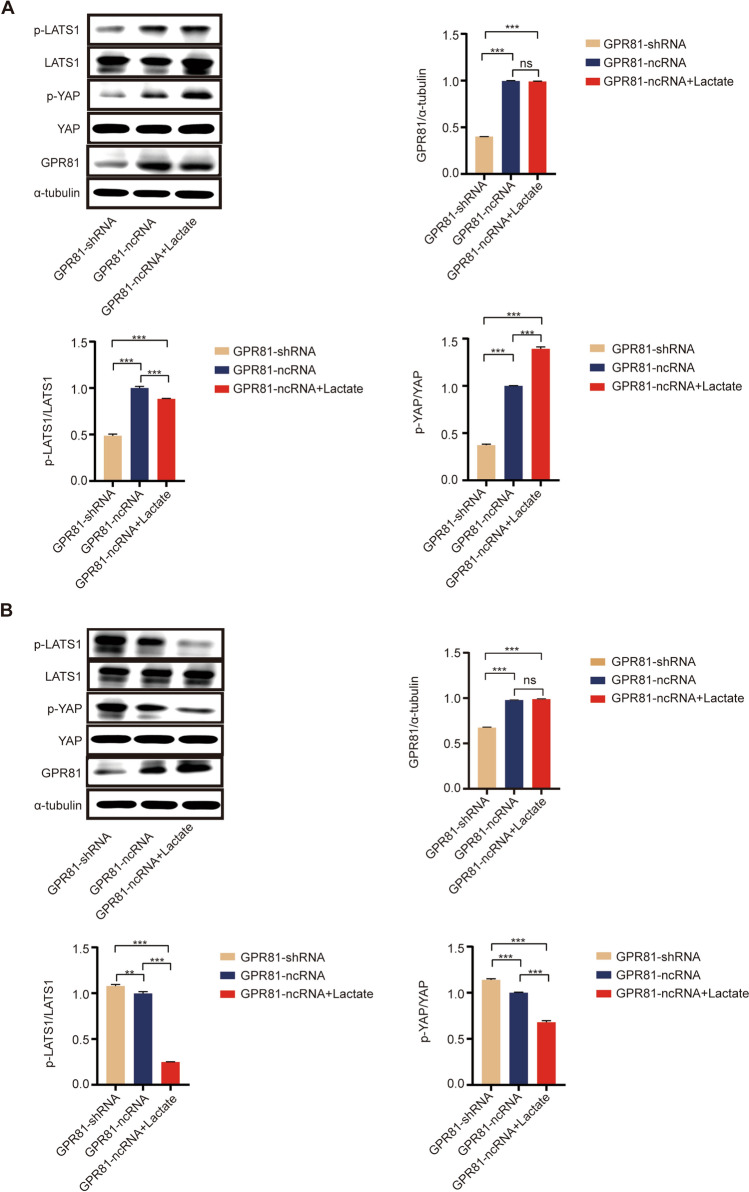
Immunohistochemistry (IHC) assay was first performed to evaluate the association between GPR81 and the immune landscape. Then, several stable BC cell lines with down-regulated GPR81 expression were established to directly identify the role of GPR81 in glucometabolic reprogramming, and western blotting assay was used to detect the underlying molecular mechanism. Finally, a transwell co-culture system confirmed the crosstalk between glucometabolic regulation mediated by GPR81 in BC and induced immune attenuation.
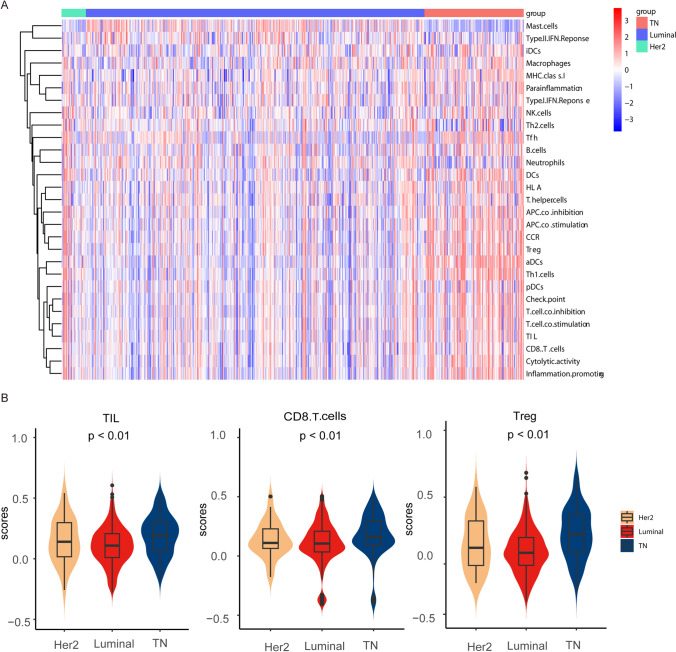
IHC analysis demonstrated that the representation of infiltrating CD8 T cells and FOXP3 T cells were dramatically higher in BC with a triple negative (TN) subtype in comparison with that with a non-TN subtype (P < 0.001). Additionally, the ratio of infiltrating CD8 to FOXP3 T cells was significantly negatively associated with GPR81 expression in BC with a TN subtype (P < 0.001). Furthermore, GPR81 was found to be substantially correlated with the glycolytic capability (P < 0.001) of BC cells depending on a Hippo-YAP signaling pathway (P < 0.001). In the transwell co-culture system, GPR81-mediated reprogramming of glucose metabolism in BC significantly contributed to a decreased proportion of CD8 T (P < 0.001) and an increased percentage of FOXP3 T (P < 0.001) in the co-cultured lymphocytes.
Glucometabolic reprogramming through a GPR81-mediated Hippo-YAP signaling pathway was responsible for the distinct immune landscape in BC. GPR81 was a potential biomarker to stratify patients before immunotherapy to improve BC's clinical prospect.
局部肿瘤微环境(TME)在乳腺癌(BC)免疫治疗中起关键作用。然而,BC细胞与周围免疫细胞之间相互作用的分子机制仍不清楚。本研究旨在确定BC中GPR81介导的糖代谢重编程与TME中免疫格局之间的相互作用。
首先进行免疫组织化学(IHC)分析,以评估GPR81与免疫格局之间的关联。然后,建立了几种GPR81表达下调的稳定BC细胞系,以直接确定GPR81在糖代谢重编程中的作用,并使用蛋白质印迹分析来检测潜在的分子机制。最后,通过Transwell共培养系统证实了BC中GPR81介导的糖代谢调节与诱导的免疫减弱之间的相互作用。
IHC分析表明,与非三阴性(TN)亚型相比,三阴性(TN)亚型BC中浸润性CD8 T细胞和FOXP3 T细胞的表达明显更高(P < 0.001)。此外,TN亚型BC中浸润性CD8与FOXP3 T细胞的比例与GPR81表达呈显著负相关(P < 0.001)。此外,发现GPR81与BC细胞的糖酵解能力(P < 0.001)密切相关,这取决于Hippo-YAP信号通路(P < 0.001)。在Transwell共培养系统中,BC中GPR81介导的葡萄糖代谢重编程显著导致共培养淋巴细胞中CD8 T细胞比例降低(P < 0.001)和FOXP3 T细胞百分比增加(P < 0.001)。
通过GPR81介导的Hippo-YAP信号通路进行的糖代谢重编程导致了BC中独特的免疫格局。GPR81是免疫治疗前对患者进行分层的潜在生物标志物,以改善BC的临床前景。