
内质网应激和自噬参与三丁基锡诱导的肝毒性。
Endoplasmic Reticulum Stress and Autophagy Are Involved in Hepatotoxicity Induced by Tributyltin.
作者信息
Liang Weiqi, Fu Lingling, Feng Mei, Wang Xiaorong, Yun Zhaohui, Xu Jin
机构信息
School of Public Health, Health Science Center, Ningbo University, Ningbo 315211, China.
Zhejiang Key Laboratory of Pathophysiology, Health Science Center, Ningbo University, Ningbo 315211, China.
出版信息
Toxics. 2023 Jul 12;11(7):607. doi: 10.3390/toxics11070607.
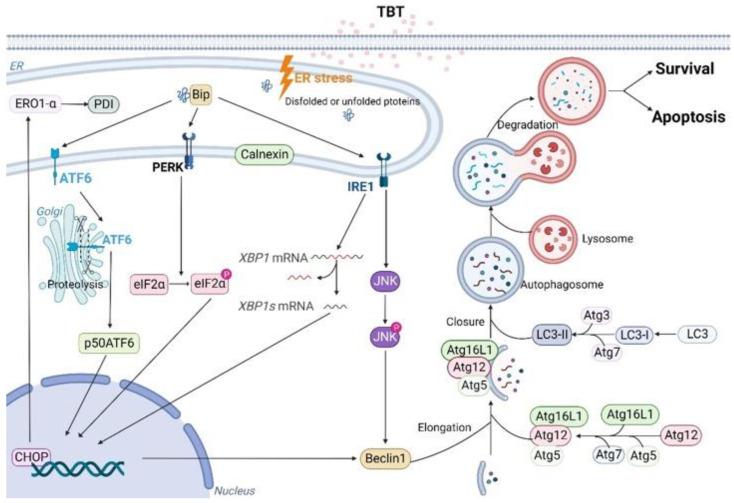
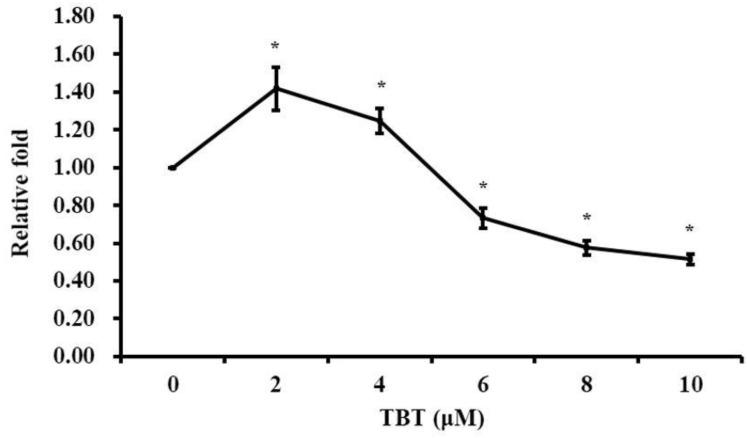
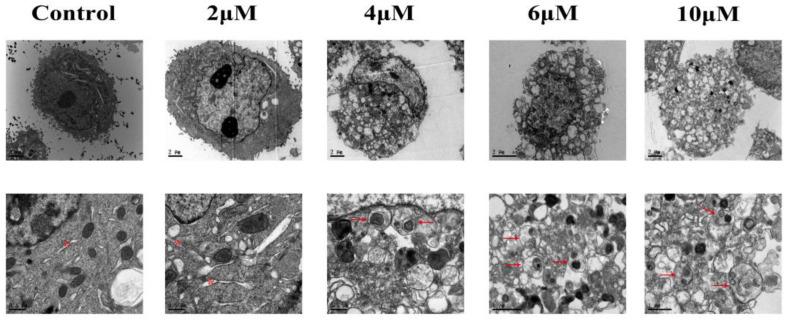
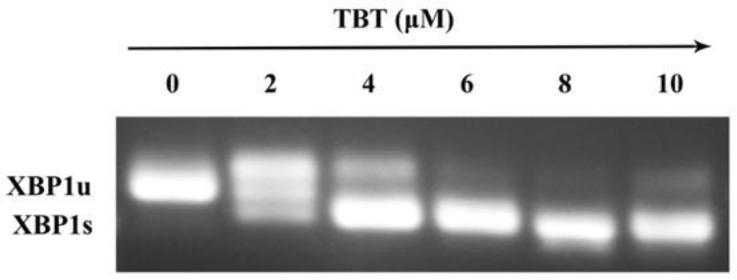
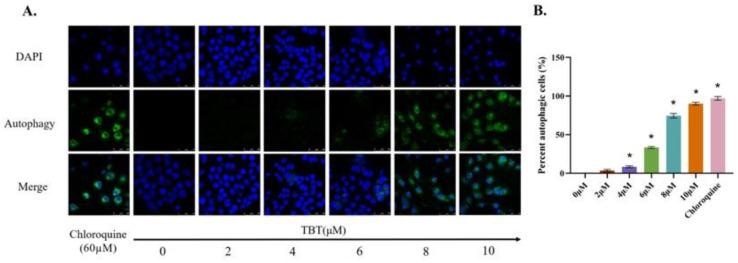
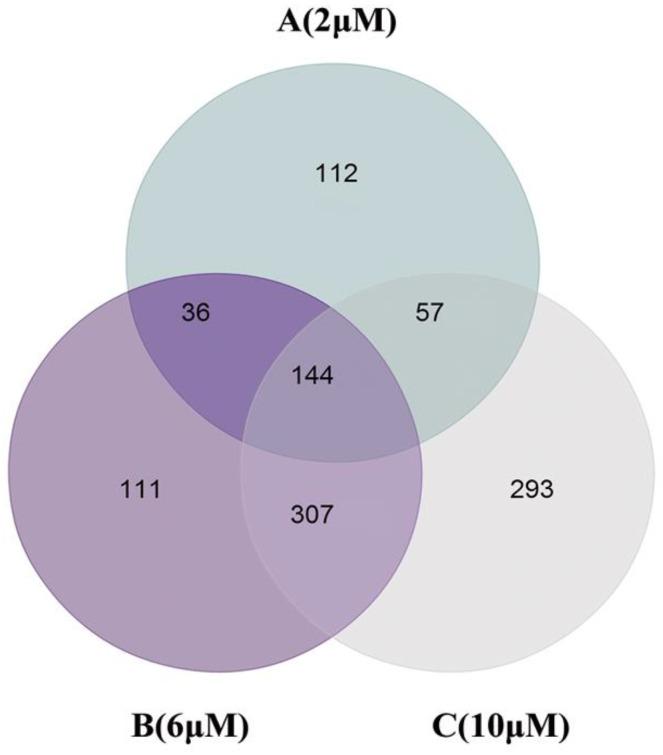
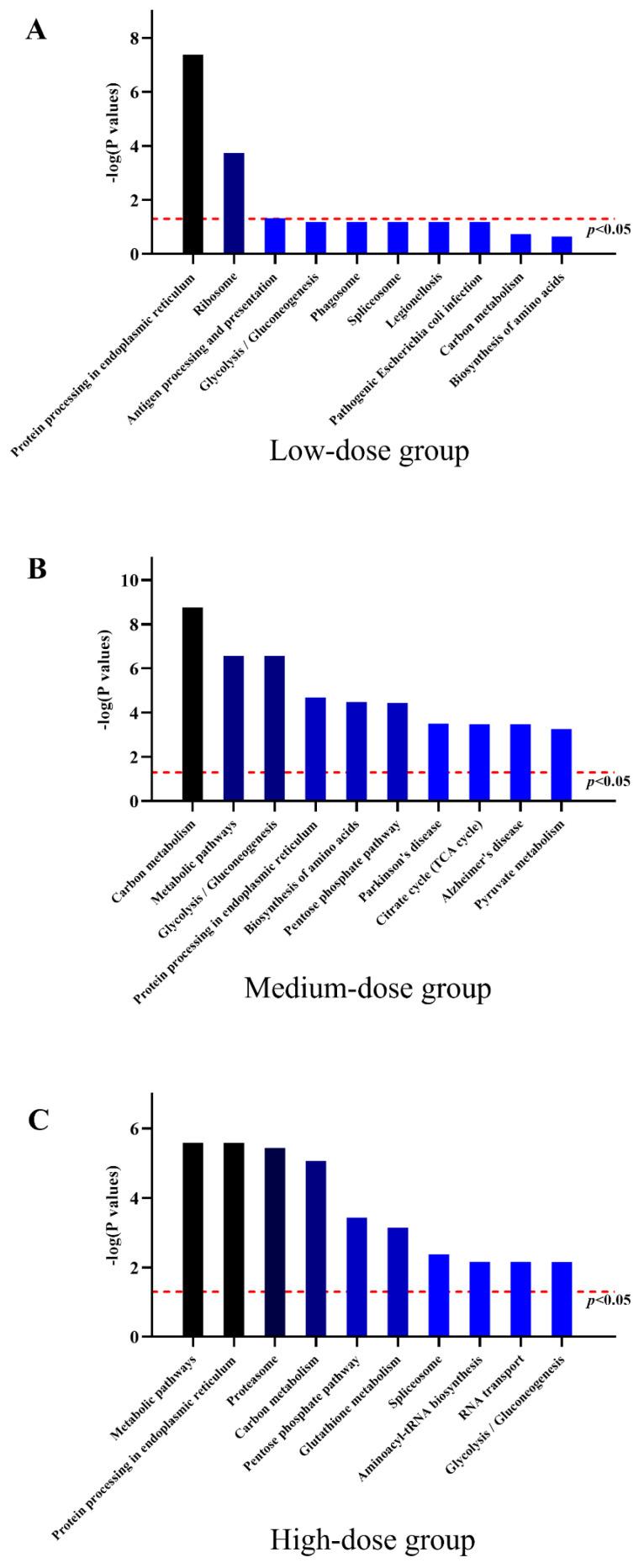
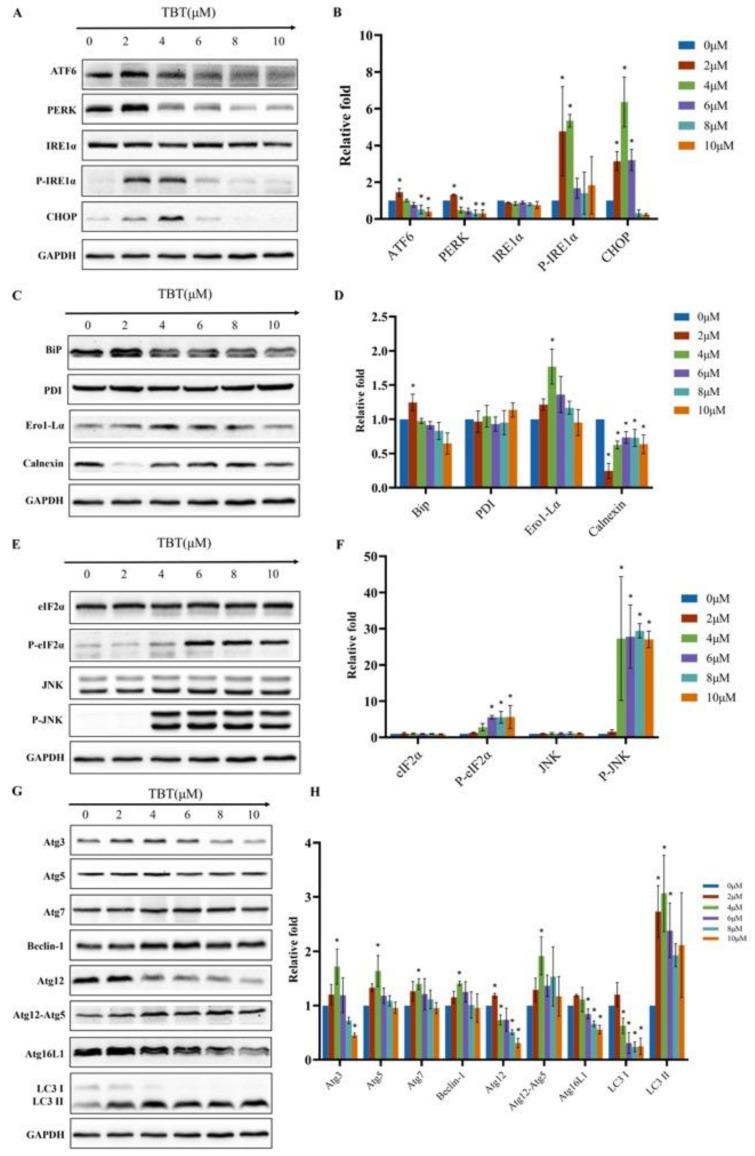
Tributyltin (TBT), a common contaminant in aquatic ecosystems, has severe toxic effects on multiple tissues and organs, especially the liver. Previous toxicogenomic analysis has indicated that the main mechanism of TBT-induced hepatotoxicity is related to the activation of the apoptotic pathway. However, the mechanism of action occurring before the activation of apoptosis is still unclear. Herein, we applied proteomic technology to explore the protein expression profile of TBT-treated HL7702 normal human liver cells. The ultrastructural changes in cells were observed by transmission electron microscopy. After low dose (2 μΜ) TBT treatment, activation of the unfolded protein response and endoplasmic reticulum stress were observed; the expression levels of PERK, ATF6, BiP, and CHOP were significantly elevated, and splicing of mRNA was initiated. When the TBT concentration increased to 4 μΜ, the protein levels of Beclin1, Atg3, Atg5, Atg7, and Atg12-Atg5 were significantly elevated, and the protein level of LC3Ⅰ decreased while that of LC3Ⅱ increased, suggesting the activation of autophagy. As the TBT concentration continued to increase, autophagy could not eliminate the damage, and apoptosis eventually occurred. These results indicate novel pathways of hepatotoxicity induced by TBT and provide insights for future studies.
三丁基锡(TBT)是水生生态系统中的常见污染物,对多种组织和器官具有严重毒性作用,尤其是肝脏。先前的毒理基因组学分析表明,TBT诱导肝毒性的主要机制与凋亡途径的激活有关。然而,在凋亡激活之前发生的作用机制仍不清楚。在此,我们应用蛋白质组学技术探索经TBT处理的HL7702正常人肝细胞的蛋白质表达谱。通过透射电子显微镜观察细胞的超微结构变化。低剂量(2μM)TBT处理后,观察到未折叠蛋白反应和内质网应激的激活;PERK、ATF6、BiP和CHOP的表达水平显著升高,并且mRNA剪接开始。当TBT浓度增加到4μM时,Beclin1、Atg3、Atg5、Atg7和Atg12-Atg5的蛋白质水平显著升高,LC3Ⅰ的蛋白质水平降低而LC3Ⅱ的蛋白质水平升高, 表明自噬被激活。随着TBT浓度持续增加,自噬无法消除损伤,最终发生凋亡。这些结果表明了TBT诱导肝毒性的新途径,并为未来的研究提供了思路。

 Zotero 插件