Key Laboratory of Vertebrate Evolution and Human Origins of Chinese Academy of Sciences, Institute of Vertebrate Paleontology and Paleoanthropology, Chinese Academy of Sciences, 142 Xi-zhi-men-wai Street, 100044, Beijing, China.
Department of Archaeology and Anthropology, University of Chinese Academy of Sciences, 100049, Beijing, China.
Nat Commun. 2023 Jul 28;14(1):4558. doi: 10.1038/s41467-023-40311-z.
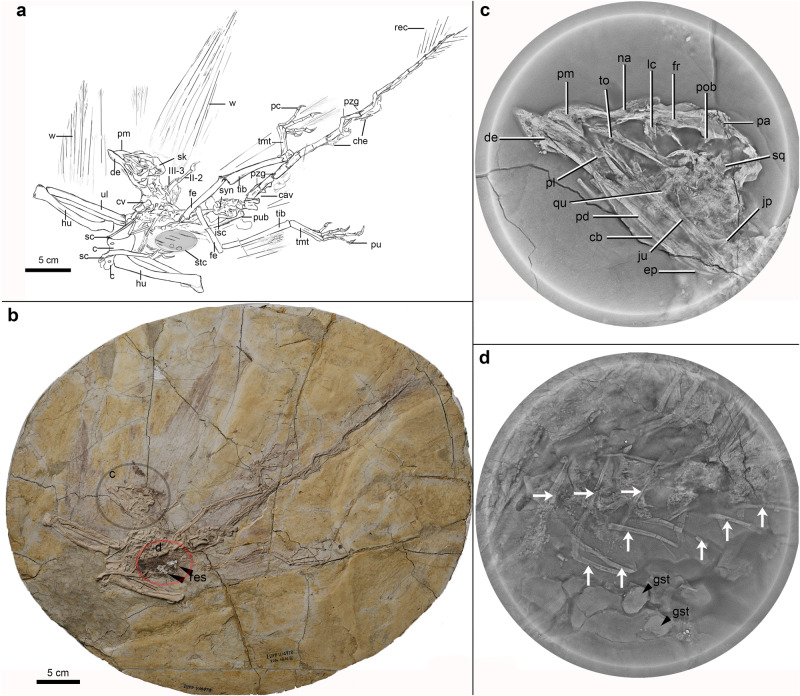
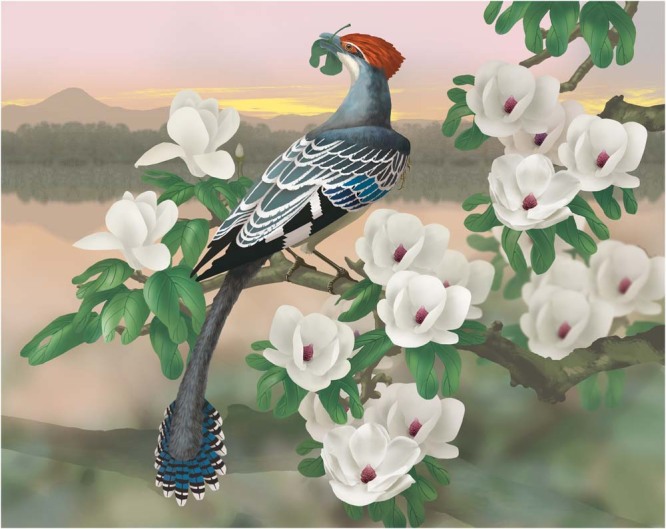
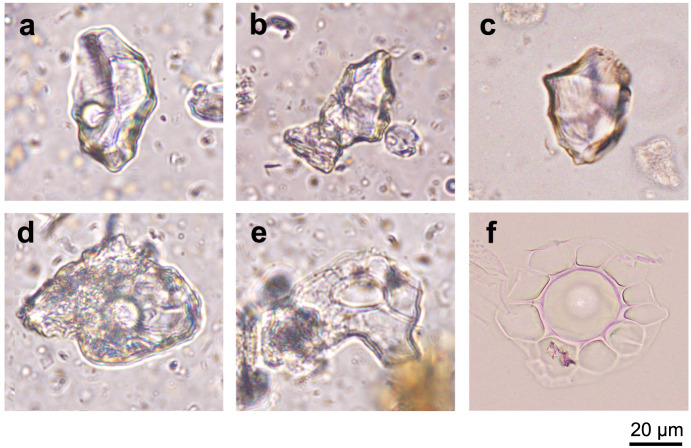
Angiosperms became the dominant plant group in early to middle Cretaceous terrestrial ecosystems, coincident with the timing of the earliest pulse of bird diversification. While living birds and angiosperms exhibit strong interactions across pollination/nectivory, seed dispersal/frugivory, and folivory, documentation of the evolutionary origins and construction of that ecological complexity remains scarce in the Mesozoic. Through the first study of preserved in situ dietary derived phytoliths in a nearly complete skeleton of the early diverging avialan clade Jeholornithidae, we provide direct dietary evidence that Jeholornis consumed leaves likely from the magnoliid angiosperm clade, and these results lend further support for early ecological connections among the earliest birds and angiosperms. The broad diet of the early diverging avialan Jeholornis including at least fruits and leaves marks a clear transition in the early evolution of birds in the establishment of an arboreal (angiosperm) herbivore niche in the Early Cretaceous occupied largely by birds today. Morphometric reanalysis of the lower jaw of Jeholornis further supports a generalized morphology shared with other herbivorous birds, including an extant avian folivore, the hoatzin.
被子植物在早-中白垩世陆地生态系统中成为占主导地位的植物群,与鸟类多样化最早脉冲的时间一致。虽然现生鸟类和被子植物在传粉/食蜜、种子传播/食果和食叶方面表现出强烈的相互作用,但在中生代,关于这种生态复杂性的进化起源和构建的记录仍然很少。通过对早白垩世分支的长尾鸡科近乎完整骨骼中保存的原位饮食衍生植硅体的首次研究,我们提供了直接的饮食证据,表明长尾鸡可能食用了木兰类被子植物的叶子,这些结果进一步支持了最早的鸟类和被子植物之间的早期生态联系。早期分化的长尾鸡的广泛饮食包括至少果实和叶子,标志着鸟类在早期进化中在建立一个以树木(被子植物)为食的生态位方面的明显转变,而这个生态位在早白垩世主要由鸟类占据。对长尾鸡下颌骨的重新形态分析进一步支持了与其他草食性鸟类共享的一般形态,包括现存的食叶性鸟类——麝雉。